


Cathay Pacific Airways Ltd (國泰航空), Asia’s biggest international airline, is to eliminate 600 jobs as part of its biggest revamp in two decades following its first loss in eight years.
The majority of affected employees are to be informed starting yesterday through the next month, with most of the restructuring completed by the end of the year, Cathay said in a statement yesterday.
No frontline employees, pilots or cabin crew would be affected, it said.
Cathay and its affiliated airlines and other businesses employed about 33,000 people as of June last year.
FIERCE COMPETITION
Despite booming demand for air travel in Asia, Cathay and Singapore Airlines Ltd are among premium carriers in the region reeling under intense competition from low-cost carriers, Chinese rivals and Middle-Eastern operators such as Emirates.
Singapore Air last week reported a surprise loss and also announced a “wide-ranging review” of its business.
“Everyone is becoming more and more cost conscious,” said Andrew Lee, an analyst at Jefferies Group LLC in Hong Kong.
“To be able to survive, they need to control costs. I think it is a start,” he said, referring to Cathay.
Cathay is to also restructure its cargo department by removing the role of cargo director.
Shares of the Hong Kong-based carrier rose as much as 3.7 percent to HK$11.74 yesterday. The stock has gained 14 percent this year, compared with a 13 percent advance in the Bloomberg Asia Pacific Airlines Index.
‘TOUGH, BUT NECESSARY’
Cathay is in the midst of a three-year reorganization program after reporting its first annual loss in eight years for last year, in part from a fuel-hedging bet gone wrong.
“We’ve had to make tough, but necessary decisions for the future of our business and our customers,” Rupert Hogg, who became chief executive officer on May 1, said in the statement.
“We will have a new structure that will make us leaner, faster and more responsive to our customers’ needs. It is the first step in the transformation of our business,” he said.
The job cuts are to involve 190 managerial positions, representing 25 percent of management, Cathay said.
“Job cuts are obviously the most effective measure in the short term, but Cathay’s problem is not coming from within, it’s growing competition from outside, from full-service peers in the mainland and middle east to budget carriers,” said Yu Zhanfu (於佔福), a Beijing-based principal at Roland Berger Strategy Consultants. “Cathay has been suffering decline in both yield and load factor. That’s what Cathay needs to urgently address by sharpening their competitiveness externally.”
Cathay has said it is targeting savings of about 30 percent from staff cost cuts at its headquarters.
An official at Air China Ltd (中國國際航空), which owns 30 percent of Cathay, said in March that the carrier would reduce more than HK$4 billion (US$513.8 million) in costs over three years.
All employees whose roles will become redundant in the new structure are to receive a severance package including up to 12 months’ salary, extended medical benefits including counseling and support, and additional and extended travel benefits, the company said.

CAUTIOUS RECOVERY: While the manufacturing sector returned to growth amid the US-China trade truce, firms remain wary as uncertainty clouds the outlook, the CIER said The local manufacturing sector returned to expansion last month, as the official purchasing managers’ index (PMI) rose 2.1 points to 51.0, driven by a temporary easing in US-China trade tensions, the Chung-Hua Institution for Economic Research (CIER, 中華經濟研究院) said yesterday. The PMI gauges the health of the manufacturing industry, with readings above 50 indicating expansion and those below 50 signaling contraction. “Firms are not as pessimistic as they were in April, but they remain far from optimistic,” CIER president Lien Hsien-ming (連賢明) said at a news conference. The full impact of US tariff decisions is unlikely to become clear until later this month

With an approval rating of just two percent, Peruvian President Dina Boluarte might be the world’s most unpopular leader, according to pollsters. Protests greeted her rise to power 29 months ago, and have marked her entire term — joined by assorted scandals, investigations, controversies and a surge in gang violence. The 63-year-old is the target of a dozen probes, including for her alleged failure to declare gifts of luxury jewels and watches, a scandal inevitably dubbed “Rolexgate.” She is also under the microscope for a two-week undeclared absence for nose surgery — which she insists was medical, not cosmetic — and is
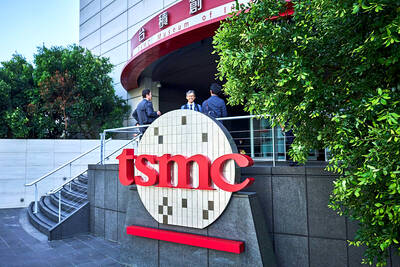
GROWING CONCERN: Some senior Trump administration officials opposed the UAE expansion over fears that another TSMC project could jeopardize its US investment Taiwan Semiconductor Manufacturing Co (TSMC, 台積電) is evaluating building an advanced production facility in the United Arab Emirates (UAE) and has discussed the possibility with officials in US President Donald Trump’s administration, people familiar with the matter said, in a potentially major bet on the Middle East that would only come to fruition with Washington’s approval. The company has had multiple meetings in the past few months with US Special Envoy to the Middle East Steve Witkoff and officials from MGX, an influential investment vehicle overseen by the UAE president’s brother, the people said. The conversations are a continuation of talks that

CHIP DUTIES: TSMC said it voiced its concerns to Washington about tariffs, telling the US commerce department that it wants ‘fair treatment’ to protect its competitiveness Taiwan Semiconductor Manufacturing Co (TSMC, 台積電) yesterday reiterated robust business prospects for this year as strong artificial intelligence (AI) chip demand from Nvidia Corp and other customers would absorb the impacts of US tariffs. “The impact of tariffs would be indirect, as the custom tax is the importers’ responsibility, not the exporters,” TSMC chairman and chief executive officer C.C. Wei (魏哲家) said at the chipmaker’s annual shareholders’ meeting in Hsinchu City. TSMC’s business could be affected if people become reluctant to buy electronics due to inflated prices, Wei said. In addition, the chipmaker has voiced its concern to the US Department of Commerce


 RSS
RSS