


Giant Group (巨大集團) founder and chairman King Liu (劉金標) is to retire in 2017 from the world’s biggest bicycle empire, which he founded more than four decades ago.
In an hour-long interview on Thursday last week in Taichung, 81-year-old Liu said the company would have a new chairman and CEO when he steps down and plans are to be finalized next year.
“There is internal consensus on the succession plan and the candidates are set,” he said.
Liu said that he expects his son, Giant China president Young Liu (劉湧昌), to be in the next generation of the company’s leadership, without specifying which position he might take up.
Giant Manufacturing Co (巨大機械) shares rose 1 percent to NT$245.5 in Taipei trading yesterday, while the TAIEX fell 0.2 percent.
The baton-passing would be the first since 1988 for Giant, which makes a third of its sales in China, a quarter in Europe and a fifth in North America.
Analysts estimate year-on-year sales growth to be 5.1 percent this year, compared with a 10.4 percent rise last year, primarily due to the slowing Chinese economy and the rise of smaller local competitors. Giant’s products range from high-end racing bikes to starter wheels for kids.
Company spokesman Ken Li (李書耕) declined to elaborate on the succession plans and said any change in management must be approved by the company’s board.
“Planning for my succession is to give the young people a chance,” said King Liu, who, along with his family, owns a 19 percent stake in the company.
The octogenarian said the new leadership would need to know the ins and outs of the company.
King Liu founded the firm in 1972 and built it up from a supplier for US-based Schwinn Bicycle Co into a standalone brand that, according to CIMB Securities Ltd analyst Jack Lin (林泓彥), ships more bikes around the world than any other maker.
“I have to make these plans while I’m healthy,” said Liu, who still rides his bike two-and-a-half hours to or from work each day. “Otherwise we won’t be able to keep up with time.”
When Schwinn pulled its orders, Giant was confronted with the challenge of quickly promoting its own brand to international markets, and the company maintains its dual business strategy today.
According to JPMorgan Securities analyst Dan Lu (呂丹), Giant is the market leader with as much as a 10 percent share of the global sales market.
Giant Manufacturing shares have risen almost 20 times in the past two decades and its market capitalization is NT$91 billion (US$2.8 billion).
As for future operations, Liu said that while he hoped the dual strategy of own-brand and manufacturing for other brands would remain in place, he hoped the new leader would pursue new ideas and not just continue with existing ways of running the business.
According to public statements, Young Liu took the company to the Chinese market in 1992 and was in charge of setting up factories. He also led the effort to build Giant’s brand into a leader in China’s domestic market. On Sept. 1, he was named to the newly created job of chief operating officer.
King Liu said he would continue as an adviser for a period of time after a new leader takes over. He is also to look after a bicycle-sharing program, YouBike, to support the spread of cycling culture in Taiwan.
Giant is hoping to operate similar programs in China and Japan, he said.

Cairo’s new monorail slices across the city skyline, running above the familiar chaos of blaring horns and aging buses’ exhaust fumes that mark rush hour below. The US$4.5 billion monorail, opened this month, is among Egypt’s most prominent new transport projects, part of a debt-funded infrastructure drive criticized for sapping state finances while bringing limited benefits to most of the country’s 109 million people. “It feels like you’re in a different country,” said Ramy Sayed, a restaurant manager, aboard a driverless Innovia 300 train. “No noise, no traffic, we’re not used to this.” The eastern line runs 56km from the bustling middle-class

Taiwanese firms have increased investment in the Philippines in recent years as Manila’s ties with Washington deepen and global supply chains continue to shift away from China, an expert at the Chung-Hua Institution for Economic Research (CIER, 中華經濟研究院) said yesterday. The Philippines had not been among Taiwanese investors’ top choices in Southeast Asia, CIER Taiwan ASEAN Studies Center director Kristy Hsu (徐遵慈) said at a seminar in Taipei. However, Taiwan’s investment in the country has grown significantly since the COVID-19 pandemic, reaching US $257 million last year, a high in recent years, she said. Although Taiwan’s total investment in the Philippines still lags

Intel Corp regards Taiwan Semiconductor Manufacturing Co (TSMC, 台積電) as a longstanding partner, as the US chipmaker would continue outsourcing production of advanced chips to TSMC, Intel chief executive officer Lip-Bu Tan (陳立武) said yesterday. “I don’t look at people as competitors. I look at the collaboration... Nvidia is also, you know, a good friend,” Tan told a news conference following his keynote speech at the Computex trade show in Taipei. “It’s a very trusted partnership for us... We are a big, top customer for them, and we’re going to continue doing that,” he said, referring to TSMC, the world’s largest foundry
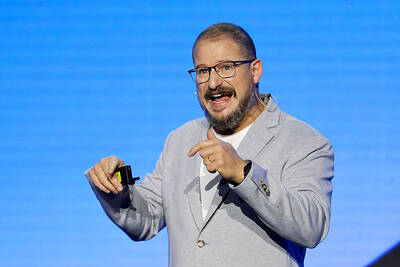
Artificial intelligence (AI) agents would supplant smartphones as the center of people’s digital lives, fundamentally reshaping personal devices and driving a major computing upgrade cycle, Qualcomm Inc CEO Cristiano Amon said yesterday. In his keynote speech for this year’s Computex trade show in Taipei, Amon said that the rise of "agentic AI" — AI systems capable of reasoning, planning and carrying out tasks autonomously — would transform how people interact with technology across phones, PCs, vehicles and wearable devices. Describing the technology as the next major evolution in computing, Amon said that "2026 is the year of agents.” For decades, smartphones have sat


 RSS
RSS