


Abercrombie & Fitch Co is saying goodbye to the shirtless beefcake models who greeted customers at its doors.
The New Albany, Ohio-based company, which operates stores under its namesake brand and Hollister, announced on Friday that store associates will not be hired “based on body type or physical attractiveness” and it will no longer call them “models,” but “brand representatives.”
It said that its employees can be more individualistic when they dress, ditching its “look policy,” which banned eyeliner and certain hair styles among other things.
It is also bidding adieu to “sexualized” photographs in marketing materials in its stores and on its gift cards and shopping bags, starting in late July.
The moves are part of a new set of changes the retailer announced on Friday as it distances itself from the controversial sexualized image established by former chief executive Mike Jeffries, who abruptly resigned in December last year amid sluggish sales. Jeffries was at the helm more than two decades.
However, analysts wonder: If Abercrombie ditches the “sexy,” what new marketing gimmick will the retailer embrace to get shoppers back in its stores?
“Abercrombie & Fitch has to find its niche. I don’t know what that’s going to be. Edgy was it,” said Ken Perkins, president of Retail Metrics LLC, a retail research firm. “You are not going to see totally wholesome, but I think the era has passed it by. They need to do something different.”
Jeffries had reinvented the chain from an ailing retailer of hunting apparel to a seller of teen clothing that became a must-have brand for young consumers fueled by racy ads and catalogs and eye candy associates that helped keep sales sizzling. A big tradition: using shirtless models for store openings and events.
However, since the Great Recession, the brand has stumbled on hard times. Young shoppers are reprioritizing and spending more money on gadgets like iPhones than clothes. And when they do buy clothes, they do so differently than past generations who found comfort in dressing like their peers.
Today’s teens shun the idea of wearing the same outfit as the girl or guy sitting next to them in chemistry class. And many are opting for inexpensive fashions at H&M and other “fast fashion” chains.
The company has posted 12 straight quarters of declines in revenue at stores open at least a year. The company’s total sales and net income have also been on a downward trend over the past two years.
In the release issued on Friday, Abercrombie & Fitch said that it will continue to focus on its commitment to diversity among its sales staff. It said that more than 50 percent of its store associates are non-white.
It also said it will focus on improving customer service.
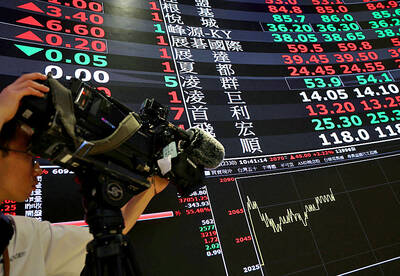
After several years flying high as Asia’s best Nvidia Corp proxy, Taiwan Semiconductor Manufacturing Co (TSMC, 台積電) is increasingly vying with other artificial intelligence (AI) stocks for investor attention. Stock traders are chasing a wider array of beneficiaries as mainstream usage of AI creates demand for hardware beyond the most-advanced chips TSMC makes for Nvidia. Subthemes from the deepening memory crunch to advances in robotics are also luring bids. At the same time, investment caps on single stocks are pushing funds to diversify, while retail investors long familiar with TSMC through its US depositary receipts are being offered a broader set of

Netherlands-based semiconductor equipment supplier ASML Holding NV yesterday said that it is planning to hire an additional 1,000 people in Taiwan this year in response to growing demand from clients. ASML had previously planned to recruit 600 people this year, but that the plan has been adjusted upward, ASML vice president and ASML Taiwan general manager Grace Wang (汪佳慧) told reporters. ASML has a workforce of more than 4,500 in Taiwan, accounting for about 10 percent of its global total, Wang said. This year’s recruitment campaign would focus on adding people in the customer support, manufacturing and supply chain domains to assist ASML

UNDER MICROSCOPE: Taiwan detained three people who allegedly conspired to buy servers in Taiwan and export them using fraudulent documentation, prosecutors said Nvidia Corp chief executive officer Jensen Huang (黃仁勳) on Saturday urged Super Micro Computer Inc to tighten up on compliance after Taiwan detained three people this week for allegedly making fraudulent declarations about artificial intelligence (AI) servers made by its US partner. The development marked the nation’s first crackdown on semiconductor smuggling, which grew after the US slapped restrictions on exports of high-end chips such as Nvidia AI accelerators to China. Nvidia is “rigorous” in explaining regulations to all of its partners, Huang told reporters after arriving in Taipei. “Ultimately Super Micro has to run their own company,” he said in response to

Nvidia Corp yesterday announced that CEO Jensen Huang (黃仁勳) would attend an employee meeting in Taipei tomorrow to celebrate the launch of the company’s Taiwan headquarters project. Huang would attend a gathering at the site of Nvidia’s planned headquarters in Beitou Shilin Technology Park (北投士林科技園區), the company said in a statement. After arriving in Taiwan on Saturday last week, Huang told reporters that he plans to meet with Quanta Computer Inc (廣達) chairman Barry Lam (林百里) and Taiwan Semiconductor Manufacturing Co (TSMC, 台積電) chairman C.C. Wei (魏哲家), and would attend the groundbreaking ceremony for Nvidia’s Taiwan headquarters tomorrow. Nvidia has not yet applied


 RSS
RSS