


Apple Inc added Flextronics International Ltd as an assembler of Mac computers last year as Apple CEO Tim Cook pushes forward with plans to have more of the company’s devices made in the US.
Flextronics assembled Macs in Austin, Texas, last year, Apple said in its annual supplier report published yesterday.
Foxconn Technology Group (富士康科技集團) remains the largest manufacturer of Apple products, with seven assembly locations in China and Brazil, according to the list published on Apple’s Web site.
Cook said in a December 2012 interview that Apple would invest more than US$100 million last year to boost manufacturing in the US.
Flextronics, with headquarters in California and Singapore, joins Quanta Computer Inc (廣達電腦) as Asia-based companies supplying to Apple from about 60 facilities in the US.
Taiwan-based Quanta already makes some Macs in California.
In November last year, Apple announced it would pay US$578 million to GT Advanced Technologies Inc to supply equipment for an advanced glass factory to be opened in Mesa, Arizona.
The US is the third-biggest hub in Apple’s supply chain, while China remains the largest with 349 locations providing parts or manufacturing to the Cupertino, California-based company.
Japan’s 139 facilities, Taiwan’s 42 and South Korea’s 32 make Asia the center of a global supply chain that includes Mexico, Brazil, France and Germany, according to the report.
Flextronics manufactures components and electronics used in avionics, flight controls, medical equipment and wearable devices.
Valerie Kurniawan, a Singapore-based spokeswoman for Flextronics, did not answer calls to her telephones yesterday.
Apple’s Supplier Responsibility Report, first released in 2007, outlines the company’s labor and environmental standards and tracks how well its suppliers meet those rules, without naming which companies violated its code of conduct.
The iPhone maker started naming its suppliers in 2012 and listing assembly locations last year as it seeks to boost transparency among the companies that provide raw materials, electronic components, packaging and final products.
Panasonic Corp, the Osaka, Japan-based electronics maker, has more facilities supplying Apple than any other company, providing components from 31 locations.
Hon Hai Precision Industry Co (鴻海精密), the largest unit of Taipei-based Foxconn, has 29 locations in China, Brazil and Vietnam.
Intel Corp, the world’s largest chipmaker, provided products from 14 places, including the US, Costa Rica, China, Vietnam, Israel and Ireland.
While the supply of Apple parts spans the globe, assembly of its two biggest products remains limited to two manufacturers. Foxconn and Taipei-based Pegatron Corp (和碩) are the only companies making iPhones and iPads, using seven locations in China and Brazil.
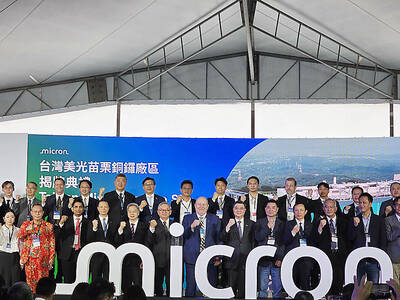
UNPRECEDENTED PACE: Micron Technology has announced plans to expand manufacturing capabilities with the acquisition of a new chip plant in Miaoli Micron Technology Inc unveiled a newly acquired chip plant in Miaoli County yesterday, as the company expands capacity to meet growing demand for advanced DRAM chips, including high-bandwidth memory chips amid the artificial intelligence boom. The plant in Miaoli County’s Tongluo Township (銅鑼), which Micron acquired from Powerchip Semiconductor Manufacturing Corp (力積電) for US$1.8 billion, is expected to make a sizeable capacity contribution to the company from fiscal 2028, the company said in a statement. It would be an extended production site of Micron’s large-scale manufacturing hub in Taichung, the company said. As the global semiconductor industry is racing to reach US$1 trillion

Singapore-based ride-hailing and delivery giant Grab Holdings Ltd has applied for regulatory approval to acquire the Taiwan operations of Germany-based Delivery Hero SE's Foodpanda in a deal valued at about US$600 million. Grab submitted the filing to the Fair Trade Commission on Friday last week, with the transaction subject to regulatory review and approval, the company said in a statement yesterday. Its independent governance structure would help foster a healthy and competitive market in Taiwan if the deal is approved, Grab said. Grab, which is listed on the NASDAQ, said in the filing that US-based Uber Technologies Inc holds about 13 percent of
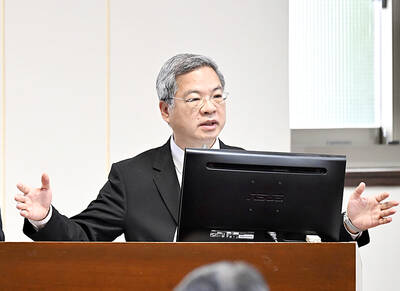
ABOVE LEGAL REQUIREMENT: The Ministry of Economic Affairs is prepared if LNG supply is disrupted, with more than the legal requirement of 11 days of inventory Taiwan has largely secured liquefied natural gas (LNG) supplies through May and arranged about half of June’s supply, Minister of Economic Affairs Kung Ming-hsin (龔明鑫) said yesterday. Since the Middle East conflict began on Feb. 28, Taiwan’s LNG inventories have remained more than 12 days, exceeding the legal requirement of 11 days, indicating no major supply concerns for domestic gas and electricity, Kung said at a meeting of the legislature’s Economics Committee in Taipei. The ministry aims to increase the figure to 14 days by the end of next year, he said. While one or two LNG or crude oil shipments for May

Taiwan’s food delivery market could undergo a major shift if Singapore-based Grab Holdings Ltd completes its planned acquisition of Delivery Hero SE’s Foodpanda business in Taiwan, industry experts said. Grab on Monday last week announced it would acquire Foodpanda’s Taiwan operations for US$600 million. The deal is expected to be finalized in the second half of this year, with Grab aiming to complete user migration to its platform by the first half of next year. A duopoly between Uber Eats and Foodpanda dominates Taiwan’s delivery market, a structure that has remained intact since the Fair Trade Commission (FTC) blocked Uber Technologies Inc’s


 RSS
RSS