


Acer Inc (宏碁), the world’s third-largest PC maker, said yesterday it aimed to ship 20 million handsets in 2012 and become one of the world’s top five smartphone providers.
The PC maker launched its first smartphone in April, 12 months after merging a local handheld device maker — E-Ten Information System Co (倚天) — as part of its diversification into the smartphone market, which offers faster growth and better margins.
“We want to be the world’s top 5 smartphone makers in the next three to four years,” Aymar de Lencquesaing, president of Acer’s Smart Handheld Business Group, told a media briefing in Taipei.
To reach this goal, Acer would have to grab about 6 percent or 7 percent of the market, Lencquesaing said.
By 2012, Acer hopes to sell 20 million smartphones, he said.
Smartphone shipments are expected to grow more than 22 percent next year after increasing by a mild 3.4 percent this year because of the global recession, market researcher IDC said.
In comparison, shipments of conventional phones are expected to rise 7.5 percent next year after contracting 10 percent this year, IDC said.
Acer is in talks with global telecom operator to sell its smartphones at an affordable price of between US$40 and US$50 per unit by bundling them with their services and subsidies, Acer vice president Roger Yuan (袁祖興) said.
The price could lure feature phone users to switch to smartphones, he said.
“Singapore will be the first market for Acer to sell its smartphones through local telecom operators. We see that happening this or next month,” Yuan said.
The company plans to launch 10 models this year, including one running Google’s Android system.
Acer said it hoped to sell half a million phones this year.
Six Taiwanese companies, including contract chipmaker Taiwan Semiconductor Manufacturing Co. (TSMC), made the 2025 Fortune Global 500 list of the world’s largest firms by revenue. In a report published by New York-based Fortune magazine on Tuesday, Hon Hai Precision Industry Co. (better known as Foxconn) ranked highest among Taiwanese firms, placing 28th with revenue of US$213.69 billion. Up 60 spots from last year, TSMC rose 60 places to reach No. 126 with US$90.16 billion in revenue, followed by Quanta Computer Inc. at 348th, Pegatron Corp. at 461st, CPC Corp., Taiwan at 494th and Wistron Corp. at 496th. According to Fortune, the world’s
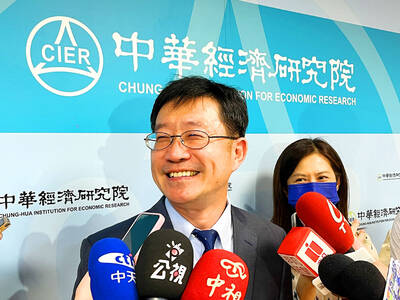
WEAKER ACTIVITY: The sharpest deterioration was seen in the electronics and optical components sector, with the production index falling 13.2 points to 44.5 Taiwan’s manufacturing sector last month contracted for a second consecutive month, with the purchasing managers’ index (PMI) slipping to 48, reflecting ongoing caution over trade uncertainties, the Chung-Hua Institution for Economic Research (CIER, 中華經濟研究院) said yesterday. The decline reflects growing caution among companies amid uncertainty surrounding US tariffs, semiconductor duties and automotive import levies, and it is also likely linked to fading front-loading activity, CIER president Lien Hsien-ming (連賢明) said. “Some clients have started shifting orders to Southeast Asian countries where tariff regimes are already clear,” Lien told a news conference. Firms across the supply chain are also lowering stock levels to mitigate
NEW PRODUCTS: MediaTek plans to roll out new products this quarter, including a flagship mobile phone chip and a GB10 chip that it is codeveloping with Nvidia Corp MediaTek Inc (聯發科) yesterday projected that revenue this quarter would dip by 7 to 13 percent to between NT$130.1 billion and NT$140 billion (US$4.38 billion and US$4.71 billion), compared with NT$150.37 billion last quarter, which it attributed to subdued front-loading demand and unfavorable foreign exchange rates. The Hsinchu-based chip designer said that the forecast factored in the negative effects of an estimated 6 percent appreciation of the New Taiwan dollar against the greenback. “As some demand has been pulled into the first half of the year and resulted in a different quarterly pattern, we expect the third quarter revenue to decline sequentially,”
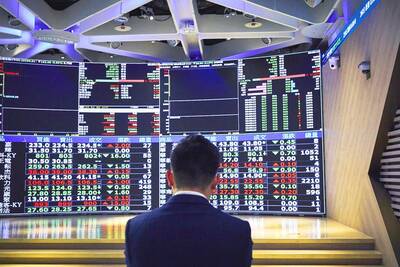
DIVERSIFYING: Taiwanese investors are reassessing their preference for US dollar assets and moving toward Europe amid a global shift away from the greenback Taiwanese investors are reassessing their long-held preference for US-dollar assets, shifting their bets to Europe in the latest move by global investors away from the greenback. Taiwanese funds holding European assets have seen an influx of investments recently, pushing their combined value to NT$13.7 billion (US$461 million) as of the end of last month, the highest since 2019, according to data compiled by Bloomberg. Over the first half of this year, Taiwanese investors have also poured NT$14.1 billion into Europe-focused funds based overseas, bringing total assets up to NT$134.8 billion, according to data from the Securities Investment Trust and Consulting Association (SITCA),


 RSS
RSS