


India’s exports fell the most in at least 14 years as the worst global recession since the Great Depression slashed demand for the nation’s jewelry, clothing and other products.
Merchandise shipments dropped 33.2 percent from a year earlier to US$10.74 billion in April, the government said in New Delhi yesterday. That was the biggest fall since at least April 1995, when Bloomberg data began. Exports slid 33 percent in March.
Indian Trade Minister Anand Sharma said last week the government was likely to announce steps to help exporters in the budget due in the first week of next month. Interest-rate cuts and fiscal stimulus worth 7 percent of GDP helped the nation grow by 5.8 percent in the three months to March 31, making it the world’s fastest-growing major economy after China.
“India’s low reliance on exports and an aggressive double-barreled fiscal and monetary response softened the blow to the economy,” said Rajeev Malik, a regional economist at Macquarie Group Ltd in Singapore.
Indian central bank Governor Duvvuri Subbarao on April 21 cut borrowing costs to a record low to support an economy forecast to grow at the slowest pace since 2003. He lowered the reverse repurchase rate and the repurchase rate by a quarter-point each to 3.25 percent and 4.75 percent respectively.
India’s exports, which account for about 15 percent of the economy, grew 3.4 percent to US$168.7 billion in the year ended March 31, missing a US$200 billion target.
India will endeavor to get the same amount of exports in the current fiscal year that started April 1, Sharma said. The central bank expects the US$1.2 trillion economy to expand 6 percent in the fiscal year that started April 1.
The decline in exports is likely to continue until September, Indian Trade Secretary Gopal Pillai said on April 13. Falling overseas sales may cost India about 10 million jobs, estimates from the Federation of Indian Export Organizations, a lobbying group, show.
The government has announced three stimulus packages of tax cuts and public works spending to spur slowing demand, as declining sales force companies including vehicle maker Tata Motors Ltd to pare output.
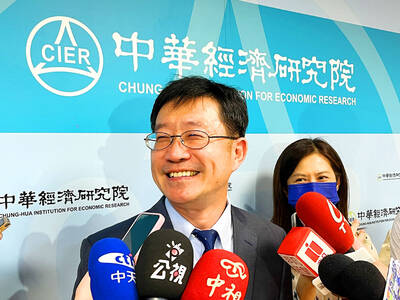
WEAKER ACTIVITY: The sharpest deterioration was seen in the electronics and optical components sector, with the production index falling 13.2 points to 44.5 Taiwan’s manufacturing sector last month contracted for a second consecutive month, with the purchasing managers’ index (PMI) slipping to 48, reflecting ongoing caution over trade uncertainties, the Chung-Hua Institution for Economic Research (CIER, 中華經濟研究院) said yesterday. The decline reflects growing caution among companies amid uncertainty surrounding US tariffs, semiconductor duties and automotive import levies, and it is also likely linked to fading front-loading activity, CIER president Lien Hsien-ming (連賢明) said. “Some clients have started shifting orders to Southeast Asian countries where tariff regimes are already clear,” Lien told a news conference. Firms across the supply chain are also lowering stock levels to mitigate
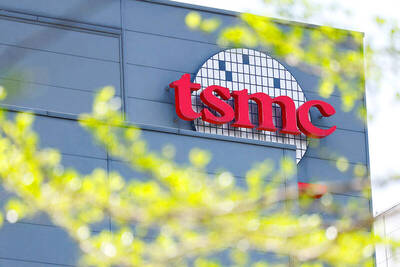
Six Taiwanese companies, including contract chipmaker Taiwan Semiconductor Manufacturing Co (TSMC, 台積電), made the 2025 Fortune Global 500 list of the world’s largest firms by revenue. In a report published by New York-based Fortune magazine on Tuesday, Hon Hai Precision Industry Co (鴻海精密), also known as Foxconn Technology Group (富士康科技集團), ranked highest among Taiwanese firms, placing 28th with revenue of US$213.69 billion. Up 60 spots from last year, TSMC rose to No. 126 with US$90.16 billion in revenue, followed by Quanta Computer Inc (廣達) at 348th, Pegatron Corp (和碩) at 461st, CPC Corp, Taiwan (台灣中油) at 494th and Wistron Corp (緯創) at

NEW PRODUCTS: MediaTek plans to roll out new products this quarter, including a flagship mobile phone chip and a GB10 chip that it is codeveloping with Nvidia Corp MediaTek Inc (聯發科) yesterday projected that revenue this quarter would dip by 7 to 13 percent to between NT$130.1 billion and NT$140 billion (US$4.38 billion and US$4.71 billion), compared with NT$150.37 billion last quarter, which it attributed to subdued front-loading demand and unfavorable foreign exchange rates. The Hsinchu-based chip designer said that the forecast factored in the negative effects of an estimated 6 percent appreciation of the New Taiwan dollar against the greenback. “As some demand has been pulled into the first half of the year and resulted in a different quarterly pattern, we expect the third quarter revenue to decline sequentially,”
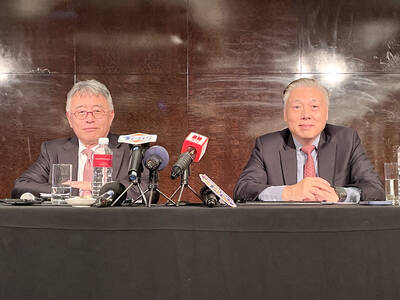
ASE Technology Holding Co (ASE, 日月光投控), the world’s biggest chip assembly and testing service provider, yesterday said it would boost equipment capital expenditure by up to 16 percent for this year to cope with strong customer demand for artificial intelligence (AI) applications. Aside from AI, a growing demand for semiconductors used in the automotive and industrial sectors is to drive ASE’s capacity next year, the Kaohsiung-based company said. “We do see the disparity between AI and other general sectors, and that pretty much aligns the scenario in the first half of this year,” ASE chief operating officer Tien Wu (吳田玉) told an


 RSS
RSS