


Jim Rogers, who in April 2006 correctly predicted oil would reach US$100 a barrel and gold US$1,000 an ounce, told investors not to “give up” on Chinese shares after the country’s stock index fell almost 50 percent this year.
“Start buying when others say ‘never again,’” Rogers, 65, said yesterday at an investor conference in Nanjing.
There is “much money to be made” from investments in Chinese stocks, he said.
China’s CSI 300 Index has slumped 52 percent from its Oct. 16 peak on concern government measures to curb consumer prices will hurt earnings growth. Rogers, who first started buying Chinese stocks in 1999, said he hasn’t sold any of his holdings.
“It’s still a growth story in China,” said Andrew Sullivan, a sales trader at Mainfirst Securities Hong Kong Ltd. “It still has a good manufacturing industry.”
Rogers told Chinese investors that the current correction is “the way the market works,” and they shouldn’t be a “market timer” trying to figure out when is the bottom.
“You should get in at a time like now,” Rogers said. “I’m starting to think about buying again.”
He said he’d be “investing in China for the rest of the century.”
Investors should “learn about commodities,” Rogers said. Oil prices, which reached a record in New York trading on Friday, will go higher, he said.
Crude oil for August delivery rose US$0.57, or 0.4 percent, to a record close of US$140.21 a barrel on Friday on the New York Mercantile Exchange, extending its gain this year to 46 percent.
The price of oil will keep rising, “unless someone finds a major oil field very quickly, in accessible areas,” Rogers told investors.
“The oil trend is still high even though the US is trying to curb oil speculation,” Sullivan said.
Rogers told investors to “stay away from” the US dollar. The US currency is within 2 percent of a record low against the euro reached in April as the US Federal Reserve has cut interest rates to stave off an economic recession.
US stocks “are going to go down,” Rogers said. The Dow Jones Industrial Average fell 0.9 percent on Friday, extending the decline for the 30-stock measure to 10 percent this month, the worst June since 1930.
The US may be in its “worst recession since World War II,” Rogers said, adding that the subprime mortgage crisis in the world’s biggest economy “has many years to go.”

Intel Corp chief executive officer Lip-Bu Tan (陳立武) is expected to meet with Taiwanese suppliers next month in conjunction with the opening of the Computex Taipei trade show, supply chain sources said on Monday. The visit, the first for Tan to Taiwan since assuming his new post last month, would be aimed at enhancing Intel’s ties with suppliers in Taiwan as he attempts to help turn around the struggling US chipmaker, the sources said. Tan is to hold a banquet to celebrate Intel’s 40-year presence in Taiwan before Computex opens on May 20 and invite dozens of Taiwanese suppliers to exchange views

Application-specific integrated circuit designer Faraday Technology Corp (智原) yesterday said that although revenue this quarter would decline 30 percent from last quarter, it retained its full-year forecast of revenue growth of 100 percent. The company attributed the quarterly drop to a slowdown in customers’ production of chips using Faraday’s advanced packaging technology. The company is still confident about its revenue growth this year, given its strong “design-win” — or the projects it won to help customers design their chips, Faraday president Steve Wang (王國雍) told an online earnings conference. “The design-win this year is better than we expected. We believe we will win
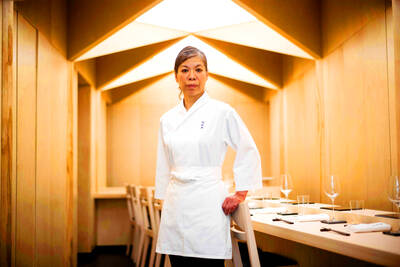
Chizuko Kimura has become the first female sushi chef in the world to win a Michelin star, fulfilling a promise she made to her dying husband to continue his legacy. The 54-year-old Japanese chef regained the Michelin star her late husband, Shunei Kimura, won three years ago for their Sushi Shunei restaurant in Paris. For Shunei Kimura, the star was a dream come true. However, the joy was short-lived. He died from cancer just three months later in June 2022. He was 65. The following year, the restaurant in the heart of Montmartre lost its star rating. Chizuko Kimura insisted that the new star is still down
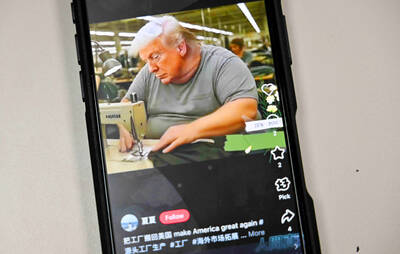
While China’s leaders use their economic and political might to fight US President Donald Trump’s trade war “to the end,” its army of social media soldiers are embarking on a more humorous campaign online. Trump’s tariff blitz has seen Washington and Beijing impose eye-watering duties on imports from the other, fanning a standoff between the economic superpowers that has sparked global recession fears and sent markets into a tailspin. Trump says his policy is a response to years of being “ripped off” by other countries and aims to bring manufacturing to the US, forcing companies to employ US workers. However, China’s online warriors


 RSS
RSS