


US telecom group Motorola Inc yesterday said that it would split into two independent, publicly traded companies.
"Our decision to separate our Mobile Devices and Broadband & Mobility Solutions businesses follows a review process undertaken by our management team and board of directors, together with independent advisors," Motorola chief executive and president Greg Brown said in a statement.
The separation is expected to take the form of a tax-free distribution to Motorola's shareholders, who would then own shares of two independent and publicly traded companies, Motorola said.
The company had announced on Jan. 31 that it was studying a possible breakup in an effort "to recapture global market leadership" in the mobile phone market and enhance shareholder value.
Motorola, once the world's second-largest mobile phone maker after Nokia Corp of Finland, has since lost its place to South Korean rival Samsung Electronics Corp amid fierce global competition and has watched earnings slide.
The company lost US$49 million last year, swinging to a deficit after a profit of US$3.6 billion in 2006 as its problems worsened in the tough market for mobile devices.
Motorola said it expected the split to take place next year after meeting conditions including the implementation of inter-company agreements, filing of required documents with the Securities and Exchange Commission and receipt of a legal opinion or an Internal Revenue Service ruling on the tax-free nature of any transaction.
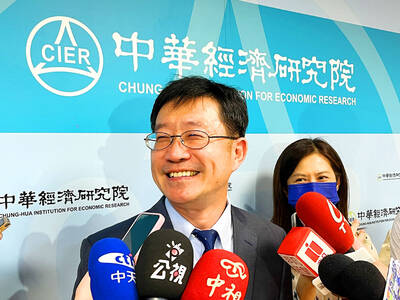
WEAKER ACTIVITY: The sharpest deterioration was seen in the electronics and optical components sector, with the production index falling 13.2 points to 44.5 Taiwan’s manufacturing sector last month contracted for a second consecutive month, with the purchasing managers’ index (PMI) slipping to 48, reflecting ongoing caution over trade uncertainties, the Chung-Hua Institution for Economic Research (CIER, 中華經濟研究院) said yesterday. The decline reflects growing caution among companies amid uncertainty surrounding US tariffs, semiconductor duties and automotive import levies, and it is also likely linked to fading front-loading activity, CIER president Lien Hsien-ming (連賢明) said. “Some clients have started shifting orders to Southeast Asian countries where tariff regimes are already clear,” Lien told a news conference. Firms across the supply chain are also lowering stock levels to mitigate
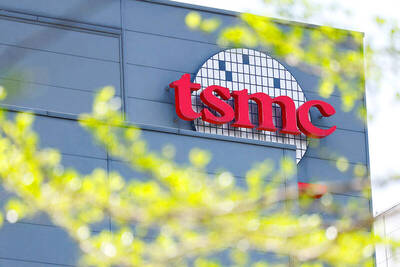
Six Taiwanese companies, including contract chipmaker Taiwan Semiconductor Manufacturing Co (TSMC, 台積電), made the 2025 Fortune Global 500 list of the world’s largest firms by revenue. In a report published by New York-based Fortune magazine on Tuesday, Hon Hai Precision Industry Co (鴻海精密), also known as Foxconn Technology Group (富士康科技集團), ranked highest among Taiwanese firms, placing 28th with revenue of US$213.69 billion. Up 60 spots from last year, TSMC rose to No. 126 with US$90.16 billion in revenue, followed by Quanta Computer Inc (廣達) at 348th, Pegatron Corp (和碩) at 461st, CPC Corp, Taiwan (台灣中油) at 494th and Wistron Corp (緯創) at
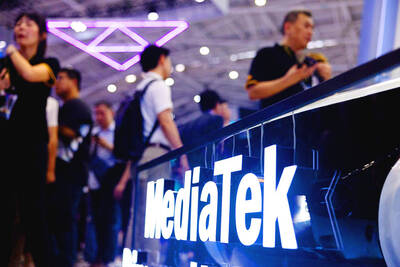
NEW PRODUCTS: MediaTek plans to roll out new products this quarter, including a flagship mobile phone chip and a GB10 chip that it is codeveloping with Nvidia Corp MediaTek Inc (聯發科) yesterday projected that revenue this quarter would dip by 7 to 13 percent to between NT$130.1 billion and NT$140 billion (US$4.38 billion and US$4.71 billion), compared with NT$150.37 billion last quarter, which it attributed to subdued front-loading demand and unfavorable foreign exchange rates. The Hsinchu-based chip designer said that the forecast factored in the negative effects of an estimated 6 percent appreciation of the New Taiwan dollar against the greenback. “As some demand has been pulled into the first half of the year and resulted in a different quarterly pattern, we expect the third quarter revenue to decline sequentially,”
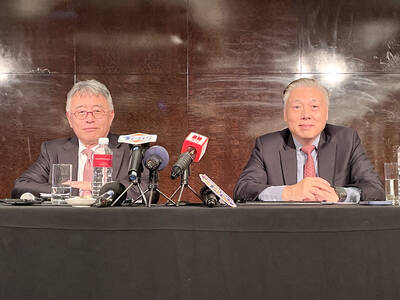
ASE Technology Holding Co (ASE, 日月光投控), the world’s biggest chip assembly and testing service provider, yesterday said it would boost equipment capital expenditure by up to 16 percent for this year to cope with strong customer demand for artificial intelligence (AI) applications. Aside from AI, a growing demand for semiconductors used in the automotive and industrial sectors is to drive ASE’s capacity next year, the Kaohsiung-based company said. “We do see the disparity between AI and other general sectors, and that pretty much aligns the scenario in the first half of this year,” ASE chief operating officer Tien Wu (吳田玉) told an


 RSS
RSS