


Mori Building Co, Japan's biggest private developer, signed its first tenants for China's tallest skyscraper and is asking rents 40 percent higher than Shanghai's priciest, underlining demand for offices in the nation's financial center.
Subsidiaries of Mizuho Financial Group Inc and Sumitomo Mitsui Financial Group Inc will lease space at the 492m Shanghai World Financial Center, Tokyo-based Mori said today in a statement. The building will be the world's second-tallest office block when Mori completes the tower next year, after Taipei 101 in Taiwan.
"This is a huge building," said Remy Chan (陳立民), regional director of Asia Pacific at Jones Lang LaSalle Inc, the world's second-largest commercial real estate broker. "It will be a market maker. Their rental policy will impact the market."
Financial companies are expanding in Shanghai after stocks tripled this year and the government relaxed rules on foreign banks, driving down the city's office vacancy rate. Mori started marketing the building before an estimated 3 million square meters of space comes on to the market by the end of 2010, doubling Shanghai's office supply.
Mori's skyscraper will add 226,900m2, about half as much new space as Shanghai usually needs in an entire year, Chan said.
The new center will push the vacancy rate up to 5 percent for the city's Pudong region at the end of next year from 1.9 percent in June, and may stall rent increases in the area, he said.
Mori is asking as much as 640 yuan per square meter per month on a net area basis for the building, equivalent to US$1.99 per square meter per day on a gross area basis, Chan said.
The average office vacancy rate in Shanghai fell to 2.6 percent as of June from 4.9 percent in March, according to Jones Lang LaSalle. Rents have gained 14 percent to 8.2 yuan a square meter as of June 30 compared with a year earlier.
Construction of the tower was halted in 1997 because of the Asian financial crisis. In 2005 political tensions over Japan's occupation of China in World War II led to the removal of a circular hole from designs of the building's apex on concern it resembled the Japanese flag.
The glass and reinforced concrete skyscraper, which includes a shopping mall and a 180-room Park Hyatt hotel, will overshadow the 88-story Jin Mao Tower that stands on an adjoining plot. Its observatory will be the world's highest at 472m, Mori said.
The building has 91 elevators and Mori used 2,271 pilings in the foundation, which would stretch 88km if laid end to end.
HSBC Tower, Citigroup Tower and Azia Center now ask Shanghai's highest rents, said Kenny Ho (何恩凱), the head of research for Shanghai at Jones Lang LaSalle.
"The market is very, very tight," Ho said.
Mori is targeting international financial companies as tenants for the building in a city with China's highest foreign direct investment -- US$7.11 billion last year. Shanghai's office supply is expected to double by 2011 to 6.1 million square meters, according to a report by Jones Lang LaSalle.
"For Mori to come out as one of the first, there is definitely an advantage in terms of rent negotiations," Ho said. "Companies looking for a space immediately will have to talk to Mori."
Mori expects a 40 percent occupancy rate when the building is completed, 10 percentage points more than initially anticipated.
"A 40 percent occupancy rate for that building means there is still some 120,000m2 to be filled, the size of two other regular office buildings," Ho said. "So there is still a lot of space to be taken up."
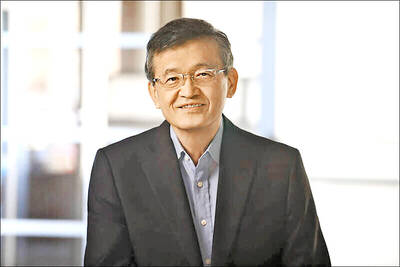
Intel Corp chief executive officer Lip-Bu Tan (陳立武) is expected to meet with Taiwanese suppliers next month in conjunction with the opening of the Computex Taipei trade show, supply chain sources said on Monday. The visit, the first for Tan to Taiwan since assuming his new post last month, would be aimed at enhancing Intel’s ties with suppliers in Taiwan as he attempts to help turn around the struggling US chipmaker, the sources said. Tan is to hold a banquet to celebrate Intel’s 40-year presence in Taiwan before Computex opens on May 20 and invite dozens of Taiwanese suppliers to exchange views

Application-specific integrated circuit designer Faraday Technology Corp (智原) yesterday said that although revenue this quarter would decline 30 percent from last quarter, it retained its full-year forecast of revenue growth of 100 percent. The company attributed the quarterly drop to a slowdown in customers’ production of chips using Faraday’s advanced packaging technology. The company is still confident about its revenue growth this year, given its strong “design-win” — or the projects it won to help customers design their chips, Faraday president Steve Wang (王國雍) told an online earnings conference. “The design-win this year is better than we expected. We believe we will win
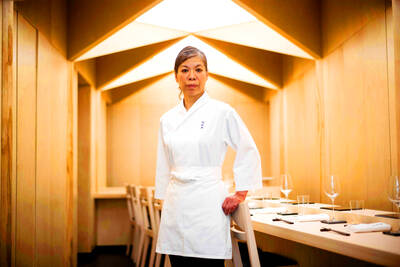
Chizuko Kimura has become the first female sushi chef in the world to win a Michelin star, fulfilling a promise she made to her dying husband to continue his legacy. The 54-year-old Japanese chef regained the Michelin star her late husband, Shunei Kimura, won three years ago for their Sushi Shunei restaurant in Paris. For Shunei Kimura, the star was a dream come true. However, the joy was short-lived. He died from cancer just three months later in June 2022. He was 65. The following year, the restaurant in the heart of Montmartre lost its star rating. Chizuko Kimura insisted that the new star is still down
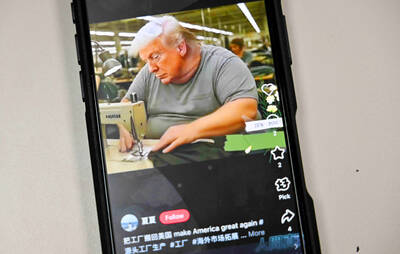
While China’s leaders use their economic and political might to fight US President Donald Trump’s trade war “to the end,” its army of social media soldiers are embarking on a more humorous campaign online. Trump’s tariff blitz has seen Washington and Beijing impose eye-watering duties on imports from the other, fanning a standoff between the economic superpowers that has sparked global recession fears and sent markets into a tailspin. Trump says his policy is a response to years of being “ripped off” by other countries and aims to bring manufacturing to the US, forcing companies to employ US workers. However, China’s online warriors


 RSS
RSS