


Profits at Taishin Financial Holding Co (
Taishin Financial incurred an estimated net loss of more than NT$3 billion (US$93.48 million) last year, or a loss of NT$0.60 per share, in a dramatic turnaround from a projected net profit of NT$11.08 billion, or NT$2.22 per share, as a result of Taishin International Bank's (
The extra provision was made to cover potential defaulted loans expected in the credit, cash-card and unsecured loan business, Taishin Financial's president Julius Chen (
Taishin International was the nation's second-biggest credit-card issuer with 4.88 million cards in circulation at the end of last year.
"We expect the company's profitability to return to normal levels this year after the precautionary measure," Chen said.
Taishin Financial posted unaudited net earnings of NT$1 billion last month. However, Chen declined to disclose its financial forecasts for this year.
The financial group made the announcement after its shares closed limit-up at NT$19.55 on the Taiwan Stock Exchange yesterday, as Newbridge Asia IV LP announced plans just before the Lunar New Year holiday to invest NT$27 billion in the company through a private placement with a mixture of common shares, preferred shares and convertible bonds.
The deal is expected to be finalized by the middle of next month, Taishin Financial's spokeswoman Carol Lai (賴昭吟) said.
Newbridge Asia, which is based in San Francisco, will obtain a maximum of two seats on Taishin Financial's nine-seat board and become the single largest shareholder with a 23.12 percent stake in the financial group when the preferred shares mature into common shares in three years, Lai said.
Newbridge Asia's investment was part of Taishin Financial's fundraising plan worth NT$35 billion to sustain the financial group's investment of NT$36 billion in Chang Hwa Bank (彰化銀行).
The financial holding firm declined to confirm any ongoing talks with other foreign investors for the moment to raise the remaining NT$8 billion, citing a confidentiality agreement.
Nomura Securities Co of Japan planned to invest NT$4 billion in Taiwan Financial, the Chinese-language Economic Daily reported earlier this week, without citing sources.
Meanwhile, Credit Suisse First Boston Ltd announced that it has upgraded Taishin Financial shares to "outperform" from "underperform," with the target price raised to NT$24 from NT$17, in the wake of Newbridge Asia's investment.

CAUTIOUS RECOVERY: While the manufacturing sector returned to growth amid the US-China trade truce, firms remain wary as uncertainty clouds the outlook, the CIER said The local manufacturing sector returned to expansion last month, as the official purchasing managers’ index (PMI) rose 2.1 points to 51.0, driven by a temporary easing in US-China trade tensions, the Chung-Hua Institution for Economic Research (CIER, 中華經濟研究院) said yesterday. The PMI gauges the health of the manufacturing industry, with readings above 50 indicating expansion and those below 50 signaling contraction. “Firms are not as pessimistic as they were in April, but they remain far from optimistic,” CIER president Lien Hsien-ming (連賢明) said at a news conference. The full impact of US tariff decisions is unlikely to become clear until later this month

With an approval rating of just two percent, Peruvian President Dina Boluarte might be the world’s most unpopular leader, according to pollsters. Protests greeted her rise to power 29 months ago, and have marked her entire term — joined by assorted scandals, investigations, controversies and a surge in gang violence. The 63-year-old is the target of a dozen probes, including for her alleged failure to declare gifts of luxury jewels and watches, a scandal inevitably dubbed “Rolexgate.” She is also under the microscope for a two-week undeclared absence for nose surgery — which she insists was medical, not cosmetic — and is
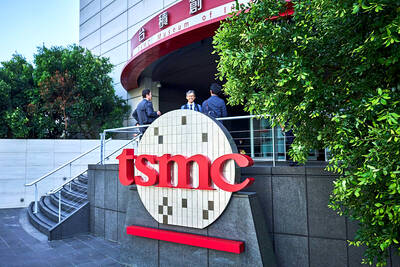
GROWING CONCERN: Some senior Trump administration officials opposed the UAE expansion over fears that another TSMC project could jeopardize its US investment Taiwan Semiconductor Manufacturing Co (TSMC, 台積電) is evaluating building an advanced production facility in the United Arab Emirates (UAE) and has discussed the possibility with officials in US President Donald Trump’s administration, people familiar with the matter said, in a potentially major bet on the Middle East that would only come to fruition with Washington’s approval. The company has had multiple meetings in the past few months with US Special Envoy to the Middle East Steve Witkoff and officials from MGX, an influential investment vehicle overseen by the UAE president’s brother, the people said. The conversations are a continuation of talks that

Alchip Technologies Ltd (世芯), an application-specific integrated circuit (ASIC) designer specializing in artificial-intelligence (AI) chips, yesterday said that small-volume production of 3-nanometer (nm) chips for a key customer is on track to start by the end of this year, dismissing speculation about delays in producing advanced chips. As Alchip is transitioning from 7-nanometer and 5-nanometer process technology to 3 nanometers, investors and shareholders have been closely monitoring whether the company is navigating through such transition smoothly. “We are proceeding well in [building] this generation [of chips]. It appears to me that no revision will be required. We have achieved success in designing


 RSS
RSS