


■ Employment
EPZs employ 70,000 people
The Ministry of Economic Affairs' export processing zones (EPZs) employ more than 70,000 people, around 84 percent of whom work in the electronics industry, showing that EPZs have been transformed into high-tech industrial parks, Export Processing Zone Administration officials said on Friday. Among the EPZs, the Nantze EPZ in Kaohsiung, with a staff of 37,900 people, employs the most workers, followed by the Kaohsiung EPZ with around 16,700, the Taichung EPZ with 11,400, and Kaohsiung's Chengkung EPZ and Chungkang EPZ with 2,500 and 1,700, respectively. Officials said that the workers are mostly engaged in the electrical engineering industry, followed by precision optical, medical and watch manufacturing, metal product manufacturing, machinery equipment manufacturing, chemical and biochemical product manufacturing and textile and garment manufacturing.
■ Internet privacy
Date set for Google hearing
A US federal judge has set a Feb. 27 hearing to examine the Google Inc decision to withhold millions of online search records from the US Department of Justice. The hearing, to be held in US District Court in San Jose, California, will be the first in the high-profile case. The Justice Department is seeking to force Google to comply with a subpoena seeking 1 million Web site addresses reached from Google and one week of search queries. It hopes to use the information to defend its Child Online Protection Act, designed to keep children from sexually explicit material on the Internet. The act has been challenged by the American Civil Liberties Union as a violation of the US Constitution's First Amendment right of free speech.
■ Telecoms
Malaysia sells Malawi stake
State-controlled Telekom Malaysia Bhd said it is selling its 60 percent stake in Telekom Networks Malawi to Econet Wireless Global, a global telecommunications company, for US$24.5 million. Telekom Network Malawi was established in 1996 and operates a GSM service in the African nation. The remaining 40 percent of its shares is owned by government-backed Malawi Telecommunications Ltd. Malaysia's largest telecommunications operator's exit from Malawi is part of its previously announced strategy to focus on regions closer to the Southeast Asian country. It divested its investment in South Africa in 2004 and is in the process of pulling out of Guinea. Its overseas investments are now in Indonesia, Thailand, Singapore, Cambodia, Sri Lanka, Bangladesh and Pakistan.
■ Macroeconomics
US growth at three-year low
The US economy slowed to its slowest pace in three years in the fourth quarter, the US government reported on Friday, as consumers and the federal government cut back on spending significantly. GDP increased 1.1 percent in the quarter, to US$11.23 trillion, and the economy posted a 3.5 percent growth rate for the full year, the US Commerce Department reported. This is the first of three estimates the government releases and the revisions it makes can be significant. Economists had expected growth to slow to 2.8 percent in the fourth quarter because sales of automobiles and other goods were known to have fallen significantly from earlier in the year. The economy grew at a 4.1 percent pace in the third quarter, 3.3 percent in the second and 3.8 percent in the first three months of last year.

Real estate agent and property developer JSL Construction & Development Co (愛山林) led the average compensation rankings among companies listed on the Taiwan Stock Exchange (TWSE) last year, while contract chipmaker Taiwan Semiconductor Manufacturing Co (TSMC, 台積電) finished 14th. JSL Construction paid its employees total average compensation of NT$4.78 million (US$159,701), down 13.5 percent from a year earlier, but still ahead of the most profitable listed tech giants, including TSMC, TWSE data showed. Last year, the average compensation (which includes salary, overtime, bonuses and allowances) paid by TSMC rose 21.6 percent to reach about NT$3.33 million, lifting its ranking by 10 notches

Popular vape brands such as Geek Bar might get more expensive in the US — if you can find them at all. Shipments of vapes from China to the US ground to a near halt last month from a year ago, official data showed, hit by US President Donald Trump’s tariffs and a crackdown on unauthorized e-cigarettes in the world’s biggest market for smoking alternatives. That includes Geek Bar, a brand of flavored vapes that is not authorized to sell in the US, but which had been widely available due to porous import controls. One retailer, who asked not to be named, because
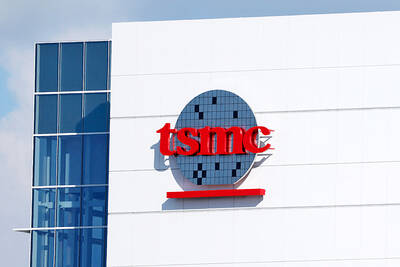
SEASONAL WEAKNESS: The combined revenue of the top 10 foundries fell 5.4%, but rush orders and China’s subsidies partially offset slowing demand Taiwan Semiconductor Manufacturing Co (TSMC, 台積電) further solidified its dominance in the global wafer foundry business in the first quarter of this year, remaining far ahead of its closest rival, Samsung Electronics Co, TrendForce Corp (集邦科技) said yesterday. TSMC posted US$25.52 billion in sales in the January-to-March period, down 5 percent from the previous quarter, but its market share rose from 67.1 percent the previous quarter to 67.6 percent, TrendForce said in a report. While smartphone-related wafer shipments declined in the first quarter due to seasonal factors, solid demand for artificial intelligence (AI) and high-performance computing (HPC) devices and urgent TV-related orders
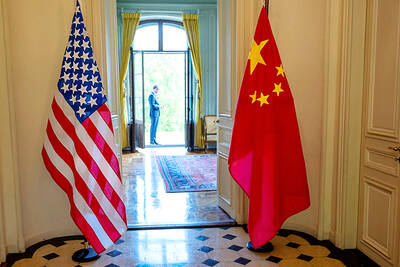
MINERAL DIPLOMACY: The Chinese commerce ministry said it approved applications for the export of rare earths in a move that could help ease US-China trade tensions Chinese Vice Premier He Lifeng (何立峰) is today to meet a US delegation for talks in the UK, Beijing announced on Saturday amid a fragile truce in the trade dispute between the two powers. He is to visit the UK from yesterday to Friday at the invitation of the British government, the Chinese Ministry of Foreign Affairs said in a statement. He and US representatives are to cochair the first meeting of the US-China economic and trade consultation mechanism, it said. US President Donald Trump on Friday announced that a new round of trade talks with China would start in London beginning today,


 RSS
RSS