


The US dollar had its biggest weekly rise in 11 against both the euro and the yen on speculation accelerating US inflation will force the Federal Reserve to raise its interest-rate target more than anticipated.
Demand for the US currency increased this week as the Fed boosted borrowing costs by a quarter percentage point for a seventh time since June. The yield on 10-year US Treasury notes rose to the highest since June, adding to the attractiveness of the dollar.
"The dollar is gathering momentum," said Takako Masai, head of foreign exchange and derivative sales in Tokyo at Calyon, the investment banking unit of Credit Agricole SA. "The theme of this market is a widening US rate advantage. People are pushing up expectations on the Fed's action this year."
The US dollar was at ?106.4 at 5pm in New York, from ?106.31 late on Thursday, according to electronic currency dealing system EBS. It was also at US$1.2960 per euro from US$1.2940. The dollar gained 2.8 percent against the euro and 1.6 percent versus the yen on the week, and may gain to ?108 and US$1.25 per euro in the next three weeks, Masai said.
Financial centers including Hong Kong, Singapore, London, Frankfurt and New York were on holiday on Friday.
Traders are increasing bets on the extent to which US rates will rise. Eurodollar futures contracts show traders and investors expect the Fed to raise its benchmark rate to at least 4 percent by the end of this year, from 2.75 percent, after the central bank on March 23 noted "pressures on inflation have picked up."
The December Eurodollar futures contract yields 4.315 percent, up from 3.905 percent a month ago. It settles at a three-month lending rate that has averaged about 0.21 percentage point higher than the Fed's target rate in the past 10 years.
Gains in the dollar may be limited by speculation the rally will prompt some investors to bet the advance is excessive.
A technical indicator suggested the dollar is poised to fall. Its 10-day relative strength index against the euro fell to 26.26, and against the yen was at 73.5. The index is a gauge of momentum in a given period, and a level above 70 or below 30 suggests a change in direction.
"The long weekend in Europe and the US will keep the market quiet, making it more likely the dollar will take a break from its rally," said Tetsu Aikawa, a currency sales manager in Tokyo at UFJ Bank Ltd. "The run-up has been fast enough to trigger concerns of a pause."
Citigroup Inc, the biggest financial services company, advised selling the dollar against the euro as it contested the view that the Fed is more likely to raise interest rates in larger increments this year.
"We disagree with this interpretation of the Fed's statement and disagree with the view that a 50 basis point tightening is more likely," Steven Saywell, chief currency strategist in London at Citigroup, wrote on Thursday in a report. The bank expects the dollar to drop to US$1.3670 per euro.
The Fed's benchmark rate exceeds the European Central Bank's key rate by three quarters of a point, the biggest gap since March 2001. The next US policy-setting meeting is May 3.
The US next week is forecast to say the economy added more than 200,000 non-farm jobs for a second month in March, according to a Bloomberg survey of economists.
US consumer prices rose 0.4 percent last month, the most in four months and more than the 0.3 percent median forecast in a Bloomberg survey of economists, the government said on March 23. A US Labor Department report the day before showed wholesale prices rose for a second month last month.
"The dollar's upward trend is going to continue," said Toru Umemoto, market analyst in Tokyo at Keio University's Global Security Research Center. "Yields are rising, and the US economy is strengthening. All of this is dollar supportive."
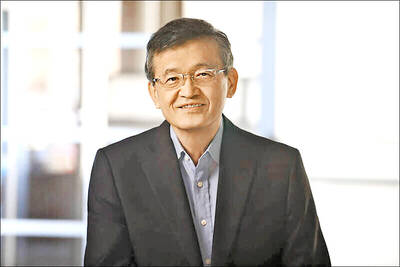
Intel Corp chief executive officer Lip-Bu Tan (陳立武) is expected to meet with Taiwanese suppliers next month in conjunction with the opening of the Computex Taipei trade show, supply chain sources said on Monday. The visit, the first for Tan to Taiwan since assuming his new post last month, would be aimed at enhancing Intel’s ties with suppliers in Taiwan as he attempts to help turn around the struggling US chipmaker, the sources said. Tan is to hold a banquet to celebrate Intel’s 40-year presence in Taiwan before Computex opens on May 20 and invite dozens of Taiwanese suppliers to exchange views

Application-specific integrated circuit designer Faraday Technology Corp (智原) yesterday said that although revenue this quarter would decline 30 percent from last quarter, it retained its full-year forecast of revenue growth of 100 percent. The company attributed the quarterly drop to a slowdown in customers’ production of chips using Faraday’s advanced packaging technology. The company is still confident about its revenue growth this year, given its strong “design-win” — or the projects it won to help customers design their chips, Faraday president Steve Wang (王國雍) told an online earnings conference. “The design-win this year is better than we expected. We believe we will win

Chizuko Kimura has become the first female sushi chef in the world to win a Michelin star, fulfilling a promise she made to her dying husband to continue his legacy. The 54-year-old Japanese chef regained the Michelin star her late husband, Shunei Kimura, won three years ago for their Sushi Shunei restaurant in Paris. For Shunei Kimura, the star was a dream come true. However, the joy was short-lived. He died from cancer just three months later in June 2022. He was 65. The following year, the restaurant in the heart of Montmartre lost its star rating. Chizuko Kimura insisted that the new star is still down
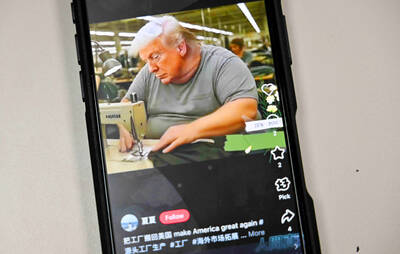
While China’s leaders use their economic and political might to fight US President Donald Trump’s trade war “to the end,” its army of social media soldiers are embarking on a more humorous campaign online. Trump’s tariff blitz has seen Washington and Beijing impose eye-watering duties on imports from the other, fanning a standoff between the economic superpowers that has sparked global recession fears and sent markets into a tailspin. Trump says his policy is a response to years of being “ripped off” by other countries and aims to bring manufacturing to the US, forcing companies to employ US workers. However, China’s online warriors


 RSS
RSS