


South Korea's LG Electronics Co on Thursday launched a new mobile phone incorporating a buttonless touch-screen that resembles the much-hyped Apple Inc iPhone -- and will be in stores next month.
LG's Prada Phone is being produced in partnership with the Italian fashion brand. It is set to go on sale in late February for 600 euros (US$780) at mobile phone dealers and Prada stores in Britain, France, Germany and Italy. It comes to Asia in March.
The no-button interface with the entire phone face covered by a touch-sensitive screen resembles the Apple iPhone, announced by the US company earlier this month to much fanfare as an innovation that could shake up the industry.
Apple's iPhone is set for US release in June, and will cost US$599 for the high-end model with 8 gigabytes of internal memory -- the same as the LG model.
Other markets will see the iPhone later this year and next year.
The LG phone has a wide-screen display and can play most popular digital music and video formats, and has a 2-megapixel camera like the iPhone. Its memory can be expanded with cards.
The iPhone allows Internet use also through regular wireless Wi-Fi networks, and has a full-featured Web browser.
The LG phone is 12mm thick, just 0.4mm more than the iPhone.
Meanwhile, Apple will have plenty of room to eventually reduce the retail price of its upcoming iPhone, according to preliminary gross margin estimates by a market research company.
The iPhone will yield gross margins of more than 50 percent at the current set of retail prices, iSuppli Corp said in an analysis of presumed component and manufacturing costs.
The 4-gigabyte version of the iPhone, with a retail price of US$499,will cost Apple US$245.83 to make, iSuppli estimated.
The 8-gigabyte version, which is priced at US$599, will cost Apple US$280.83.
"With a 50 percent gross margin, Apple is setting itself up for aggressive price declines going forward," said Jagdish Rebello, a director and principal analyst with research firm iSuppli.
Since Apple will face stiff competition in the cell phone market, the company may need to cut into its margins to reduce pricing in the future, he said.
An Apple spokeswoman declined to comment.
The Apple iPhone will be available starting in June exclusively through AT&T's Cingular Wireless. Apple has said it hopes to sell 10 million units next year, or about 1 percent of the market.
That goal "seems attainable," Rebello said.

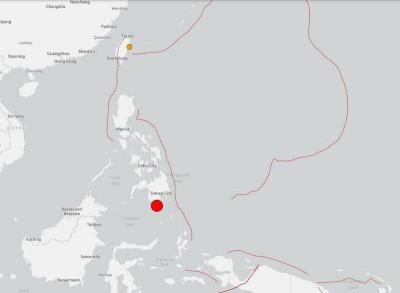
A magnitude 7.8 earthquake struck off the southern coast of Mindanao in the Philippines at 7:38am today, prompting the US Tsunami Warning System to issue an alert for neighboring countries, including Taiwan. The system issued a purple alert indicating a "tsunami threat." The potential threat zone includes Taiwan, the Philippines, Papua New Guinea, Yap and Palau. Philippine authorities were assessing the damage from the quake, with the office of civil defense seeking to verifying initial reports that 15 people had been killed and 129 injured in the region, mostly from falling debris. Arlene Hollero, disaster chief of Maasim town in the Philippines' Sarangani Province,

RESILIENCE: Taiwan plays a key role in semiconductors, energy, information infrastructure and advanced manufacturing, AIT Director Raymond Greene said Taiwan’s continued investment in deterrence and resilience remains vital, especially in uncrewed systems and other emerging technologies, American Institute in Taiwan (AIT) Director Raymond Greene said yesterday. Greene made the remarks at the annual National Strategic Summit on Supply Chain Resilience held by the Research Institute for Democracy, Society and Emerging Technology (DSET), a government-backed think tank. As Taiwan last year became the US’ fourth-largest trading partner and supply chain security is becoming more important, cooperation in emerging technologies continues to deepen between the two countries, he said. The US is committed to accelerating innovation, building key infrastructure, strengthening cooperation

The National Chungshan Institute of Science and Technology yesterday showcased its locally developed variants of the Vision 60 robotic patrol dog, which it plans to deploy on the nation’s outlying territories in the South China Sea. The variants were produced under the Joint Lab project — created by the institute and domestic companies — and assembled with domestically produced motors, lenses and artificial intelligence (AI) systems alongside licensed tech from the US, Missile and Rocket Systems Research Division deputy director Jen Kuo-kang (任國光) told the media event at a military base in Taipei’s Dazhi (大直) area. Taiwan has built up its strengths

RIGHT DIRECTION: Taiwan’s efforts to prevent forced labor include a proposal to ‘fully prohibit’ employers from withholding workers’ documents, an official said Taiwan is to establish a mechanism to restrict imports of goods linked to forced labor, the Executive Yuan said yesterday, after the US proposed imposing additional tariffs on Taiwanese goods over labor concerns. “The Ministry of Labor and the Ministry of Economic Affairs are to establish an interministerial review procedure,” Executive Yuan spokesperson Michelle Lee (李慧芝) said at a news briefing in Taipei. “The government is to use the Foreign Trade Act [貿易法] as the legal basis to restrict imports of goods produced with forced labor” and bring its supply chain governance more in line with international standards on human rights, resilience


 RSS
RSS