


Top Norwegian officials arrived in Japan yesterday to promote their nation's seafood, but their long-term hopes to sell whale meat could be scuppered by worries that the delicacy is contaminated by toxic chemicals.
Tokyo and Norway have been discussing whale imports for over a year, but plans to resume the controversial trade were dealt a blow earlier this month when Norwegian scientists ruled that whale blubber it had hoped to sell to Japan contained dangerously high levels of banned PCB chemicals.
PCBs, or polychlorinated biphenyls, were formerly used in everything from paint to plastics. They build up in fatty tissues and have been linked to birth defects.
The blubber contamination could cast a pall over talks on other whale products, such as meat, that are likely to arise during the visit of Norwegian Prime Minister Kjell Magne Bondevik, who arrived yesterday, and Fisheries Minister Svein Ludvigsen, who came on Sunday.
Oslo resumed the commercial hunting of minke whales in 1993, breaking with an international moratorium. Sales of the creamy blubber -- some 500 tonnes of which are stored in freezer ware-houses in Norway -- were long seen as a potential gold mine if exported to Japan, where it is a delicacy.
Japanese officials, though, say food safety is paramount.
"It's all about safety," said a Fisheries Ministry official. "The fact that they can't sell the blubber raises questions about the rest of the meat."
"Whale trade is quite a big issue internationally and so we must proceed prudently," he said.
Whale was an important source of protein in an impoverished Japan after World War II, but has become a scarce gourmet food in the last few decades as prices rose and supplies fell.
Media reports -- denied by officials -- have said whale imports were planned to bring down the price and spur consumption.
Consumer groups strongly oppose any imports.
"Not only the blubber, but also the red meat is contaminated," said Yoko Tomiyama, head of the Japan Consumers Union, citing a recent Norwegian warning that pregnant women should not eat whale because of high levels of toxic mercury.
"This should not be imported to Japan, and we have made our views clear to the government," she said.
Japan abandoned commercial whaling in 1986 but carries out what it calls scientific research whaling, with most of the meat from that research ending up on restaurant tables and grocery store shelves.
Tokyo agrees with protecting endangered species but argues that others, such as minkes, are numerous and not endangered.
It has made numerous attempts to reinstate commercial whaling and is set to do the same at the meeting of the International Whaling Commission from June 16.
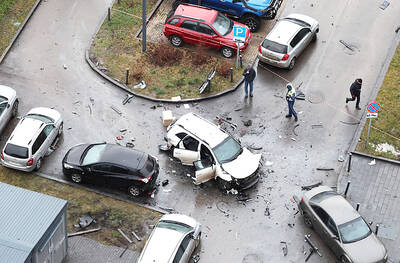
A car bomb killed a senior Russian general in southern Moscow yesterday morning, the latest high-profile army figure to be blown up in a blast that came just hours after Russian and Ukrainian delegates held separate talks in Miami on a plan to end the war. Kyiv has not commented on the incident, but Russian investigators said they were probing whether the blast was “linked” to “Ukrainian special forces.” The attack was similar to other assassinations of generals and pro-war figures that have either been claimed, or are widely believed to have been orchestrated, by Ukraine. Russian Lieutenant General Fanil Sarvarov, 56, head

SAFETY FIRST: Double the number of police were deployed at the Taipei Marathon, while other cities released plans to bolster public event safety Authorities across Taiwan have stepped up security measures ahead of Christmas and New Year events, following a knife and smoke bomb attack in Taipei on Friday that left four people dead and 11 injured. In a bid to prevent potential copycat incidents, police deployments have been expanded for large gatherings, transport hubs, and other crowded public spaces, according to official statements from police and city authorities. Taipei Mayor Chiang Wan-an (蔣萬安) said the city has “comprehensively raised security readiness” in crowded areas, increased police deployments with armed officers, and intensified patrols during weekends and nighttime hours. For large-scale events, security checkpoints and explosives
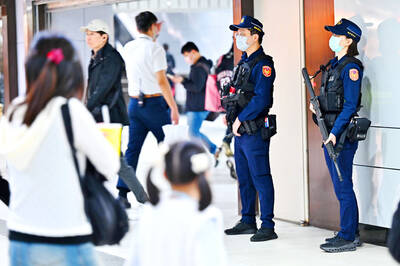
PUBLIC SAFETY: The premier said that security would be tightened in transport hubs, while President Lai commended the public for their bravery The government is to deploy more police, including rapid response units, in crowded public areas to ensure a swift response to any threats, President William Lai (賴清德) said yesterday after a knife attack killed three people and injured 11 in Taipei the previous day. Lai made the remarks following a briefing by the National Police Agency on the progress of the investigation, saying that the attack underscored the importance of cooperation in public security between the central and local governments. The attack unfolded in the early evening on Friday around Taipei Main Station’s M7 exit and later near the Taipei MRT’s Zhongshan
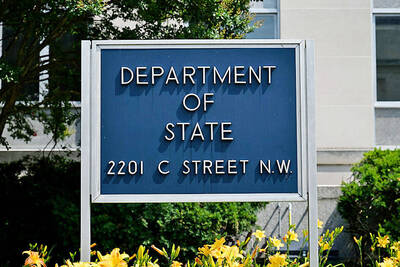
REBUFFED: In response to Chinese criticism over recent arms sales, Washington urged Beijing to engage in meaningful dialogue instead of threats and intimidation Washington’s long-term commitment to Taiwan would not change, the US Department of State said yesterday, urging Beijing to stop pressuring Taiwan and engage in meaningful bilateral dialogues. The remarks came in response to a backlash from Beijing about Washington’s latest approval of arms sales to Taiwan. The US Defense Security Cooperation Agency said in a statement on Wednesday that the Taipei Economic and Cultural Representative Office in the US has asked to purchase an arms package, including Tactical Mission Network Software; AH-1W helicopter spare and repair parts; M109A7 self-propelled howitzers; HIMARS long range precision strike systems; tube-launched, optically tracked, wire-guided missiles; Javelin


 RSS
RSS