


A court on Wednesday charged seven men for impersonating Kenyan President Uhuru Kenyatta and swindling a prominent businessman out of 10 million shillings (US$100,000) in yet another high-profile corruption case.
The suspects called tire firm Sameer Africa boss Naushad Merali and his finance director, Akif Butt, pretending to be the president and asking to sell them land, court documents showed.
The seven pleaded not guilty at a Nairobi court and were released on bail before their case resumes on March 12.
One of the suspected fraudsters impersonated Kenyatta’s voice, while the others arrived in fancy vehicles and suits to collect the money, police said.
“Merali ... gave a go-ahead to the finance director to process payment believing he spoke to the head of state,” the documents read.
The Star newspaper said Joseph Waswa, the man accused of imitating Kenyatta, was known to use luxury vehicles, helicopters and bodyguards.
Although the case is entertaining, it also showed how pervasive corruption is in East Africa’s richest economy, prominent anti-graft campaigner John Githongo said.
“It is so completely normal to be shaken down ... that he didn’t even bother to check up before sending the money,” he said. “For that to happen, especially right now when we are ostensibly in the middle of an anti-corruption campaign, shows that much of it is window dressing.”
Kenyatta’s government has come in for repeated criticism over corruption scandals in the health and construction sectors, and the National Youth Service.
Dozens of senior officials and businesspeople were charged in May last year with various crimes related to the theft of nearly US$100 million from the National Youth Service, a state agency.
The Kenyan Directorate of Criminal Investigations on Monday said that it was also investigating what it said was fraudulent construction of two dams valued at 63 billion shillings.
Some payments had already already made, despite the dams not being built, it said.
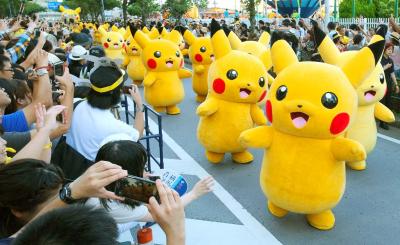
China’s military news agency yesterday warned that Japanese militarism is infiltrating society through series such as Pokemon and Detective Conan, after recent controversies involving events at sensitive sites. In recent days, anime conventions throughout China have reportedly banned participants from dressing as characters from Pokemon or Detective Conan and prohibited sales of related products. China Military Online yesterday posted an article titled “Their schemes — beware the infiltration of Japanese militarism in culture and sports.” The article referenced recent controversies around the popular anime series Pokemon, Detective Conan and My Hero Academia, saying that “the evil influence of Japanese militarism lives on in
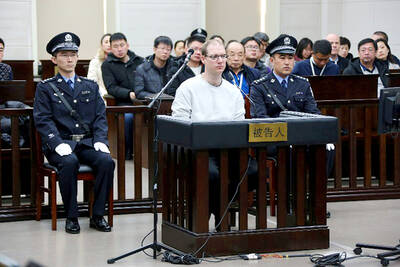
DIPLOMATIC THAW: The Canadian prime minister’s China visit and improved Beijing-Ottawa ties raised lawyer Zhang Dongshuo’s hopes for a positive outcome in the retrial China has overturned the death sentence of Canadian Robert Schellenberg, a Canadian official said on Friday, in a possible sign of a diplomatic thaw as Canadian Prime Minister Mark Carney seeks to boost trade ties with Beijing. Schellenberg’s lawyer, Zhang Dongshuo (張東碩), yesterday confirmed China’s Supreme People’s Court struck down the sentence. Schellenberg was detained on drug charges in 2014 before China-Canada ties nosedived following the 2018 arrest in Vancouver of Huawei chief financial officer Meng Wanzhou (孟晚舟). That arrest infuriated Beijing, which detained two Canadians — Michael Spavor and Michael Kovrig — on espionage charges that Ottawa condemned as retaliatory. In January
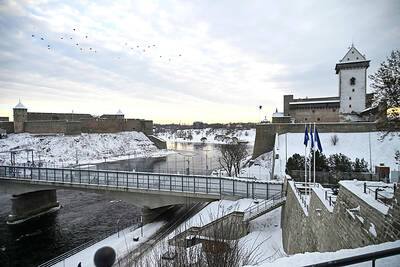
Two medieval fortresses face each other across the Narva River separating Estonia from Russia on Europe’s eastern edge. Once a symbol of cooperation, the “Friendship Bridge” connecting the two snow-covered banks has been reinforced with rows of razor wire and “dragon’s teeth” anti-tank obstacles on the Estonian side. “The name is kind of ironic,” regional border chief Eerik Purgel said. Some fear the border town of more than 50,0000 people — a mixture of Estonians, Russians and people left stateless after the fall of the Soviet Union — could be Russian President Vladimir Putin’s next target. On the Estonian side of the bridge,

Jeremiah Kithinji had never touched a computer before he finished high school. A decade later, he is teaching robotics, and even took a team of rural Kenyans to the World Robotics Olympiad in Singapore. In a classroom in Laikipia County — a sparsely populated grasslands region of northern Kenya known for its rhinos and cheetahs — pupils are busy snapping together wheels, motors and sensors to assemble a robot. Guiding them is Kithinji, 27, who runs a string of robotics clubs in the area that have taken some of his pupils far beyond the rural landscapes outside. In November, he took a team


 RSS
RSS