


New Brazillian President Jair Bolsonaro has promised to radically change the path taken by Latin America’s biggest country by trashing decades of center-left policies.
However, while the far-right politician enjoys sky-high popularity, the challenges to his agenda are formidable.
Here are the key issues he faces:
ECONOMY
Brazil is a commodity-exporting powerhouse, but it is still limping out of a record-breaking recession that eradicated many gains from the stellar period of prosperity it enjoyed only a decade ago.
Bolsonaro has appointed a free-marketeer, Paulo Guedes, as Brazilian minister of the economy to push through reforms to bring down Brazil’s swelling debt, mainly through privatizations, tax changes and encouraging foreign investment.
One of the trickiest problems is likely to be cutting back on Brazil’s unsustainable pension system, which requires an overhaul of the constitution.
Bolsonaro’s far-right Social Liberal Party does not have a majority in the Brazillian Congress. To pass legislation he would have to rely on ad hoc alliances with backbenchers in various parties who are part of his evangelical, pro-agribusiness, pro-gun base.
Consulting firm Eurasia Group said that the reforms pose “a real challenge.”
The big swing in public support behind Bolsonaro could give him the legislative firepower he needs, if he moves early in his term — but even then “expect a lot of drama” in Congress, it said.
DIPLOMACY
Brazil’s new orientation is likely to become quickly clear to the world through its diplomacy and a lot of that is inspired by US President Donald Trump, whom Bolsonaro admires.
Bolsonaro has already said he would pull his country out of a UN global migration pact, and he is deciding whether to do the same with the Paris accord on climate change and whether to move Brazil’s embassy in Israel to Jerusalem — all measures aligned with Trump.
Additionally, he is hostile to greater Chinese investment in Brazil, and he has said he would do all he can to challenge the leftist governments of Cuba and Venezuela.
DOMESTIC POLITICS
Bolsonaro’s two main promises are to crack down on rampant crime and extinguish political corruption.
The former military man wants laws eased so “good” people can own guns to deter armed assailants.
Critics fear that could usher in a “Wild West” in a country where there are already nearly 64,000 homicides annually.
Police officers — responsible for about 5,000 deaths a year — would be given greater impunity under Bolsonaro.
The fight against corruption has been under way since 2014, under a sprawling anti-graft probe known as “Car Wash,” which has snared many political and corporate chiefs.
In a savvy move, Bolsonaro has named the judge who led “Car Wash,” Sergio Moro, as his minister of justice.
Yet corruption in Brazil has deep roots and any evidence of it in Bolsonaro’s inner circle — some allegations are already being investigated — or his party could rapidly damage his image.
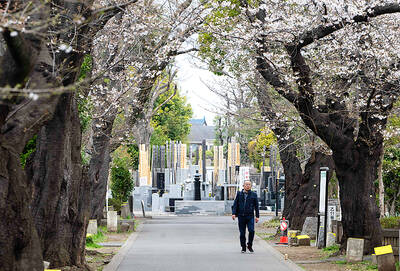
ROCKY RELATIONS: The figures on residents come as Chinese tourist numbers drop following Beijing’s warnings to avoid traveling to Japan The number of Chinese residents in Japan has continued to rise, even as ties between the two countries have become increasingly fractious, data released on Friday showed. As of the end of December last year, the number of Chinese residents had increased by 6.5 percent from the previous year to 930,428. Chinese people accounted for 22.6 percent of all foreign residents in Japan, making them by far the largest group, Japanese Ministry of Justice data showed. Beijing has criticized Tokyo in increasingly strident terms since Japanese Prime Minister Sanae Takaichi last year suggested that a military conflict around Taiwan could

A retired US colonel behind a privately financed rocket launch site in the Dominican Republic sees the project as a response to China’s dominance of the space race in Latin America. Florida-based Launch on Demand is slated to begin building a US$600 million facility in a remote region near the border with Haiti late this year. The project is designed to meet surging demand for the heavy-lift rockets needed to put clusters of satellites into orbit. It is also an answer to China’s growing presence in the region, said CEO Burton Catledge, a former commander of the US Air Force’s 45th Operations

Germany is considering Australia’s Ghost Bat robot fighter as it looks to select a combat drone to modernize its air force, German Minister of Defense Boris Pistorius said yesterday. Germany has said it wants to field hundreds of uncrewed fighter jets by 2029, and would make a decision soon as it considers a range of German, European and US projects developing so-called “collaborative combat aircraft.” Australia has said it will integrate the Ghost Bat, jointly developed by Boeing Australia and the Royal Australian Air Force, into its military after a successful weapons test last year. After inspecting the Ghost Bat in Queensland yesterday,
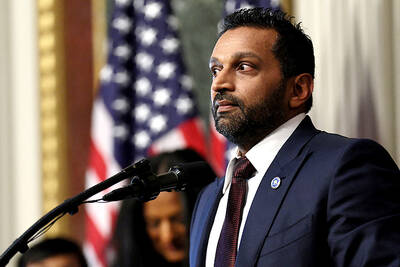
A pro-Iran hacking group claimed to breach FBI Director Kash Patel’s personal e-mail inbox and posted some of the contents online. The e-mails provided by the hacking group include travel details, correspondence with leasing agents in Washington and global entry, and loyalty account numbers. The e-mail address the hackers claim to have compromised has been previously tied to Patel’s personal details, and the leaked e-mails contain photos of Patel and others, in addition to correspondence with family members and colleagues. “The FBI is aware of malicious actors targeting Director Patel’s personal email information,” the agency said in a statement on


 RSS
RSS