


A painting that was stolen during World War II and later spent decades in a Connecticut home is to be returned to an art museum in Ukraine, according to US and Ukrainian officials.
The FBI seized the painting after a retired couple in Ridgefield transported it to Washington to be auctioned last year.
The couple, David and Gabby Tracy, had long cherished the painting, but figured it was a copy, not the signed original.
Standing nearly 2.4m tall, the painting depicts the 16th-century Russian czar Ivan the Terrible looking crestfallen as he flees the Kremlin on horseback.
It had been left behind in a Ridgefield home that David Tracy bought in 1987. The previous couple in the home said the painting was already there when they purchased the house from a Swiss man in 1962.
When Tracy and his wife moved to a different house in the area, they paid US$37,000 to add a sunroom big enough to display the painting.
“This painting was a beautiful painting, and we treasured it,” Gabby Tracy, 84, told reporters on Saturday. “You couldn’t help but admire the fine painting, what detail was in Ivan’s face.”
However, as they made plans to move to a condominium in Maine last year, they realized the painting would not fit. They hired an auctioning company near Washington to sell the work, which was appraised at about US$5,000.
However, after the auction house added the painting to its catalog, an employee received an urgent e-mail from an art museum in Ukraine.
“Attention! Painting ‘Ivan the Terrible’ was in the collection of the Dnepropetrovsk Art Museum until 1941 and was stolen during the Second World War,” the e-mail said, according to court documents. “Please stop selling this painting at auction!!!”
The museum identified the painting as a 1911 work by Mikhail Panin, titled Secret Departure of Ivan the Terrible Before the Oprichina. It was a permanent exhibit at the Ukrainian museum until 1941, but disappeared during Nazi occupation of the city.
FBI officials took custody of the painting and later traced it to the Swiss man who sold the Ridgefield home in 1962.
Officials did not release his name, but said he moved to the US in 1946 after serving in the Swiss Army. He died in 1986.
It was unknown how he obtained the painting, Gabby Tracy said.
After learning it had been stolen, the Tracy couple agreed that the painting should be returned.
The story particularly moved Gabby, who was born in Slovakia and survived the Holocaust. Her father, Samuel Weiss, died in a concentration camp.
“There was never a question that it was going back. It’s just sad that we had to go through this experience,” Gabby said. “It’s ironic that I should have been so worried about keeping this painting safe.”
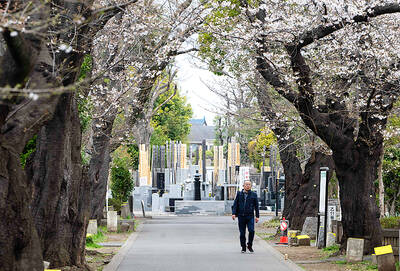
ROCKY RELATIONS: The figures on residents come as Chinese tourist numbers drop following Beijing’s warnings to avoid traveling to Japan The number of Chinese residents in Japan has continued to rise, even as ties between the two countries have become increasingly fractious, data released on Friday showed. As of the end of December last year, the number of Chinese residents had increased by 6.5 percent from the previous year to 930,428. Chinese people accounted for 22.6 percent of all foreign residents in Japan, making them by far the largest group, Japanese Ministry of Justice data showed. Beijing has criticized Tokyo in increasingly strident terms since Japanese Prime Minister Sanae Takaichi last year suggested that a military conflict around Taiwan could

A retired US colonel behind a privately financed rocket launch site in the Dominican Republic sees the project as a response to China’s dominance of the space race in Latin America. Florida-based Launch on Demand is slated to begin building a US$600 million facility in a remote region near the border with Haiti late this year. The project is designed to meet surging demand for the heavy-lift rockets needed to put clusters of satellites into orbit. It is also an answer to China’s growing presence in the region, said CEO Burton Catledge, a former commander of the US Air Force’s 45th Operations

Germany is considering Australia’s Ghost Bat robot fighter as it looks to select a combat drone to modernize its air force, German Minister of Defense Boris Pistorius said yesterday. Germany has said it wants to field hundreds of uncrewed fighter jets by 2029, and would make a decision soon as it considers a range of German, European and US projects developing so-called “collaborative combat aircraft.” Australia has said it will integrate the Ghost Bat, jointly developed by Boeing Australia and the Royal Australian Air Force, into its military after a successful weapons test last year. After inspecting the Ghost Bat in Queensland yesterday,
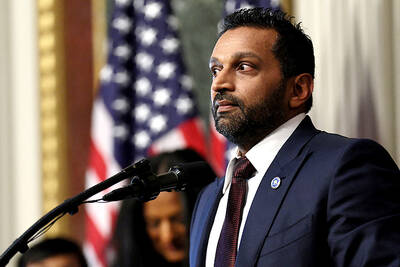
A pro-Iran hacking group claimed to breach FBI Director Kash Patel’s personal e-mail inbox and posted some of the contents online. The e-mails provided by the hacking group include travel details, correspondence with leasing agents in Washington and global entry, and loyalty account numbers. The e-mail address the hackers claim to have compromised has been previously tied to Patel’s personal details, and the leaked e-mails contain photos of Patel and others, in addition to correspondence with family members and colleagues. “The FBI is aware of malicious actors targeting Director Patel’s personal email information,” the agency said in a statement on


 RSS
RSS