


Japanese researchers have mapped vast reserves of rare earth elements in deep-sea mud, enough to feed global demand on a “semi-infinite basis,” a fresh study said.
The deposit, found within Japan’s exclusive economic waters, contains more than 16 million tonnes of the elements needed to build high-tech products from mobile phones to electric vehicles, according to the study, released on Tuesday in the journal Scientific Reports.
The team, comprising several universities, businesses and government institutions, surveyed the western Pacific Ocean near Minamitorishima Island, Japan.
In a sample area of the mineral-rich region, the team’s survey estimated that there were 1.2 million tonnes of “rare earth oxide” deposited there, said the study, conducted jointly by Yutaro Takaya of Waseda University and Yasuhiro Kato of the University of Tokyo, among others.
The finding extrapolates that a 2,500km2 region off the southern Japanese island should contain 16 million tonnes of the valuable elements and “has the potential to supply these metals on a semi-infinite basis to the world,” the study said.
The area reserves offer “great potential as ore deposits for some of the most critically important elements in modern society,” it said.
The report said there were hundreds of years of reserves of most of the rare earths in the area surveyed.
The team has also developed an efficient method to separate valuable elements from others in the mud.
The world relies heavily on China for rare earths, with Beijing producing most of the elements currently available on the market.
However, Beijing has severely restricted exports of these products at times of diplomatic tension.
In 2010, for example, Japanese manufacturers faced serious supply shortages as Beijing limited the valuable exports.
That came after Japan arrested the captain of a Chinese trawler that was involved in a run-in with Japanese coastguards near the disputed Senkaku Islands — also known as Diaoyutai Islands (釣魚台), which are also claimed by Taiwan and China.
The Japanese study stressed the importance of the efforts to develop efficient and economic methods to collect the deep-sea mud.
“The enormous resource amount and the effectiveness of the mineral processing are strong indicators that this new [rare-earth rich mud] resource could be exploited in the near future,” the study said.
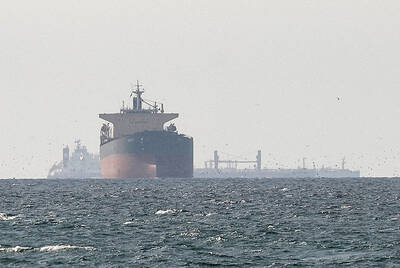
A ship that appears to be taking on the identity of a scrapped gas carrier exited the Strait of Hormuz on Friday, showing how strategies to get through the waterway are evolving as the Middle East war progresses. The vessel identifying as liquefied natural gas (LNG) carrier Jamal left the Strait on Friday morning, ship-tracking data show. However, the same tanker was also recorded as having beached at an Indian demolition yard in October last year, where it is being broken up, according to market participants and port agent’s reports. The ship claiming to be Jamal is likely a zombie vessel that

Cannabis-based medicines have shown little evidence of effectiveness for treating most mental health and substance-use disorders, according to a large review of past studies published in a major medical journal on Monday. Medical use of cannabinoids has been expanding, including in the US, Canada and Australia, where many patients report using cannabis products to manage conditions such as anxiety, post-traumatic stress disorder and sleep problems. Researchers reviewed data from 54 randomized clinical trials conducted between 1980 and May last year involving 2,477 participants for their analysis published in The Lancet. The studies assessed cannabinoids as a primary treatment for mental disorders or substance-use

NATIONWIDE BLACKOUT: US President Donald Trump cut off Venezuelan oil shipments to Cuba, strangling the Caribbean island’s already antiquated grid Cuba’s national electric grid collapsed on Monday, the nation’s grid operator said, leaving about 10 million people without power amid a US-imposed oil blockade that has crippled the already obsolete generation system. Grid operator UNE on social media said that it is investigating the causes of the blackout, the latest in a series of widespread outages that last for hours or days and that this weekend sparked a rare violent protest in the communist-run nation. Officials ruled out a major power plant failure, but had still not pinpointed the root cause of the grid collapse, suggesting a problem with transmission. Officials said that
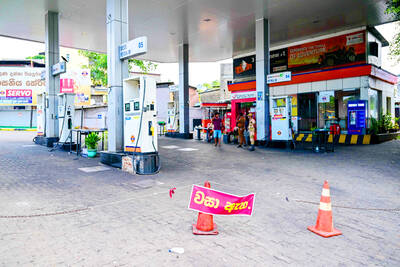
CONSERVING FUEL: State institutions are to operate only four days a week starting tomorrow, with the measures also applying to schools and universities Sri Lanka on Monday announced a shorter working week to conserve its scarce fuel reserves as it prepares for a prolonged war in the Middle East. The Strait of Hormuz, a key waterway through which about 20 percent of global exports pass in peacetime, has been effectively closed by Iran in retaliation over the US and Israeli war against it, now in its third week. Sri Lankan Commissioner-General of Essential Services Prabath Chandrakeerthi said state institutions would operate only four days a week starting tomorrow. The new austerity measures would also apply to schools and universities, and would remain in place indefinitely. “We are


 RSS
RSS