


Myanmar, Thailand and Cambodia yesterday torched nearly US$1 billion worth of seized narcotics in a defiant show of force as police struggle to stem the rising flow of drugs in the region.
The burnings, to mark the UN’s International Day Against Drug Abuse and Illicit Trafficking, follow another year of record seizures of narcotics from the remote borderlands of Myanmar, Laos, southern China and northern Thailand.
Myanmar in particular remains one of the world’s great drug-producing nations, a dark legacy of decades of civil war in its frontier regions where troops and ethnic rebel forces have vied for control of the lucrative trade.
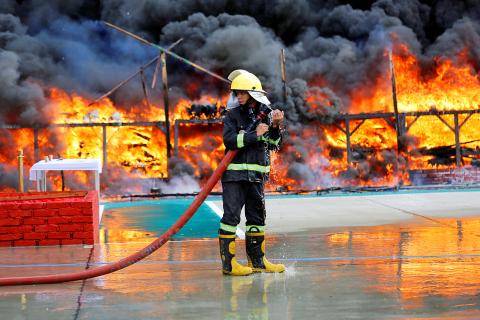
Photo: Reuters
Armed gangs churn out vast quantities of opium, heroin and cannabis and millions of caffeine-laced methamphetamine pills known as “yaba” which are then smuggled out across Southeast Asia.
An estimated US$385 million was burned yesterday in three official ceremonies around Myanmar, according to a senior police officer in the capital, Naypyidaw.
At the biggest bonfire in Yangon, huge clouds of smoke filled the sky as authorities set fire to stacks of opium, heroin, cocaine and methamphetamine tablets worth almost US$230 million.
“We burned a record amount of drugs today ... because police have seized more in recent years,” drug enforcement officer Myo Kyi said.
On an industrial estate on the outskirts of Bangkok, Thai authorities incinerated about US$589 million worth of drugs, including 7,800kg of yaba pills and 1,185kg of crystal methamphetamine.
In Cambodia, officials burned 130kg of drugs estimated to be worth about US$4 million.
The huge seizures are often touted as proof these countries are making inroads into the vast regional drug trade, but law enforcement agents say they are just the tip of the iceberg as producers ramp up production to meet growing demand across Southeast Asia and increasingly in Bangladesh and India.
Unlike their Latin American counterparts, cartel leaders in the Golden Triangle are rarely ever arrested or killed.
The senior officer in Naypyidaw said almost all of the drugs burned at Myanmar’s official ceremonies originated in the eastern state of Shan in areas controlled by ethnic armed groups.
The kingpins are the United Wa State Army, a 25,000-strong militia known as Asia’s most heavily armed drug dealers who boast their own autonomous territories on the border with China and have close links with Beijing.
Despite their reputation, the Wa deny producing drugs and even staged their own burning session yesterday in the village of Ponpakyin.
Myanmar has also been struggling to stem a growing tide of drug addiction inside its borders.
Experts say yaba use has exploded in Myanmar as ethnic armed gangs switched from exporting all the pills abroad to increasingly targeting domestic users.
Buddhist monks and military officers were among 13,500 people prosecuted for drugs crimes last year, up 50 percent from the previous year, according to data seen by reporters.
Drug production has increased every year since 2006,” Yangon police chief Win Naing told crowds gathered for yesterday’s ceremony on the outskirts of the city.


When a hiker fell from a 55m waterfall in wild New Zealand bush, rescuers were forced to evacuate the badly hurt woman without her dog, which could not be found. After strangers raised thousands of dollars for a search, border collie Molly was flown to safety by a helicopter pilot who was determined to reunite the pet and the owner. A week earlier, an emergency rescue helicopter found the woman with bruises and lacerations after a fall at a rocky spot at the waterfall on the South Island’s West Coast. She was airlifted on March 24, but they were forced to
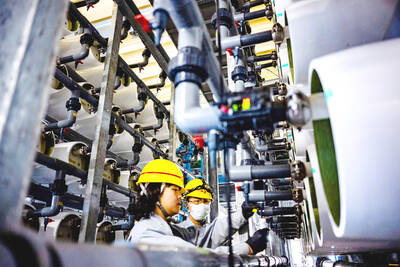
HIGH HOPES: The power source is expected to have a future, as it is not dependent on the weather or light, and could be useful for places with large desalination facilities A Japanese water plant is harnessing the natural process of osmosis to generate renewable energy that could one day become a common power source. The possibility of generating power from osmosis — when water molecules pass from a less salty solution to a more salty one — has long been known. However, actually generating energy from that has proved more complicated, in part due the difficulty of designing the membrane through which the molecules pass. Engineers in Fukuoka, Japan, and their private partners think they might have cracked it, and have opened what is only the world’s second osmotic power plant. It generates

Hundreds of Filipinos and tourists flocked to a sun-bleached field north of Manila yesterday, on Good Friday, to witness one of the country’s most blood-soaked displays of religious fervor, undeterred by rising fuel prices. Scores of bare-chested flagellants with covered faces walked barefoot through the dusty streets of Pampanga Province’s San Fernando as they flogged their backs with bamboo whips in the scorching heat. Agence France-Presse (AFP) journalists said they saw devotees deliberately puncturing their skin with glass shards attached to a small wooden paddle to ensure their bleeding during the ritual, a way to atone for sins and seek miracles from
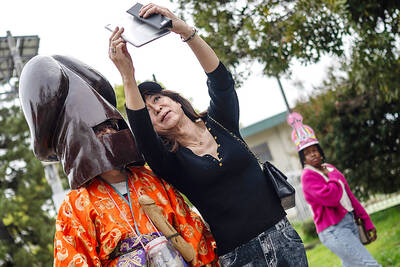
Showcasing phallus-shaped portable shrines and pink penis candies, Japan’s annual fertility festival yesterday teemed with tourists, couples and families elated by its open display of sex. The spring Kanamara Matsuri near Tokyo features colorfully dressed worshipers carrying a trio of giant phallic-shaped objects as they parade through the street with glee. The festival, as legend has it, honors a local blacksmith in the Edo Period (1603-1868) who forged an iron dildo to break the teeth of a sharp-toothed demon inhabiting a woman’s vagina that had been castrating young men on their wedding nights. A 1m black steel phallus sits in the courtyard of


 RSS
RSS