


Flag-waving Cuban students broke into a mass chant of “I am Fidel” to salute former Cuban president Fidel Castro as nine days of mourning began for the combative Cold War icon, who dominated the island’s political life for generations.
Alcohol sales were suspended, flags flew at half-staff and shows and concerts were canceled after his younger brother and successor, Cuban President Raul Castro, told the country on Friday that Fidel had died at 10:29pm, without giving a cause of death.
Giant rallies are planned in Havana’s Plaza de la Revolucion and in the eastern city of Santiago to honor Fidel Castro, who died aged 90, six decades after the brothers set out from Mexico to overthrow US-backed former Cuban president Fulgencio Batista.
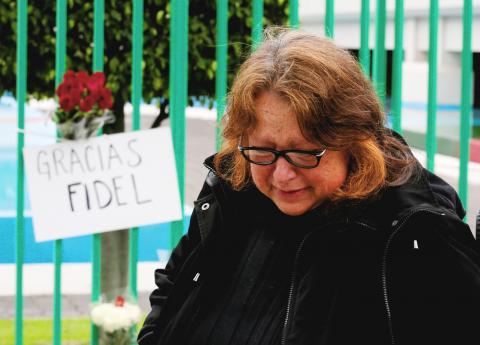
Photo: Reuters
Newspapers on the island of 11 million people were printed in black ink to mourn Fidel, instead of the usual red of the official Cuban Communist Party daily Granma, and the blue of Juventud Rebelde (Rebel Youth), the paper of Cuba’s Young Communist League.
There was no heightened military or police presence to mark the passing of the epochal revolutionary leader, and at Havana University, Castro’s alma mater, hundreds of students gathered to wave huge Cuban flags and shout “Viva Fidel and Viva Raul.”
“Fidel isn’t dead because the people are Fidel,” shouted a local student leader dressed in jeans and a white T-shirt.
“I am Fidel,” he continued, a refrain quickly adopted by the crowd.
“Fidel put Cuba on the map, and made Cuba a paradigm for the people of the world, especially the poor and the marginalized,” said another university student, Raul Alejandro Palmeros.
Castro studied law at the university in the late 1940s and early 1950s, when it was a hotbed of leftist politics, setting him on the path that led to his toppling of Batista in 1959.
Under Castro, bitter diplomatic conflict with the US followed, and Cuba quickly became a firm ally of the Soviet Union, sparking the Cuban Missile Crisis in 1962.
However, despite years of ideological strife and increasing hardship under a US economic embargo, Castro’s Cuba became renowned for high education standards and world-class doctors.
“What Fidel did with education and free health stands out on the world stage. It was unique,” said Rene Perez, 78, a retired accountant and Communist Party member. “It’s his main legacy.”
Streets were quiet following the news and some normally busy restaurants were all but empty, but Castro’s death did not bring daily life in Havana to a complete halt.
Castro’s remains were cremated and his ashes are to be taken around Cuba until a state funeral on Sunday. Western diplomatic officials said foreign dignitaries are to arrive tomorrow for a memorial service due to be held in Plaza de la Revolucion that evening.
Formally handing over power to Raul in 2008, he remained a major presence on the island and regularly warned the Cuban population about the perils of giving in to the US.
“Everyone here is sad. Everyone is a Fidelista,” said Anaida Gonzales, a retired nursing professor in central Camaguey Province. “People are just going about their business, but sad. Me, I’m very sad for my commandante, it really took me by surprise.”

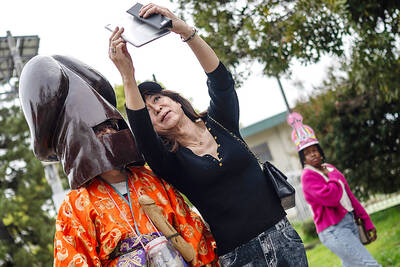
Showcasing phallus-shaped portable shrines and pink penis candies, Japan’s annual fertility festival yesterday teemed with tourists, couples and families elated by its open display of sex. The spring Kanamara Matsuri near Tokyo features colorfully dressed worshipers carrying a trio of giant phallic-shaped objects as they parade through the street with glee. The festival, as legend has it, honors a local blacksmith in the Edo Period (1603-1868) who forged an iron dildo to break the teeth of a sharp-toothed demon inhabiting a woman’s vagina that had been castrating young men on their wedding nights. A 1m black steel phallus sits in the courtyard of

JAN. 1 CLAUSE: As military service is voluntary, applications for permission to stay abroad for over three months for men up to age 45 must, in principle, be granted A little-noticed clause in sweeping changes to Germany’s military service policy has triggered an uproar after it emerged that the law requires men aged up to 45 to get permission from the armed forces before any significant stay abroad, even in peacetime. The legislation, which went into effect on Jan. 1 aims to bolster the military and demands all 18-year-old men fill out a questionnaire to gauge their suitability to serve in the armed forces, but stops short of conscription. If the “modernized” model fails to pull in enough recruits, parliament will be compelled to discuss the reintroduction of compulsory service, German
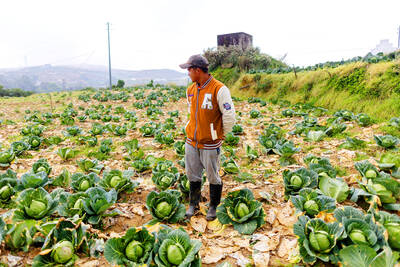
Filipino farmers like Romeo Wagayan have been left with little choice but to let their vegetables rot in the field rather than sell them at a loss, as rising oil prices linked to the Iran war drive up the cost of harvesting, labor and transport. “There’s nothing we can do,” said Wagayan, a 57-year old vegetable farmer in the northern Philippine province of Benguet. “If we harvest it, our losses only increase because of labor, transportation and packing costs. We don’t earn anything from it. That’s why we decided not to harvest at all,” he said. Soaring costs caused by the Middle East
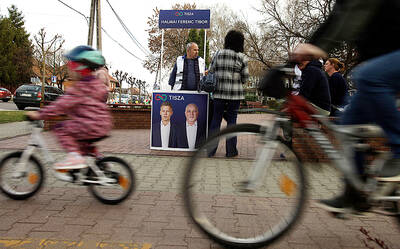
Hungarian Prime Minister Viktor Orban’s officially declared wealth is fairly modest: some savings and a jointly owned villa in Budapest. However, voters in what Transparency International deems the EU’s most corrupt country believe otherwise — and they might make Orban pay in a general election this Sunday that could spell an end to his 16-year rule. The wealth amassed by Orban’s inner circle is fueling the increasingly palpable frustration of a population grappling with sluggish growth, high inflation and worsening public services. “The government’s communication machine worked well as long as our economic situation remained relatively good,” said Zoltan Ranschburg, a political analyst


 RSS
RSS