


New Zealand’s military leaders yesterday said they had almost completed the evacuation of more than 700 tourists and residents from a small coastal town, two days after a powerful earthquake cut off train and vehicle access.
The magnitude 7.8 earthquake left two people dead, triggered a small tsunami, and brought down rocks and mud that swept across highways.
Headquarters Joint Forces New Zealand acting commander Air Commodore Darryn Webb told reporters that crews were loading about 380 people and three dogs onto a Royal New Zealand Navy ship.

Photo: AP / New Zealand Defence Force
He said the ship was due to leave yesterday evening for a six-hour trip to a port near Christchurch.
Webb said it had evacuated another 340 people by helicopter since Tuesday.
Other tourists have left by chartering helicopters or having air transport provided by their embassy. Some have chosen to stay until an inland road reopens.
“I think it’s gone really well,” Webb said. “We were fortunate to have a reasonable break in the weather today.”
Webb said warships from Australia, Canada and the US were due to arrive soon and would help restock the town with water, fuel and other supplies, as well as transport needed equipment.
Australian honeymooners Kurt and Kailah Sapwell were among the tourists stuck in Kaikoura, but they did not seem too bothered by their ordeal.
They said they had all the essentials they needed: a place to stay, food and water.
“It’s been a shaky experience, all good though,” Kurt Sapwell said when New Zealand Prime Minister John Key paid a visit to the town.
His wife added that their honeymoon had been “memorable.”
Flying over a large landslide in a helicopter, Key expressed surprise at the amount of debris.
“Look at this road here, this is really stuffed and there’s thousands of meters of it,” Key said. “I just don’t see how you can ever repair that bit of road. The whole mountain has moved over.”
Home to about 2,000 residents, Kaikoura was a popular destination for travelers wanting to go on whale-watching expeditions before the earthquake hit.
Yesterday, Key promised business owners the government would provide financial assistance for them through what was going to be a tough summer.
Authorities yesterday also managed to clear an emergency inland road to Kaikoura, although it was only open for military vehicles.
NZ Transport Agency Highways and Network Operations Group Manager Neil Walker said the road remains high-risk and unsuitable for cars, although crews were working to open it to the public by the weekend.
In the capital, Wellington, several streets remained cordoned off after engineers determined that a nine-story office building was in danger of collapsing.
New Zealand Fire Service regional commander Brendan Nally said engineers were completing an inspection of the building on Tuesday when they found a major vertical beam had failed above the fifth floor.
Wellington Mayor Justin Lester told reporters that the building would likely have to be demolished.
He said he did not believe it posed a risk to public safety because of the precautions authorities had taken in evacuating the area around it.

When a hiker fell from a 55m waterfall in wild New Zealand bush, rescuers were forced to evacuate the badly hurt woman without her dog, which could not be found. After strangers raised thousands of dollars for a search, border collie Molly was flown to safety by a helicopter pilot who was determined to reunite the pet and the owner. A week earlier, an emergency rescue helicopter found the woman with bruises and lacerations after a fall at a rocky spot at the waterfall on the South Island’s West Coast. She was airlifted on March 24, but they were forced to
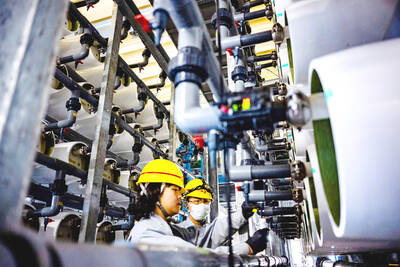
HIGH HOPES: The power source is expected to have a future, as it is not dependent on the weather or light, and could be useful for places with large desalination facilities A Japanese water plant is harnessing the natural process of osmosis to generate renewable energy that could one day become a common power source. The possibility of generating power from osmosis — when water molecules pass from a less salty solution to a more salty one — has long been known. However, actually generating energy from that has proved more complicated, in part due the difficulty of designing the membrane through which the molecules pass. Engineers in Fukuoka, Japan, and their private partners think they might have cracked it, and have opened what is only the world’s second osmotic power plant. It generates

Hundreds of Filipinos and tourists flocked to a sun-bleached field north of Manila yesterday, on Good Friday, to witness one of the country’s most blood-soaked displays of religious fervor, undeterred by rising fuel prices. Scores of bare-chested flagellants with covered faces walked barefoot through the dusty streets of Pampanga Province’s San Fernando as they flogged their backs with bamboo whips in the scorching heat. Agence France-Presse (AFP) journalists said they saw devotees deliberately puncturing their skin with glass shards attached to a small wooden paddle to ensure their bleeding during the ritual, a way to atone for sins and seek miracles from
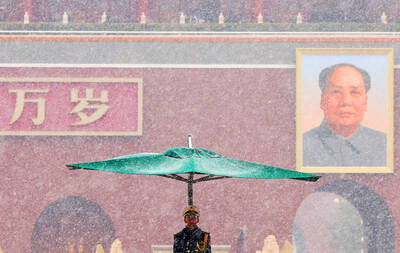
Chinese dissident artist Gao Zhen (高兟), famous for making provocative satirical sculptures of former Chinese leader Mao Zedong (毛澤東), was tried on Monday over accusations of “defaming national heroes and martyrs,” his wife and a rights group said. Gao, 69, who was detained in 2024 during a visit from the US, faces a maximum three-year prison sentence, said his wife, Zhao Yaliang (趙雅良), and Shane Yi, a researcher at the Chinese Human Rights Defenders group which operates outside the nation. The closed-door, one-day trial took place at Sanhe City People’s Court in Hebei Province neighboring the capital, Beijing, and ended without a


 RSS
RSS