


The city of Volgograd was renamed Stalingrad for a day yesterday as Russia marked the 70-year anniversary of a brutal battle in which the Red Army defeated Nazi forces and changed the course of World War II.
Commuter buses emblazoned with pictures of the feared Soviet dictator ran across the southern city as patriotic Russians remembered what many view as the Soviet people’s greatest achievement.
The half-year battle in 1943 in the city on the Volga River — much of it fought in hand-to-hand combat across the ruined streets — claimed the lives of 2 million people on both sides and eventually led to the German troops’ surrender.
The battle marked Hitler’s first big defeat and led to a Nazi retreat from Soviet territory after a lightning June 1941 invasion that had caught Stalin completely unaware.
The pulverized city was renamed Volgograd in 1961 after Soviet leaders admitted the extent of Stalin’s tyranny during his decades in power.
However, the old city name has remained synonymous with the battle and Volgograd lawmakers have decided to revive it for the anniversary and five other days of the year.
“We will defend our country by commemorating the great Battle of Stalingrad — our great victory,” Russian Deputy Prime Minister Dmitry Rogozin told veterans who gathered on the city’s central square at the start of the commemorations ceremony.
“Any enemy and potential aggressor should see this, understand this and feel this,” the close ally of Russian President Vladimir Putin said.
Putin — due to attend a fireworks display and concert in Volgograd later yesterday — has never denied Stalin’s murderous purges of innocent citizens and deadly forced collectivization.
However, he and other modern leaders have preferred to overlook the disastrous errors in military strategy Stalin made during the war.
And Putin in particular has preached a patriotic message since returning to a third term in the Kremlin last year.
Analysts believe this has helped him maintain support among many of the older middle-class voters in the face of the first street protests of his rule among the young.
State media focused their attention on Volgograd throughout the week as they detailed the lavish preparations and Kremlin’s attention to veterans.
The start of the Volgograd commemorations were broadcast live on the national news channels while state TV was due to broadcast a new dramatized documentary that promised to reveal new secrets about a “battle which changed world history.”
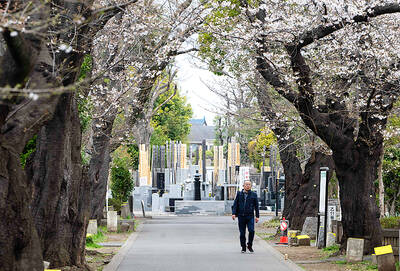
ROCKY RELATIONS: The figures on residents come as Chinese tourist numbers drop following Beijing’s warnings to avoid traveling to Japan The number of Chinese residents in Japan has continued to rise, even as ties between the two countries have become increasingly fractious, data released on Friday showed. As of the end of December last year, the number of Chinese residents had increased by 6.5 percent from the previous year to 930,428. Chinese people accounted for 22.6 percent of all foreign residents in Japan, making them by far the largest group, Japanese Ministry of Justice data showed. Beijing has criticized Tokyo in increasingly strident terms since Japanese Prime Minister Sanae Takaichi last year suggested that a military conflict around Taiwan could
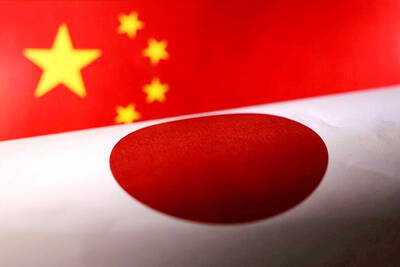
Japan is to downgrade its description of ties with China from “one of its most important” in an annual diplomatic report, according to a draft reviewed by Reuters, as relations with Beijing worsen. This year’s Diplomatic Bluebook, which Japanese Prime Minister Sanae Takaichi’s government is expected to approve next month, would instead describe China as an important neighbor and the relationship as “strategic” and “mutually beneficial.” The draft cites a series of confrontations with Beijing over the past year, including export controls on rare earths, radar lock-ons targeting Japanese military aircraft and increased pressure around Taiwan. The shift in tone underscores a deterioration
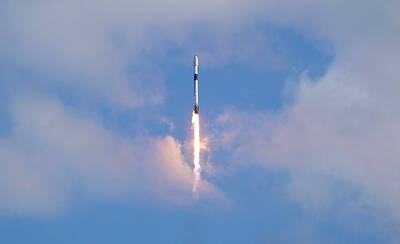
A retired US colonel behind a privately financed rocket launch site in the Dominican Republic sees the project as a response to China’s dominance of the space race in Latin America. Florida-based Launch on Demand is slated to begin building a US$600 million facility in a remote region near the border with Haiti late this year. The project is designed to meet surging demand for the heavy-lift rockets needed to put clusters of satellites into orbit. It is also an answer to China’s growing presence in the region, said CEO Burton Catledge, a former commander of the US Air Force’s 45th Operations

Germany is considering Australia’s Ghost Bat robot fighter as it looks to select a combat drone to modernize its air force, German Minister of Defense Boris Pistorius said yesterday. Germany has said it wants to field hundreds of uncrewed fighter jets by 2029, and would make a decision soon as it considers a range of German, European and US projects developing so-called “collaborative combat aircraft.” Australia has said it will integrate the Ghost Bat, jointly developed by Boeing Australia and the Royal Australian Air Force, into its military after a successful weapons test last year. After inspecting the Ghost Bat in Queensland yesterday,


 RSS
RSS