


Russian President Vladimir Putin said on Friday the Orthodox Church should be given more say over family life, education and the armed forces in Russia, as he celebrated the leadership of its head, Patriarch Kirill.
Faith runs deep in Russia after the fall of the officially atheist Soviet Union and Putin has looked to the largest religion in Russia for support since he began his third term as president after a wave of protests against his rule.
He has also tried to mix spirituality with his own brand of patriotism to unify the officially secular country, where ethnic and political fault lines are beginning to show.
“At the heart of all Russia’s victories and achievements are patriotism, faith and strength of spirit,” Putin said in the Kremlin’s gold-encrusted Alexeyevsky hall, celebrating the fourth anniversary of Kirill’s accession as patriarch.
Putin’s relationship with the church has strengthened since band members of protest punk band Pussy Riot entered Russia’s Christ the Savior Church last year and sang a vulgarity-laced song, urging the Virgin Mary to “throw Putin out.”
Without giving specifics, Putin said a “vulgar” understanding of secularism must be swept away to give the Church, and other religions, control over more aspects of Russian life.
“While preserving the secular nature of our state, and not allowing the over-involvement of the government in church life, we need to get away from the vulgar, primitive understanding of secularism,” he said.
“The Russian Orthodox Church and other traditional religions should get every opportunity to fully serve in such important fields as the support of family and motherhood, the upbringing and education of children, youth, social development and to strengthen the patriotic spirit of the armed forces.”
Putin has praised the Church’s spiritual values in their own right, but he has also turned to religious understanding to counteract ethnic tension in cities such as Moscow, which have large Muslim migrant populations from the Caucasus Mountain region and Central Asia.
The church in turn has praised Putin’s leadership.
Shortly before the Pussy Riot performance, Kirill likened Putin’s time in power to a “miracle of God.”
Putin was then prime minister and in the midst of a campaign for the March 4 presidential vote.
The church has also given its priests freer rein in politics, establishing rules for the clergy seeking elected office, despite restrictions on almost all political activity by religious authorities.
The Pussy Riot performance took place at the height of a protest movement sparked by allegations of voting fraud during 2011 parliamentary elections. Holding regular protests, tens of thousands of Russians aired grievances over problems in Putin’s tightly controlled top-down political system.
However, many Russians consider leaders of that movement out of touch with everyday problems outside of Moscow, where faith is stronger, and many were insulted by the Pussy Riot performance.
The pro-Kremlin United Russia party has proposed a law introducing prison terms for offenses against religious symbols and feelings of believers.
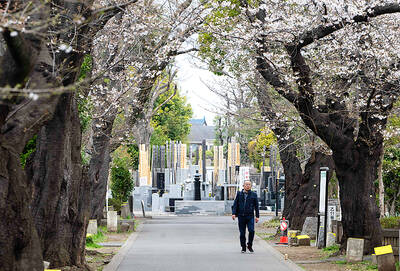
ROCKY RELATIONS: The figures on residents come as Chinese tourist numbers drop following Beijing’s warnings to avoid traveling to Japan The number of Chinese residents in Japan has continued to rise, even as ties between the two countries have become increasingly fractious, data released on Friday showed. As of the end of December last year, the number of Chinese residents had increased by 6.5 percent from the previous year to 930,428. Chinese people accounted for 22.6 percent of all foreign residents in Japan, making them by far the largest group, Japanese Ministry of Justice data showed. Beijing has criticized Tokyo in increasingly strident terms since Japanese Prime Minister Sanae Takaichi last year suggested that a military conflict around Taiwan could
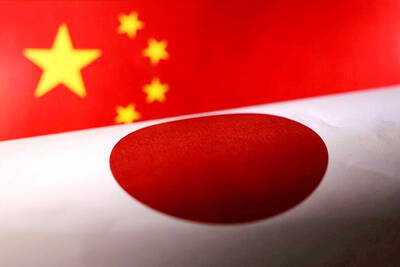
Japan is to downgrade its description of ties with China from “one of its most important” in an annual diplomatic report, according to a draft reviewed by Reuters, as relations with Beijing worsen. This year’s Diplomatic Bluebook, which Japanese Prime Minister Sanae Takaichi’s government is expected to approve next month, would instead describe China as an important neighbor and the relationship as “strategic” and “mutually beneficial.” The draft cites a series of confrontations with Beijing over the past year, including export controls on rare earths, radar lock-ons targeting Japanese military aircraft and increased pressure around Taiwan. The shift in tone underscores a deterioration

A retired US colonel behind a privately financed rocket launch site in the Dominican Republic sees the project as a response to China’s dominance of the space race in Latin America. Florida-based Launch on Demand is slated to begin building a US$600 million facility in a remote region near the border with Haiti late this year. The project is designed to meet surging demand for the heavy-lift rockets needed to put clusters of satellites into orbit. It is also an answer to China’s growing presence in the region, said CEO Burton Catledge, a former commander of the US Air Force’s 45th Operations

Germany is considering Australia’s Ghost Bat robot fighter as it looks to select a combat drone to modernize its air force, German Minister of Defense Boris Pistorius said yesterday. Germany has said it wants to field hundreds of uncrewed fighter jets by 2029, and would make a decision soon as it considers a range of German, European and US projects developing so-called “collaborative combat aircraft.” Australia has said it will integrate the Ghost Bat, jointly developed by Boeing Australia and the Royal Australian Air Force, into its military after a successful weapons test last year. After inspecting the Ghost Bat in Queensland yesterday,


 RSS
RSS