


China’s top official in Tibet has urged authorities to tighten their grip on the Internet and mobile phones, state media reported yesterday, reflecting the government’s fears about unrest ahead of its annual parliamentary session.
The move is the latest in a series of measures the government says are intended to maintain stability, and comes after a spate of self-immolations and protests against Chinese control in the country’s Tibetan-populated areas.
It is likely to mean telephone and online communications will be even more closely monitored and censored than is normal.
Chen Quanguo (陳全國), who was appointed the Chinese Communist Party chief of Tibet in August last year, urged authorities at all levels to “further increase their alertness to stability maintenance” ahead of the National People’s Congress, the official Tibet Daily newspaper quoted him as saying on Wednesday.
China’s rubber-stamp parliament session meets on Monday.
“Mobile phones, Internet and other measures for the management of new media need to be fully implemented to maintain the public’s interests and national security,” Chen said.
China has tightened security in what it calls the Tibet Autonomous Region and other Tibetan parts of the country following several incidents in which people have set fire to themselves, and protests against Chinese rule, mostly in Sichuan and Gansu provinces.
This month is a particularly sensitive time for Tibet, as it marks five years since deadly riots erupted across the region.
Twenty-two Tibetans have set themselves alight in protest since March last year, and at least 15 are believed to have died from their injuries, according to rights groups. Most of them were Buddhist monks.
Chen also vowed to “completely crush hostile forces” that he said were led by the Dalai Lama, suggesting that he will not ease the government’s hardline stance towards the region, enforced by his predecessor Zhang Qingli.
The Chinese government has repeatedly blamed exiled Tibetans for stoking the protests, including spiritual leader the Dalai Lama. China has ruled Tibet since 1950.
Nationally, defending one-party control is a leadership priority. Official anxieties about unrest have multiplied ahead of a change of leadership later this year, when Chinese President Hu Jintao (胡錦濤) will hand power to his successor, widely expected to be Xi Jinping (習近平).
A prominent Beijing-based Tibetan writer who goes by the single name of Woeser yesterday said state security agents have barred her from collecting an award given by the Netherlands.
Woeser was awarded the Prince Claus award in September last year for her work on Tibet, according to the Web site for the Prince Claus Fund for Culture and Development. She was due to accept the award yesterday at the Dutch ambassador’s house in Beijing, she said.
“They told my husband that I couldn’t go to the ceremony but didn’t give specific reasons,” Woeser said by telephone. “They said even if I wanted to go, I wouldn’t be able to go. They have people below our apartment watching us.”
Dutch officials were not immediately available for comment.
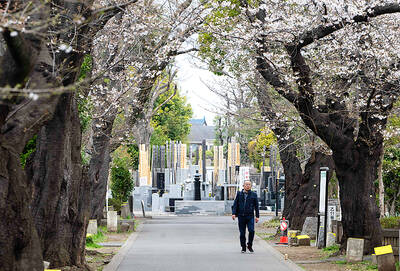
ROCKY RELATIONS: The figures on residents come as Chinese tourist numbers drop following Beijing’s warnings to avoid traveling to Japan The number of Chinese residents in Japan has continued to rise, even as ties between the two countries have become increasingly fractious, data released on Friday showed. As of the end of December last year, the number of Chinese residents had increased by 6.5 percent from the previous year to 930,428. Chinese people accounted for 22.6 percent of all foreign residents in Japan, making them by far the largest group, Japanese Ministry of Justice data showed. Beijing has criticized Tokyo in increasingly strident terms since Japanese Prime Minister Sanae Takaichi last year suggested that a military conflict around Taiwan could
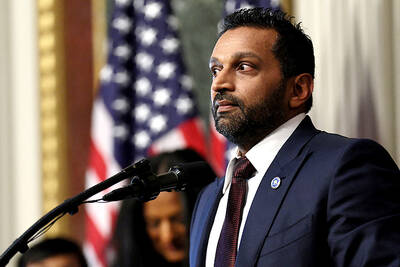
A pro-Iran hacking group claimed to breach FBI Director Kash Patel’s personal e-mail inbox and posted some of the contents online. The e-mails provided by the hacking group include travel details, correspondence with leasing agents in Washington and global entry, and loyalty account numbers. The e-mail address the hackers claim to have compromised has been previously tied to Patel’s personal details, and the leaked e-mails contain photos of Patel and others, in addition to correspondence with family members and colleagues. “The FBI is aware of malicious actors targeting Director Patel’s personal email information,” the agency said in a statement on
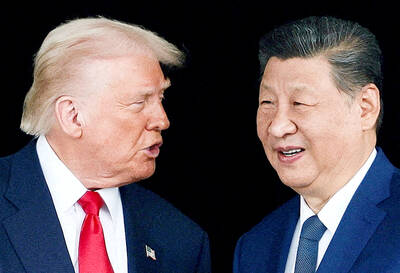
RIVALRY: ‘We know that these are merely symbolic investigations initiated by China, which is in fact the world’s most profligate disrupter of supply chains,’ a US official said China has started a pair of investigations into US trade practices, retaliating against similar probes by US President Donald Trump’s administration as the superpowers stake out positions before an expected presidential summit in May. The move, announced by the Chinese Ministry of Commerce on Friday, is a direct mirror of steps Trump took to revive his tariff agenda after the US Supreme Court last month struck down some of his duties. “China expresses its strong dissatisfaction and firm opposition to these actions,” a ministry spokesperson said in a statement, referring to the so-called Section 301 investigations initiated on March 11.

When a hiker fell from a 55m waterfall in wild New Zealand bush, rescuers were forced to evacuate the badly hurt woman without her dog, which could not be found. After strangers raised thousands of dollars for a search, border collie Molly was flown to safety by a helicopter pilot who was determined to reunite the pet and the owner. A week earlier, an emergency rescue helicopter found the woman with bruises and lacerations after a fall at a rocky spot at the waterfall on the South Island’s West Coast. She was airlifted on March 24, but they were forced to


 RSS
RSS