


An EU watchdog today warns of an “alarming increase” in cash machine fraud by organized criminal gangs across Europe using sophisticated skimming technology, together with an explosion in ram-raiding attacks on ATMs.
ATM crime in Europe jumped to 485 million euros (US$696 million) last year following a 149 percent rise in attacks on cash machines.
Gangs are turning to Bluetooth wireless technology to transmit card and pin number details to nearby laptops and using increasingly sophisticated techniques to skim cards.
More conventional smash-and-grab attacks are also on the rise, says Enisa, the European Network and Information Security Agency.
It reports a 32 percent rise in physical attacks on ATMs, ranging from ram raids to the use of rotary saws, blowtorches and diamond drills. It blames the increase on gangs from eastern Europe.
SPY CAMERAS
Europe has 384,000 cash machines, with crime rates rising as they spread to more remote locations. Enisa found increases in the use of small spy cameras, false pin overlays and even entirely fake machines.
One development is the introduction of fake entry devices on the outside of bank lobbies containing a number of ATMs. A skimming device is placed in a card reader designed to open the door of the lobby. Once the customer is at the machine, a further spy camera collects pin numbers.
Fake cash machines — some of which even hand out real money — are increasingly being found in and around shopping centers and other public locations.
“These look like real ATM machines and some have even been known to dispense cash. All cards used at these machines are copied, and the pin information obtained from the pin pad,” the report said.
DISTRACTION
Enisa also warns of more conventional “distraction” skimming, where gangs observe the pin number as it is typed in, then distract the cardholder by dropping a banknote nearby.
Successful cyber-attacks on bank or retailer networks are still relatively rare. But Enisa cites a recent incident in Russia in which ATMs were infected with malware that collected both card details and pin numbers.
Enisa recommends that card users avoid ATMs with extra signage or warnings, avoid freestanding machines, and try to use ATMs inside banks.
It adds: “ATMs do not have the same security measures all over the world, and it is a good rule for cardholders to change their pin every time they’ve been abroad.”
“Fraudsters will also try the pin they have to access accounts on other cards, so a good rule is always to have a different pin number for different cards,” Enisa says.


Kehinde Sanni spends his days smoothing out dents and repainting scratched bumpers in a modest autobody shop in Lagos. He has never left Nigeria, yet he speaks glowingly of Burkina Faso military leader Ibrahim Traore. “Nigeria needs someone like Ibrahim Traore of Burkina Faso. He is doing well for his country,” Sanni said. His admiration is shaped by a steady stream of viral videos, memes and social media posts — many misleading or outright false — portraying Traore as a fearless reformer who defied Western powers and reclaimed his country’s dignity. The Burkinabe strongman swept into power following a coup in September 2022
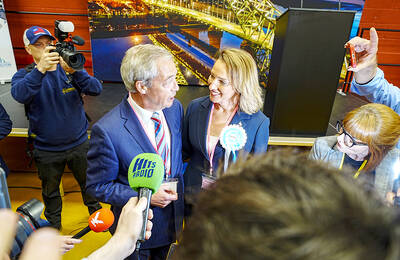
‘FRAGMENTING’: British politics have for a long time been dominated by the Labor Party and the Tories, but polls suggest that Reform now poses a significant challenge Hard-right upstarts Reform UK snatched a parliamentary seat from British Prime Minister Keir Starmer’s Labor Party yesterday in local elections that dealt a blow to the UK’s two establishment parties. Reform, led by anti-immigrant firebrand Nigel Farage, won the by-election in Runcorn and Helsby in northwest England by just six votes, as it picked up gains in other localities, including one mayoralty. The group’s strong showing continues momentum it built up at last year’s general election and appears to confirm a trend that the UK is entering an era of multi-party politics. “For the movement, for the party it’s a very, very big
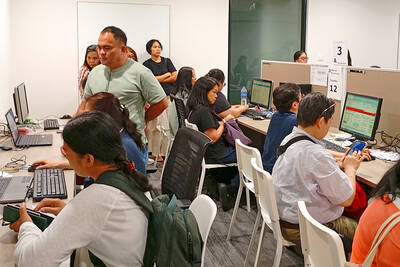
A new online voting system aimed at boosting turnout among the Philippines’ millions of overseas workers ahead of Monday’s mid-term elections has been marked by confusion and fears of disenfranchisement. Thousands of overseas Filipino workers have already cast their ballots in the race dominated by a bitter feud between President Ferdinand Marcos Jr and his impeached vice president, Sara Duterte. While official turnout figures are not yet publicly available, data from the Philippine Commission on Elections (COMELEC) showed that at least 134,000 of the 1.22 million registered overseas voters have signed up for the new online system, which opened on April 13. However,
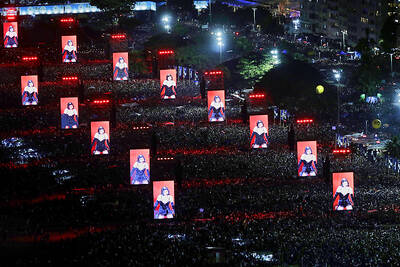
ENTERTAINMENT: Rio officials have a history of organizing massive concerts on Copacabana Beach, with Madonna’s show drawing about 1.6 million fans last year Lady Gaga on Saturday night gave a free concert in front of 2 million fans who poured onto Copacabana Beach in Rio de Janeiro for the biggest show of her career. “Tonight, we’re making history... Thank you for making history with me,” Lady Gaga told a screaming crowd. The Mother Monster, as she is known, started the show at about 10:10pm local time with her 2011 song Bloody Mary. Cries of joy rose from the tightly packed fans who sang and danced shoulder-to-shoulder on the vast stretch of sand. Concert organizers said 2.1 million people attended the show. Lady Gaga


 RSS
RSS