


The Supreme Court on Monday agreed to decide whether top government officials can be sued for damages by the Muslim men who were rounded up and imprisoned under harsh conditions in the immediate aftermath of the terrorist attacks of Sept. 11, 2001.
The case is an appeal by the administration of US President George W. Bush on behalf of John Ashcroft, who at the time was attorney general, and Robert Mueller, director of the FBI.
The federal appeals court in Manhattan, in a pretrial decision last June, rejected the claims of immunity raised by the two officials, as well as by other defendants, including the former head of the Bureau of Prisons and the former warden of the Metropolitan Detention Center, where many of the men were held. The lower-ranking officials also appealed that ruling to the Supreme Court, but the justices took no action on their petitions on Monday.
The lawsuit was filed by two men, Javaid Iqbal, a Pakistani, and Ehad Elmaghraby, an Egyptian, both of whom were deported after months of confinement in a section of the Brooklyn prison known as ADMAX-SHU, which stands for administrative maximum special housing unit. Elmaghraby settled his claims for a US$300,000 payment from the government and is no longer in the case.
Iqbal, who has not settled, was a 33-year-old cable television installer on Long Island at the time of his arrest on Nov. 2, 2001. He lived in Hicksville with his wife, a US citizen, and had an application pending for a green card. He was charged with document fraud for using a Social Security card that belonged to someone else.
Iqbal pleaded guilty after several months of confinement in the special unit, where he was subjected to daily body-cavity searches, sometimes several times a day, as well as to beatings and to extremes of hot and cold. He was kept in solitary confinement with the lights in his cell constantly on. He lost 18kg during six months in the special unit, before he was placed in the general prison population.
Iqbal’s lawsuit maintains that he was treated as a “high interest” prisoner solely because of his religion and national origin, under policies and procedures directed by Ashcroft and Mueller and carried out by the other defendants. The lawsuit also maintains that the conditions of confinement in the special unit violated minimal constitutional standards, of which the defendants should have been aware.
Although Iqbal is now the sole plaintiff in his case, the Supreme Court’s decision will affect another lawsuit that raises similar claims on behalf of seven named plaintiffs and a class of hundreds of others. That case, Turkmen v Ashcroft, was argued before the 2nd Circuit in February.
In refusing the defendants’ request to dismiss the Iqbal case, the 2nd US Circuit Court of Appeals found that the allegations, although not yet proven, were at least “plausible.”
That was sufficient to permit Iqbal’s lawyers to proceed to pretrial discovery to establish the facts, Judge Jon Newman wrote for the appeals court.
The government’s appeal maintains that the case against the two high officials should have been dismissed because it was based on nothing but “bare and conclusory allegations” and lacked evidence that the two condoned or even knew about the treatment Iqbal alleges to have occurred.
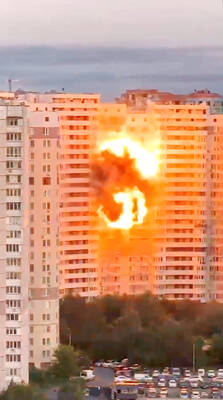
BOMBARDMENT: Moscow sent more than 440 drones and 32 missiles, Volodymyr Zelenskiy said, in ‘one of the most terrifying strikes’ on the capital in recent months A nighttime Russian missile and drone bombardment of Ukraine killed at least 15 people and injured 116 while they slept in their homes, local officials said yesterday, with the main barrage centering on the capital, Kyiv. Kyiv City Military Administration head Tymur Tkachenko said 14 people were killed and 99 were injured as explosions echoed across the city for hours during the night. The bombardment demolished a nine-story residential building, destroying dozens of apartments. Emergency workers were at the scene to rescue people from under the rubble. Russia flung more than 440 drones and 32 missiles at Ukraine, Ukrainian President Volodymyr Zelenskiy
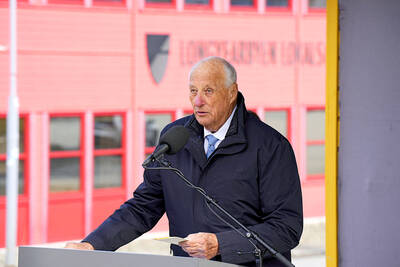
COMPETITION: The US and Russia make up about 90 percent of the world stockpile and are adding new versions, while China’s nuclear force is steadily rising, SIPRI said Most of the world’s nuclear-armed states continued to modernize their arsenals last year, setting the stage for a new nuclear arms race, the Stockholm International Peace Research Institute (SIPRI) said yesterday. Nuclear powers including the US and Russia — which account for about 90 percent of the world’s stockpile — had spent time last year “upgrading existing weapons and adding newer versions,” researchers said. Since the end of the Cold War, old warheads have generally been dismantled quicker than new ones have been deployed, resulting in a decrease in the overall number of warheads. However, SIPRI said that the trend was likely

‘SHORTSIGHTED’: Using aid as leverage is punitive, would not be regarded well among Pacific Island nations and would further open the door for China, an academic said New Zealand has suspended millions of dollars in budget funding to the Cook Islands, it said yesterday, as the relationship between the two constitutionally linked countries continues to deteriorate amid the island group’s deepening ties with China. A spokesperson for New Zealand Minister of Foreign Affairs Winston Peters said in a statement that New Zealand early this month decided to suspend payment of NZ$18.2 million (US$11 million) in core sector support funding for this year and next year as it “relies on a high trust bilateral relationship.” New Zealand and Australia have become increasingly cautious about China’s growing presence in the Pacific
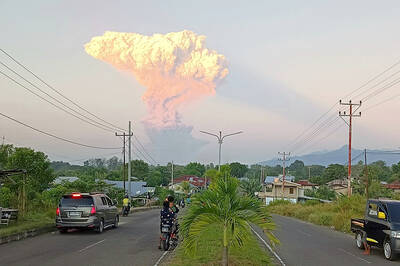
Indonesia’s Mount Lewotobi Laki-Laki yesterday erupted again with giant ash and smoke plumes after forcing evacuations of villages and flight cancelations, including to and from the resort island of Bali. Several eruptions sent ash up to 5km into the sky on Tuesday evening to yesterday afternoon. An eruption on Tuesday afternoon sent thick, gray clouds 10km into the sky that expanded into a mushroom-shaped ash cloud visible as much as 150km kilometers away. The eruption alert was raised on Tuesday to the highest level and the danger zone where people are recommended to leave was expanded to 8km from the crater. Officers also


 RSS
RSS