


China has arrested nine Tibetan Buddhist monks accused of involvement in a bomb attack on a government building in Tibet, an official said yesterday.
The monks from the Tongxia monastery in eastern Tibet fled after the homemade bomb exploded at the building in Gyanbe Township on March 23, and they later confessed to planting the explosive, Xinhua news agency said late on Saturday.
A local official confirmed the monks had been detained.
“Cewang Yexe, one of the suspects, brought a homemade bomb to the site on a motorcycle and moved it into the office building with the help of others. They detonated the bomb and ran away,” the late on Saturday report said.
Xinhua named Rinqen Jamcan, 27, a “ranking monk” at the monastery, as ringleader. All the suspects have confessed, it said.
Xinhua did not explain why the alleged incident was not reported earlier, nor did it mention any casualties or damage in the blast.
The bombing report builds on Beijing’s claims that the recent Tibetan protests were part of a violent campaign by the Dalai Lama and his supporters to throw off Chinese rule in Tibet and sabotage the Beijing Olympics in August.
The bombing is the first to be reported in Tibet since the anti-China protests began March 10 in the Tibetan capital, Lhasa, turning violent four days later.
Coming nearly two weeks after the initial protests, the bombing is the first report of violence within Tibet after China imposed a security clampdown in the region and claimed life had returned to normal.
The Dalai Lama has denied involvement in violent acts and says he only wants greater autonomy for the remote mountain region. He has expressed opposition to a boycott of the Olympic Games.
An official with the local county Public Security Bureau at Gongjue, near the border with Sichuan Province, confirmed that six monks had been detained for allegedly planting the bomb and three for shielding the suspects and covering up their crimes.
The official refused to give his name because he was not authorized to talk to the media.
A woman at the Tibetan Regional Public Security Department said she was not sure about the case because it was still under investigation. She also declined to be named.
China says 22 people were killed in the Tibetan riots that began March 14, four days after protests began, with hundreds of shops torched and Chinese civilians attacked.
The Dalai Lama’s India-based government-in-exile has claimed at least 140 people died. More than 1,000 protesters were detained.
Beijing has accused Tibetan independence forces of organizing suicide squads for launching violent attacks against China.
Wu Heping (吳和平), a spokesman for China’s Ministry of Public Security, also claimed that searches of monasteries in Lhasa had uncovered a large cache of weapons.
On Friday, China labeled a group linked to the Dalai Lama’s government-in-exile a “terrorist organization.”
Separately, Xinhua said Saturday a Tibetan seized in a Lhasa monastery had confessed to slashing a passer-by three times with a 30cm-long knife during the March 14 riot.
The man was listed as No. 2 in a most-wanted list by police, Xinhua said. Police have 93 suspects on their most-wanted list and have arrested 13 of them, an official said. .
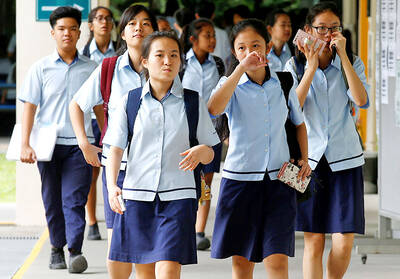
School bullies in Singapore are to face caning under new guidelines, but the education minister on Tuesday said it would be meted out only as a last resort with strict safeguards. Human rights groups regularly criticize Singapore for the use of corporal punishment, which remains part of the school and criminal justice systems, but authorities have defended it as a deterrent to crime and serious misconduct. Caning was discussed in the parliament after legislators asked how it would be used in relation to bullying in schools. The debate followed stricter guidelines on serious student misconduct, including bullying, unveiled by the Singaporean Ministry of

As evening falls in Fiji’s capital, a steady stream of people approaches a makeshift clinic that is a first line of defense against one of the world’s fastest-growing HIV epidemics. In the South Pacific nation — a popular tourist destination of just under a million people — more than 2,000 new HIV cases were recorded last year, a 26 percent increase from 2024. The government has declared an HIV outbreak and described it as a national crisis. “It’s spreading like wildfire,” said Siteri Dinawai, 46, who came to be tested. The Moonlight Clinic, a converted minibus parked in a suburban cul-de-sac in Suva, is
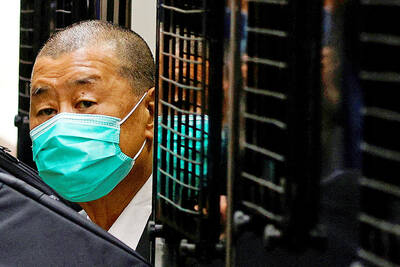
Jailed media entrepreneur Jimmy Lai (黎智英) has been awarded Deutsche Welle’s (DW) freedom of speech award for his contribution to Hong Kong’s pro-democracy movement. The German public broadcaster on Thursday said Lai would be presented in absentia with the 12th iteration of the award on June 23 at the DW Global Media Forum in Bonn. Deutsche Welle director-general Barbara Massing praised the 78-year-old founder of the now-shuttered news outlet Apple Daily for standing “unwaveringly for press freedom in Hong Kong at great personal risk.” “With Apple Daily, he gave journalists a platform for free reporting and a voice to the democracy movement in
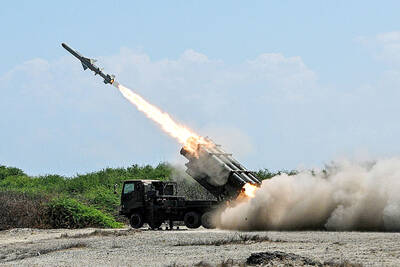
A MESSAGE: Japan’s participation in the Balikatan drills is a clear deterrence signal to China not to attack Taiwan while the US is busy in the Middle East, an analyst said The Japan Self-Defense Forces yesterday fired a Type 88 anti-ship missile during a joint maritime exercise with US, Australian and Philippine forces, hitting a decommissioned Philippine Navy ship in waters facing the disputed South China Sea, in drills that underscore Tokyo’s rising willingness to project military power on China’s doorstep. The drill took place as Manila and Tokyo began talks on a potential defense equipment transfer, made possible by Japan’s decision to scrap restrictions on military exports. The discussions include the possible early transfer of Abukuma-class destroyers and TC-90 aircraft to the Philippines, Japanese Minister of Defense Shinjiro Koizumi said. Philippine Secretary of


 RSS
RSS