


US President George W. Bush was scheduled to leave yesterday for his farewell NATO summit and a final heads-of-state meeting with Russia's Vladimir Putin in a bid to salvage a foreign policy legacy frayed by the Iraq war.
Seeking to reassert himself on the world stage in the twilight of his term, Bush will press NATO for more troops in Afghanistan, try to keep up momentum in the alliance's eastward expansion and attempt to ease strains with Russia.
But with Bush even more unpopular overseas than at home, he could have a hard time swaying world leaders at this week's Bucharest summit as they look to whomever will succeed him in next January.
"Many of them are looking forward now to the next president in Washington and are already thinking about what the 2009 summit will bring," said Julianne Smith, a Europe analyst at Washington's Center for Strategic and International Studies.
Lame-duck status will not be Bush's only obstacle as he ventures abroad for the first in a series of international conferences marking his final year in office.
Overhanging his travels will be the five-year-old Iraq war, which has damaged US credibility with friends and foes alike. The latest spike in fighting has increased doubts of further drawdowns of US forces before Bush leaves office.
He will also be trailed by a financial crisis at home that has roiled global markets and sharpened criticism of his economic stewardship, once seen as a bright spot on his record.
Bush's first stop will be Ukraine, where he will try to reassure Kiev's reform-minded government over its aspirations for NATO membership but offer no firm guarantees.
European partners are wary of letting Ukraine and Georgia into the alliance because of opposition from Moscow, which sees it as encroachment on the former Soviet sphere of influence.
Bush backs their bids for a roadmap for membership but may not have enough clout to overcome French and German misgivings at the summit in Bucharest this week.
Another source of friction is NATO's role in the war in Afghanistan, which has led to transatlantic finger-pointing.
Bush wants a greater commitment from NATO partners reluctant to send troops to areas of heavy combat against a resurgent Taliban. A French offer of more forces has helped ease the dispute but it remains unresolved.
Bush will share the summit spotlight with Putin, an unusual guest of the Western alliance. How the two leaders interact may signal whether the West's relations with Russia will improve or deteriorate further.
Afterward, Bush will fly to Russia for a final round of one-on-one talks with Putin before he steps down as Russian president next month.
Demanding more troop contributions from alliance members for the second front in the "war on terror," where failure would be seen as a personal blow, has emerged as a priority for Bush.
Facing accusations of neglecting the mission in Afghanistan to focus on the war in Iraq, Bush affirmed that "there is no better opportunity to deal with the threats of terror than in Afghanistan" and that he heads to Bucharest "to encourage people to take our obligations seriously."
His decision to commit an additional 3,500 Marines should "set an example and encourage others to participate," he told reporters. Less than a year before he leaves office, Bush knows his reputation rests in large measure on success in Afghanistan.
French President Nicolas Sarkozy's announcement that he would strengthen France's presence there should "ensure" a successful NATO summit, Bush said.
But while the discord throughout Europe over the war in Iraq seems remote, Afghanistan continues to be divisive among the NATO allies.
Some countries such as Germany "are being beaten up" by the Bush administration because they aren't doing well enough in Afghanistan, said Elizabeth Sherwood-Randall, an expert at the Council on Foreign Relations.
The German government has also underlined its opposition to NATO opening the door to membership to former Soviet republics Ukraine and Georgia, and about half of the 25 other NATO members have cast doubt on the bids too.
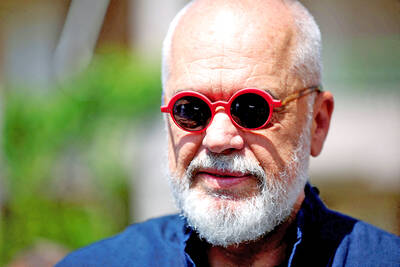
FRAUD ALLEGED: The leader of an opposition alliance made allegations of electoral irregularities and called for a protest in Tirana as European leaders are to meet Albanian Prime Minister Edi Rama’s Socialist Party scored a large victory in parliamentary elections, securing him his fourth term, official results showed late on Tuesday. The Socialist Party won 52.1 percent of the vote on Sunday compared with 34.2 percent for an alliance of opposition parties led by his main rival Sali Berisha, according to results released by the Albanian Central Election Commission. Diaspora votes have yet to be counted, but according to initial results, Rama was also leading there. According to projections, the Socialist Party could have more lawmakers than in 2021 elections. At the time, it won 74 seats in the

EUROPEAN FUTURE? Albanian Prime Minister Edi Rama says only he could secure EU membership, but challenges remain in dealing with corruption and a brain drain Albanian Prime Minister Edi Rama seeks to win an unprecedented fourth term, pledging to finally take the country into the EU and turn it into a hot tourist destination with some help from the Trump family. The artist-turned-politician has been pitching Albania as a trendy coastal destination, which has helped to drive up tourism arrivals to a record 11 million last year. US President Donald Trump’s son-in-law, Jared Kushner, also joined in the rush, pledging to invest US$1.4 billion to turn a largely deserted island into a luxurious getaway. Rama is expected to win another term after yesterday’s vote. The vote would
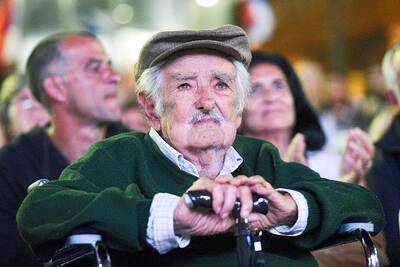
CANCER: Jose Mujica earned the moniker ‘world’s poorest president’ for giving away much of his salary and living a simple life on his farm, with his wife and dog Tributes poured in on Tuesday from across Latin America following the death of former Uruguayan president Jose “Pepe” Mujica, an ex-guerrilla fighter revered by the left for his humility and progressive politics. He was 89. Mujica, who spent a dozen years behind bars for revolutionary activity, lost his battle against cancer after announcing in January that the disease had spread and he would stop treatment. “With deep sorrow, we announce the passing of our comrade Pepe Mujica. President, activist, guide and leader. We will miss you greatly, old friend,” Uruguayan President Yamandu Orsi wrote on X. “Pepe, eternal,” a cyclist shouted out minutes later,
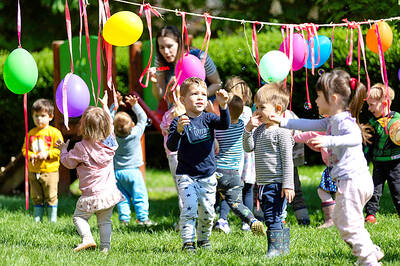
A Croatian town has come up with a novel solution to solve the issue of working parents when there are no public childcare spaces available: pay grandparents to do it. Samobor, near the capital, Zagreb, has become the first in the country to run a “Grandmother-Grandfather Service,” which pays 360 euros (US$400) a month per child. The scheme allows grandparents to top up their pension, but the authorities also hope it will boost family ties and tackle social isolation as the population ages. “The benefits are multiple,” Samobor Mayor Petra Skrobot told reporters. “Pensions are rather low and for parents it is sometimes


 RSS
RSS