


Thailand's powerful military council yesterday declared that New Year's Eve bomb attacks in Bangkok were staged by politicians and renegade army officers loyal to exiled Prime Minister Thaksin Shinawatra who want to topple the government.
It vowed to severely punish those behind the bombings, which killed three people and wounded nearly 40 while the city was in the midst of New Year's celebrations.
"The evidence and intelligence information proves that the bombs were the dirty work of politicians who lost power and benefit. Some bad soldiers loyal to the bad politicians collaborated with them with the intention to topple this government," said General Saprang Kanlayanamitr, a member of the Council for National Security.
The council was set up after generals toppled Thaksin in a bloodless coup on Sept. 19. It later appointed an interim civilian government to run the country until promised elections in October.
Thaksin, in a handwritten letter faxed on Tuesday from China and distributed by his lawyer in Thailand, accused the interim government of Prime Minister Surayud Chulanont of unfairly implying he was behind the violence.
"I strongly condemn this act [of bombing] and I swear that I never ever think of hurting the people and destroying the country's credibility for my own political gain," Thaksin said in the letter, given to reporters.
He also said he suspected Islamic separatists, who have waged a bloody insurgency in the country's southernmost provinces for the past three years, may have been responsible for the eight small blasts that shattered Sunday night's celebrations.
"The bandits and terrorist groups in southern Thailand had no links or connections to the bombs in Bangkok," Saprang said.
No arrests have yet been made but Saprang said that the days of compromise with the former power-brokers were over and "from now on there will be no compromise."
Saprang hinted that former Prime Minister General Chavalit Yongchaiyudh was part of the pro-Thaksin camp, saying the group had "used an old soldier to launch a war of words against the government and [council]."
Chavalit has sharply criticized the interim government recently.
The bombings, which included nine foreigners among the wounded, have raised concerns about Thailand's stability, shaky economy and thriving tourism industry.
Thai shares fell by 2.6 percent in early trading yesterday, with the Stock Exchange of Thailand's benchmark SET Index at 662.09, off 17 points from its close on Friday.
Analyst have predicted that the bombings will affect the short-term confidence of both foreign and local retail investors so outflows will likely be higher than previously expected.
But Deputy Prime Minister Pridiyathorn Devakula said the New Year's Eve bomb attack will not harm the economy in the long run.
"The bomb attacks will not affect the GDP in the long run but it is affecting the tourist sector in the short term," Pridiyathorn said.
Several hotels reported significant cancellations on inbound tour groups, particularly from Japan, following the incident.
The attacks capped a year of unrest in Thailand, including the coup and the increasingly violent Muslim insurgency in the south, which has claimed almost 2,000 lives since 2004.
Nobody has claimed responsibility for the blasts, though the military-backed government has virtually ruled out southern insurgents, instead focusing on supporters of Thaksin as suspects.
Thaksin said the bombings could be related to the southern violence because they were similar to explosions that killed four people and wounded dozens last September in Hat Yai, the south's commercial hub near the three Muslim-dominated southern provinces rocked by the insurgency.
"I used to warn high-ranking officials that if we can't stop them ... they will go to Bangkok," Thaksin wrote.
Several analysts noted the military itself was a possible suspect in the bombings, perhaps aiming to demonize the former prime minister.
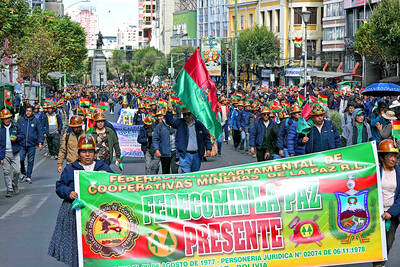
The Bolivian government on Friday struck a deal with protesting miners, but was still grappling with blockades and demonstrations by other workers across La Paz. Other groups are still blocking access roads into the city, which is also the seat of the government. Police on Thursday prevented the miners from entering the main square by using tear gas, while the demonstrators hurled stones and explosives with slingshots. Protests against the policies of Bolivian President Rodrigo Paz have convulsed the Andean nation since early this month, and roadblocks were choking routes into La Paz throughout Friday, the national road authority said. Miners demanded that Paz
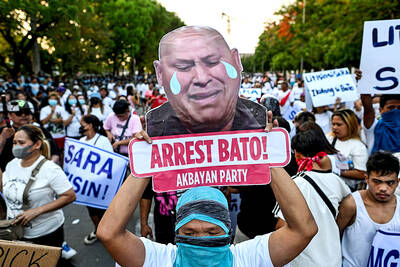
The Philippines said it has asked the country’s Supreme Court to allow it to arrest former Philippine president Rodrigo Duterte’s chief drug war enforcer to stand trial in an international tribunal. The International Criminal Court (ICC) last week unsealed an arrest warrant against Philippine Senator Ronald dela Rosa, accusing him along with Duterte and other “coperpetrators” of the “crime against humanity of murder.” Dela Rosa briefly sought refuge in the Philippine Senate last week while asking the Philippine Supreme Court to stop an ongoing attempt by government agents to arrest him. “By his own conduct, he has placed himself outside the protection of

A ship anchored off the United Arab Emirates (UAE) was seized and taken toward Iran and another — a cargo ship near Oman — sank after being attacked, authorities said on Thursday, as tensions escalated near the Strait of Hormuz. It was not immediately clear who was behind these incidents, but they happened as a senior Iranian official reiterated his country’s claim of control over the waterway and another said it had a right to seize oil tankers connected to the US. The turmoil in the strait has been a sticking point for weeks in talks between the US and Iran to
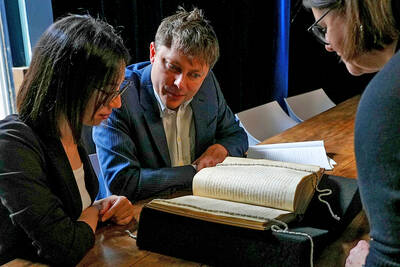
The researchers in Ireland looked at their computer screen, marveling at a medieval book tracked down in a Roman library. They flipped through its digitized pages and found their sought-after treasure: the oldest surviving English poem. “We were extremely surprised. We were speechless. We couldn’t believe our eyes when we first saw that,” said Elisabetta Magnanti, a visiting research fellow at Trinity College Dublin’s school of English. The poem was also within the main body of Latin text, she said, calling it “extraordinary.” Composed in Old English by a Northumbrian agricultural worker in the 7th century, Caedmon’s Hymn appears within some copies of


 RSS
RSS