


Representatives of 118 Nonaligned Movement nations condemned Israel's attacks on Lebanon and supported a peaceful resolution to the dispute over Iran's nuclear program in the final declaration on Saturday of a summit that brought together some of the world's staunchest foes of the US.
The 92-page declaration also broadly condemned terrorism -- with exceptions for movements for self-determination and battles against foreign occupiers.
And while declaring democracy to be a universal value, the movement said no one country or region should define it for the whole world. The leaders mentioned Venezuela and Cuba in particular as they asserted the right of all countries to determine their own form of government.
The statements, many of which contain veiled criticisms of the US, were approved by unanimous consent after another round of speechmaking on Saturday night by leaders of the Nonaligned Movement.
"No one in the Nonaligned Movement thinks that the United States is responsible for all the problems, but many think that it is for some," Cuba's Foreign Minister Felipe Perez Roque said.
An ailing Fidel Castro was named president of the movement, but he stayed home in his pajamas on doctors' orders while Acting Cuban President Raul Castro presided over the meeting of two-thirds of the world's nations.
Raul joined numerous US foes who said a bellicose US had made the world more dangerous.
"The United States spends one billion dollars a year in weapons and soldiers," he said. "To think that a social and economic order that has proven unsustainable could be maintained by force is simply an absurd idea."
Many demanded that the UN take action against the veto power of the five permanent Security Council members. Suggestions in the final declaration include expanding the council's membership or allowing council vetoes to be overruled by a two-thirds majority of the General Assembly.
"The US is turning the security council into a base for imposing its politics," Iran's President Mahmoud Ahmadinejad complained.
"Why should people live under the nuclear threat of the US?," he said.
Some leaders tried to resolve disputes with their neighbors: Pakistani President General Pervez Musharraf and Indian Prime Minister Manmohan Singh agreed Saturday to resume peace talks, and Bolivian President Evo Morales tried to reassure Brazilians angered by tough energy negotiations.
Others held onto hardline positions: North Korea defended its nuclear weapons program, Sudan's leader rejected a UN peacekeeping mission for Darfur and Ahmadinejad insisted on Iran's right to develop nuclear energy.
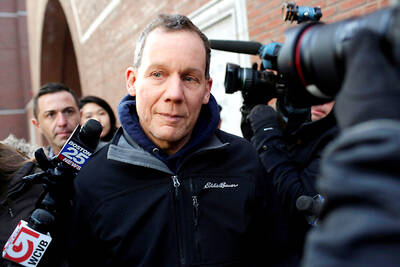
An American scientist convicted of lying to US authorities about payments from China while he was at Harvard University has rebuilt his research lab in Shenzhen, China, to pursue technology the Chinese government has identified as a national priority: embedding electronics into the human brain. Charles Lieber, 67, is among the world’s leading researchers in brain-computer interfaces. The technology has shown promise in treating conditions such as amyotrophic lateral sclerosis and restoring movement in paralyzed people. It also has potential military applications: Scientists at the Chinese People’s Liberation Army have investigated brain interfaces as a way to engineer super soldiers by boosting
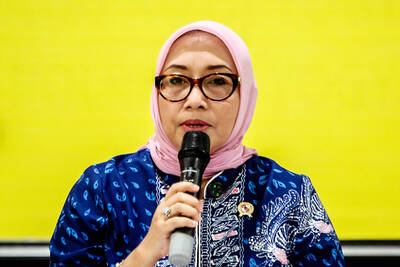
Indonesian police have arrested 13 people after shocking images of alleged abuse against small children at a daycare center went viral, sparking outrage across the nation, officials said on Monday. Police on Friday last week raided Little Aresha, a daycare center in Yogyakarta on Java island, following a report from a former employee. CCTV footage circulating on social media showed children, most younger than two, lying on the floor wearing only diapers, their hands and feet bound with rags. The police have confirmed that the footage is authentic. Police said they also found 20 children crammed into a room just 3m by 3m. “So

A grieving mother has ended her life at a clinic in Switzerland four years after the death of her only child. Wendy Duffy, 56, a physically healthy woman, died at the Pegasos clinic in Basel after struggling to cope with the death of her 23-year-old son, Marcus. The former care worker, from the West Midlands, England, had previously attempted to take her own life. The case comes as assisted dying would not become law in England and Wales after proposed legislation, branded “hopelessly flawed” by opponents, ran out of time. Ruedi Habegger, the founder of Pegasos, described Duffy’s death as

From post offices and parks to stations and even the summit of Mount Fuji, Japan’s vending machines are ubiquitous, but with the rapid pace of inflation cooling demand for their drinks, operators are being forced to rethink the business. Last month beverage giant DyDo Group Holdings announced it would remove about 20,000 vending machines — about 7 percent of their stock nationwide — by January next year, to “reconstruct a profitable network.” Pokka Sapporo Food & Beverage, based in Nagoya, also said last month it would sell its 40,000-machine operation to Osaka-based Lifedrink Co. “The strength of the vending machine


 RSS
RSS