


Health officials sought to allay fears about a possible spread of the deadly bird flu saying people needed only to follow simple precautions as they announced that the H5N1 strain has been detected in a sixth wild swan in southern Italy.
The Health Ministry said on Sunday that test results came back positive on a swan found in the Puglia region in the heel of Italy. The result came one day after the virus was discovered in five wild swans in southern Italy.
"The important thing is not to touch those animals," Health Minister Francesco Storace said at a news conference hours before releasing the test results on the sixth swan.
The cases in Italy and others confirmed in northern Greece on Saturday marked the first time the highly infectious strain of the H5N1 virus had been detected within the EU.
The Health Ministry repeated on Sunday that the outbreak posed no immediate threat to people nor to domesticated bird flocks because only wild birds had been infected.
Almost all of the 88 human deaths in Asia and Turkey since 2003 have been linked to contact with infected poultry, but experts fear the H5N1 virus could mutate into a form that spreads easily among people, possibly sparking a human flu pandemic.
An emergency response committee of veterinary experts and health officials met in Rome to discuss next steps, and the ministry announced the committee's warning not to touch sick or dead birds and seek professional help.
It also reiterated that there was no danger of getting the virus by eating poultry and eggs that had been cooked.
However, the ministry said poultry destined for slaughter in Italy was being checked by veterinarians before and after the birds are killed, and the meat that passes the test is labeled as such.
The swans arrived from the Balkans, likely pushed south by cold weather. They were discovered in the southern Italian regions of Puglia, Calabria and Sicily. Storace said he would travel to those regions in the coming days.
"This is to show that there is no reason for the population to worry," Storace said.
After the virus was confirmed, Italy committed itself to a series of precautionary measures including the creation of a 3km high-risk, protection zone around each outbreak area, and a surveillance zone of an additional 7km.
"We've adopted the first measures, and the protection of the affected area is already under way," the health assessor for Puglia, Alberto Tedesco, told reporters as he arrived for Sunday's meeting at the Health Ministry.
Tests are to be done on samples of domestic birds inside the protection zone. Birds that are infected or suspected of being infected will be killed.
Hunting wild birds will be banned in both zones, and poultry cannot be moved out of the surveillance zone.
The ministry said the same measures were being adopted around the location where the sixth infected swan had been found.
Also on Sunday, an H5 subtype of the bird flu virus was detected in domestic fowl in southeast Romania and in Slovenia, near the border with Austria. Samples have been sent to labs to determine if the viruses are of the H5N1 variety.
The announcement of the case in Slovenia prompted Austria's southernmost province of Carinthia to introduce strict border controls on livestock and food coming from Slovenia.
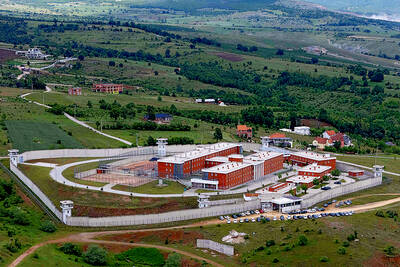
By 2027, Denmark would relocate its foreign convicts to a prison in Kosovo under a 200-million-euro (US$228.6 million) agreement that has raised concerns among non-governmental organizations (NGOs) and residents, but which could serve as a model for the rest of the EU. The agreement, reached in 2022 and ratified by Kosovar lawmakers last year, provides for the reception of up to 300 foreign prisoners sentenced in Denmark. They must not have been convicted of terrorism or war crimes, or have a mental condition or terminal disease. Once their sentence is completed in Kosovan, they would be deported to their home country. In

Brazil, the world’s largest Roman Catholic country, saw its Catholic population decline further in 2022, while evangelical Christians and those with no religion continued to rise, census data released on Friday by the Brazilian Institute of Geography and Statistics (IBGE) showed. The census indicated that Brazil had 100.2 million Roman Catholics in 2022, accounting for 56.7 percent of the population, down from 65.1 percent or 105.4 million recorded in the 2010 census. Meanwhile, the share of evangelical Christians rose to 26.9 percent last year, up from 21.6 percent in 2010, adding 12 million followers to reach 47.4 million — the highest figure

A Chinese scientist was arrested while arriving in the US at Detroit airport, the second case in days involving the alleged smuggling of biological material, authorities said on Monday. The scientist is accused of shipping biological material months ago to staff at a laboratory at the University of Michigan. The FBI, in a court filing, described it as material related to certain worms and requires a government permit. “The guidelines for importing biological materials into the US for research purposes are stringent, but clear, and actions like this undermine the legitimate work of other visiting scholars,” said John Nowak, who leads field

LOST CONTACT: The mission carried payloads from Japan, the US and Taiwan’s National Central University, including a deep space radiation probe, ispace said Japanese company ispace said its uncrewed moon lander likely crashed onto the moon’s surface during its lunar touchdown attempt yesterday, marking another failure two years after its unsuccessful inaugural mission. Tokyo-based ispace had hoped to join US firms Intuitive Machines and Firefly Aerospace as companies that have accomplished commercial landings amid a global race for the moon, which includes state-run missions from China and India. A successful mission would have made ispace the first company outside the US to achieve a moon landing. Resilience, ispace’s second lunar lander, could not decelerate fast enough as it approached the moon, and the company has


 RSS
RSS