


The first shipload of aid for thousands of Vanuatu villagers forced from their homes by an erupting volcano arrived yesterday at this remote South Pacific island.
The shipment, funded by former islanders now living and working in the country's capital, Port Vila, included sacks of rice, tinned fish, sugar, noodles and fuel for vehicles, generators and lamps.
It arrived as some refugees began complaining of ill health at the largest evacuation center.
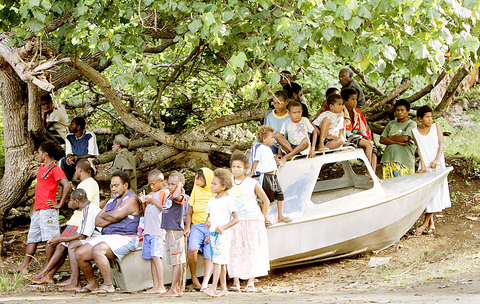
PHOTO: AP
Anxious mothers talked of children suffering coughs and fever at the Torgil Center in the Longana area of Ambae Island, where half the 10,000 population are in evacuation centers.
Erupting volcano Mount Manaro has been pumping out steam, ash and sulfur gases since Nov. 27 after waking from a 10-year slumber.
With more than 700 people crammed into the sprawling Torgil camp, living conditions are cramped in the concrete block huts where scores of people sleep -- many on woven mats on concrete floors.
"This place is not good," Rebecca Woi said as she cradled a coughing 2-year-old.
"The kids are sick, they have fever and coughs because it's so hot down here at the bottom of the mountain," she said.
"We're not getting the aid we need with coughs and fevers and the medicines are not free. Many families can't afford to pay for them," Woi added.
Local medical authorities were not immediately available to comment on the claims.
Earlier, a small motorized dinghy buzzed back and forth across Ambae's palm-fringed Lolowai Harbor ferrying the supplies from the freighter M.V. Ula to the beach where a human chain of 20 men passed the sacks and cartons to pickup trucks.
A large water tank, sent by the Vanuatu Red Cross, also landed on the beach, headed for one of five evacuation centers on the island.
The latest seismological readings show Manaro remains in a "stable, constant" state of activity, with the mountain trembling as explosions occur inside its crater.
Already the Vanuatu government has two ships standing ready to evacuate the island if the volcano's activity increases, though vulcanologists have said the chance of that happening appears low.
Former island resident Hannington Alatoa said yesterday that members of the Port Vila Ambae Society "are very concerned indeed" about the welfare of islanders.
"We have arriving today the first supply of goods to support" Ambae villagers displaced from their homes by the crisis, he said.
On Friday, many villagers returned to their own gardens to collect food, complaining that the government in Port Vila was not sending them any supplies.
Alatoa said Ambae people were able to provide their own food for the first two weeks of the emergency, and the relief supplies would ensure nobody was hungry.
He added that government assistance, including logistical aid, vulcanologists, evacuation vessels and emergency systems "will run into millions of Vat [local dollars] already."
But relief activity should remain under local control unless the eruption alert rises above its current Level 2 status on the five-point danger scale, he added.
At the emergency evacuation centers -- most of which are empty school and village buildings with thatch or tin roofs and glassless windows -- life for the refugees is an endless wait.
Woven mats on concrete and earth floors provide places to sleep but no protection from mosquitoes, many carrying malaria.
The outside walls of the shelters are lined with pots, pans, basins and buckets while taps from tanks provide rainwater.
The displaced villagers wait for news of the volcano, and whether its activity level is worsening.
Otherwise they chat in small groups, men and women talking separately -- reflecting the traditional structure of village life.
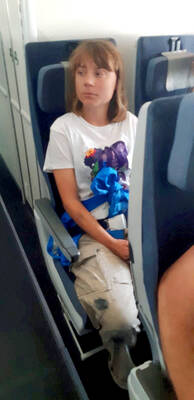
Swedish campaigner Greta Thunberg was deported from Israel yesterday, the Israeli Ministry of Foreign Affairs said, the day after the Israeli navy prevented her and a group of fellow pro-Palestinian activists from sailing to Gaza. Thunberg, 22, was put on a flight to France, the ministry said, adding that she would travel on to Sweden from there. Three other people who had been aboard the charity vessel also agreed to immediate repatriation. Eight other crew members are contesting their deportation order, Israeli rights group Adalah, which advised them, said in a statement. They are being held at a detention center ahead of a
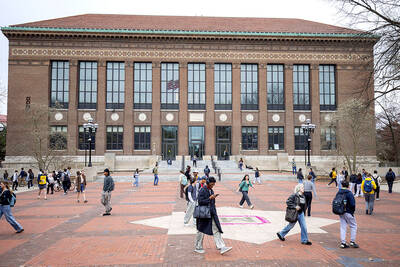
A Chinese scientist was arrested while arriving in the US at Detroit airport, the second case in days involving the alleged smuggling of biological material, authorities said on Monday. The scientist is accused of shipping biological material months ago to staff at a laboratory at the University of Michigan. The FBI, in a court filing, described it as material related to certain worms and requires a government permit. “The guidelines for importing biological materials into the US for research purposes are stringent, but clear, and actions like this undermine the legitimate work of other visiting scholars,” said John Nowak, who leads field
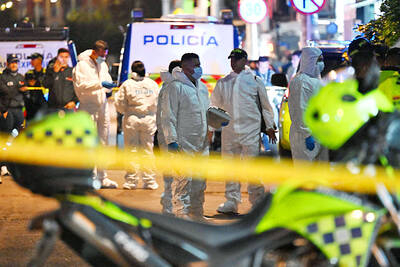
‘THE RED LINE’: Colombian President Gustavo Petro promised a thorough probe into the attack on the senator, who had announced his presidential bid in March Colombian Senator Miguel Uribe Turbay, a possible candidate in the country’s presidential election next year, was shot and wounded at a campaign rally in Bogota on Saturday, authorities said. His conservative Democratic Center party released a statement calling it “an unacceptable act of violence.” The attack took place in a park in the Fontibon neighborhood when armed assailants shot him from behind, said the right-wing Democratic Center, which was the party of former Colombian president Alvaro Uribe. The men are not related. Images circulating on social media showed Uribe Turbay, 39, covered in blood being held by several people. The Santa Fe Foundation

NUCLEAR WARNING: Elites are carelessly fomenting fear and tensions between nuclear powers, perhaps because they have access to shelters, Tulsi Gabbard said After a trip to Hiroshima, US Director of National Intelligence Tulsi Gabbard on Tuesday warned that “warmongers” were pushing the world to the brink of nuclear war. Gabbard did not specify her concerns. Gabbard posted on social media a video of grisly footage from the world’s first nuclear attack and of her staring reflectively at the Hiroshima Peace Memorial. On Aug. 6, 1945, the US obliterated Hiroshima, killing 140,000 people in the explosion and by the end of the year from the uranium bomb’s effects. Three days later, a US plane dropped a plutonium bomb on Nagasaki, leaving abut 74,000 people dead by the


 RSS
RSS