


In a stunning result, the outlawed Muslim Brotherhood captured at least 25 more seats in Egypt's parliament on Saturday, despite cordons of police that fired tear gas and rubber bullets in what appeared to be a determined government effort to block opposition voters and clamp off building momentum by the Islamic-based organization.
Early Interior Ministry figures showed the banned but tolerated Brotherhood increasing its share in parliament to at least 72 seats, a more than fourfold jump over its representation in the outgoing parliament -- with a third and final stage of voting still to go on Thursday, with a runoff likely six days after that.
The outcome, if it becomes final, would push the Brotherhood theoretically past number of seats needed under new constitutional rules to nominate a presidential candidate in 2011.
Armed backers of both Islamist and secular politicians engaged in fierce clashes that -- combined with police action -- severely curbed turnout and scarred an election that was seen as a test of Egypt's pledge to open its authoritarian political system.
Nongovernment organizations and judges monitoring the polls complained security forces blocked thousands of the 10 million eligible voters from entering polling stations in nine provinces where 122 seats were in play after no candidate garnered more than half the vote in the second round of polling.
Three prominent figures from President Hosni Mubarak's ruling National Democratic Party (NDP) -- Ahmed Abu Zeid, El-Sayed Rashed and Mohammed Abdellah, the former head of parliament's foreign affairs committee and president of Alexandria University -- were among those turned out of the 454-seat People's Assembly, where the NDP had held an 80 percent majority.
Before Saturday's vote the Brotherhood -- Egypt's largest Islamist group -- had racked up 47 of 186 decided seats. Mubarak's NDP had won 122 seats and 17 went to other candidates in voting that began Nov. 9.
While there was no chance the Brotherhood would unseat the NDP, which with its allies held 388 of 454 seats in the previous People's Assembly, the Brotherhood showing was a stunning outcome for an organization that previously held only 15 seats, with 41 occupied by other parties. Mubarak appointees fill 10 seats.
The president, meanwhile, unexpectedly canceled plans to attend a EU-sponsored summit yesterday in Barcelona, Spain, at which Europe was to push for increased ties by linking billions of dollars in economic aid to sweeping democratic and other reforms on the Mediterranean's southern and eastern rims.
Presidential spokesman Suleiman Awwad said the press of developments in the Arab world were behind the cancellation and denied election violence was the cause.
Judge Hesham el-Bastawisy, deputy head of Egypt's Court of Cassation, denounced the violence in an interview with the Arab satellite television channel al-Arabiya.
"What we've been hearing since early morning about what is happening at polling stations indicates this is not an election. It's a battle. Judges have been attacked, some wounded, some prevented from entering polling stations," el-Bastawisy said.
Senior Muslim Brotherhood member Ali Abdel Fattah said police arrested 680 members and supporters nationwide on Saturday, with nearly 120 of that number detained in Alexandria alone.
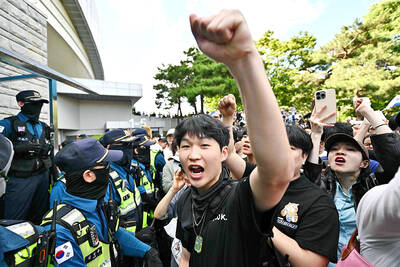
‘ABSURD MISTAKE’: The election commission said that there had been a failure to anticipate turnout after 14 polling stations ran short of ballot papers South Korean riot police yesterday cleared protesters from a Seoul polling station after a 35-hour blockade sparked by a shortage of ballot papers during local elections earlier this week. Wednesday’s election was the first nationwide vote since South Korean President Lee Jae-myung took office following the ouster of Yoon Suk-yeol over his short-lived martial law declaration. Lee’s ruling Democratic Party swept most races, but failed to flip the crucial Seoul mayoral seat. The South Korean National Election Commission apologized, blaming a failure to anticipate turnout after 14 polling stations in Seoul ran short of ballot papers. Some polling stations stayed open until 10pm to

France experienced its hottest spring on record, the French weather service said on Tuesday, after an exceptional early heat wave that also broke highs for the season in England and Wales. Meteo-France said the average nationwide temperature over March to May was 13.8°C — about 1.7°C above the norm, and surpassing records set in 2011 and 2020. “The warmest spring since records began in 1900,” it said in a bulletin. All three months were warmer than average, but the onset of an “unprecedented heatwave” late last month pushed the mercury to highs typically seen at the height of the summer. “Our country had never
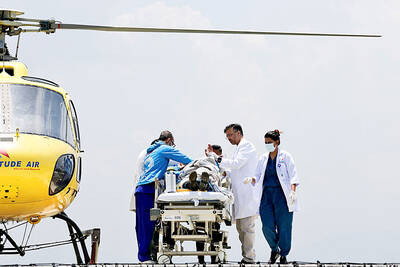
A Sherpa guide was found crawling to base camp on Mount Everest a week after he went missing and was reunited with his family, who had given up hope he would return. Dawa Sherpa was last seen on Friday last week descending the mountain, but he did not reach base camp even though his client did. The pair were among the last climbers on the mountain as the climbing season came to an end and the route was dismantled. Dawa was located by a cleaning crew on Thursday morning as he was crawling down the snowy slopes around the Khumbu Icefall, just above
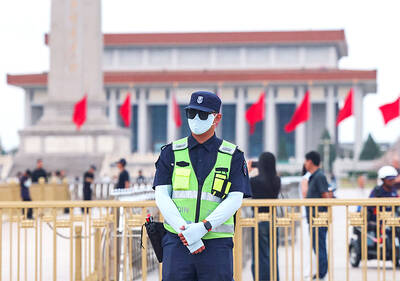
Chinese authorities are snuffing out any remembrance of the deadly 1989 military crackdown on student-led pro-democracy protests in Tiananmen Square, which happened 37 years ago yesterday, in a further tightening of a years-long campaign to erase what happened from public memory. Police told relatives of the victims they would not be allowed to visit a cemetery in Beijing on the anniversary of the crackdown, a person with knowledge of the matter said. Relatives of the victims visited the cemetery on the anniversary for more than 30 years to read memorial statements with police keeping watch, Amnesty International said. Hundreds of people,


 RSS
RSS