


Pakistan is flush with the success of raising nearly US$6 billion to help it recover from last month's massive earthquake, but the pressure is now on for it to deliver.
The sum pledged at an international donors' meet Saturday exceeded the government's appeal for US$5.2 billion for reconstruction and ongoing relief after the 7.6-magnitude earthquake that killed more than 73,000 people.
Having been chastised by UN Secretary General Kofi Annan for a "weak response" to the Oct. 8 quake, a host of countries, international banks and other groups pledged more than US$5.8 billion in grants, loans and aid.
"It was, from the point of view of Pakistan, a roaring success in that they actually obtained more pledges than they had asked for," political commentator Mohammad Afzal Niazi told reporters.
However, "The real test for the government will be whether they are able to deliver to the victims the fruits of this," Niazi said.
Another concern was whether the pledges would be honored, he said, because donors to international disasters frequently fail to deliver on grand promises that catch the spotlight.
Also, the government had been so focused on raising the aid that it had not properly worked out what it would do with it, Faisal Bari, economist with the Islamabad-based Mahbobul Haq Human Development Center, told reporters.
"It is good to know that they have been able to raise what they wanted," Bari said.
"The negative side of it is that there has been too much attention in raising money and too little thinking on what the reconstruction and rehabilitation plans should be," he said.
The UN and aid agencies have warned of a possible "second wave of deaths" with the onset of the severe Himalayan winter and the homes of three million people reduced to rubble in the quake.
President Pervez Musharraf and Prime Minister Shaukat Aziz were warm in their thanks to the conference delegates from about 50 countries and 25 international organizations and financial institutions.
The generosity had shown "that this world is truly a global village," Musharraf said.
"We are not isolated," Aziz said. "We are on the world map. We have respect."
Donor fatigue after last year's tsunami and Hurricane Katrina in the US were blamed for some of the initial donor reluctance.
Aid agencies said privately though there were also concerns about Islamic fundamentalists based in Pakistan, and widespread corruption.
After years of isolation because of its support for the brutal Taliban regime in neighboring Afghanistan, Pakistan was brought back into the global fold in late 2001 when Musharraf agreed to support the US "war on terror" launched after the Sept. 11 attacks claimed by al-Qaeda against the US.
In what some said was payback for Pakistan's efforts against al-Qaeda-linked militants, the US led the emergency relief effort in the immediate aftermath of the quake.
It was also among the main donor nations on Saturday, pledging US$510 million that was second only to Saudi Arabia's US$573 million in loans and grants.
That most of the new pledges were loans was a disappointment, Oxfam humanitarian coordinator James Cocking told reporters.
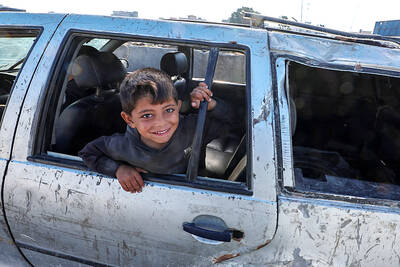
Gaza is rapidly running out of its limited fuel supply and stocks of food staples might become tight, officials said, after Israel blocked the entry of fuel and goods into the war-shattered territory, citing fighting with Iran. The Israeli military closed all Gaza border crossings on Saturday after announcing airstrikes on Iran carried out jointly with the US. Israeli authorities late on Monday night said that they would reopen the Kerem Shalom crossing from Israel to Gaza yesterday, for “gradual entry of humanitarian aid” into the strip, without saying how much. Israeli authorities previously said the crossings could not be operated safely during
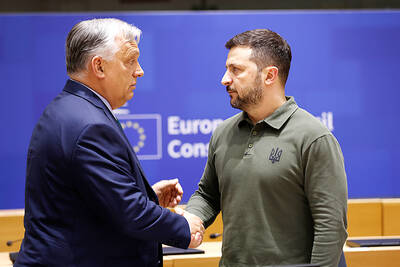
Hungarian authorities temporarily detained seven Ukrainian citizens and seized two armored cars carrying tens of millions of euros in cash across Hungary on suspicion of money laundering, officials said on Friday. The Ukrainians were released on Friday, following their detention on Thursday, but Hungarian officials held onto the cash, prompting Ukraine to accuse Hungary’s Russia-friendly government of illegally seizing the money. “We will not tolerate this state banditism,” Ukrainian Minister of Foreign Affairs Andrii Sybiha said. The seven detained Ukrainians were employees of the Ukrainian state-owned Oschadbank, who were traveling in the two armored cars that were carrying the money between Austria and
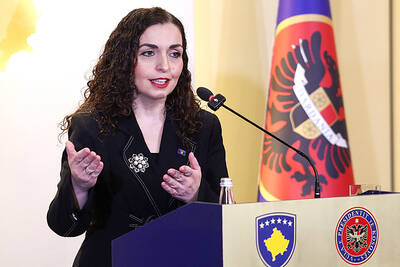
Kosovar President Vjosa Osmani on Friday after dissolving the Kosovar parliament said a snap election should be held as soon as possible to avoid another prolonged political crisis in the Balkan country at a time of global turmoil. Osmani said it is important for Kosovo to wrap up the upcoming election process and form functional institutions for political stability as the war rages in the Middle East. “Precisely because the geopolitical situation is that complex, it is important to finish this electoral process which is coming up,” she said. “It is very hard now to imagine what will happen next.” Kosovo, which declared
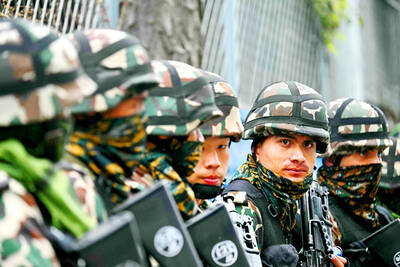
Counting was under way in Nepal yesterday, after a high-stakes parliamentary election to reshape the country’s leadership following protests last year that toppled the government. Key figures vying for power include former Nepalese prime minister K. P. Sharma Oli, rapper-turned-mayor Balendra Shah, who is bidding for the youth vote, and newly elected Nepali Congress party leader Gagan Thapa. In Kathmandu’s tea shops and city squares, people were glued to their phones, checking results as early trends flashed up — suggesting Shah’s centrist Rastriya Swatantra Party (RSP) was ahead. Nepalese Election Commission spokesman Prakash Nyupane said the counting was ongoing “in a peaceful manner”


 RSS
RSS