


British Prime Minister Tony Blair is expected to be forced into a humiliating climbdown this week over his plans to detain terrorist suspects without charge for up to 90 days, despite the near unanimous backing of the police in the UK and the British general public.
In a letter to the Guardian, the chief constable of Greater Manchester and the senior member of the police terrorism committee, Michael Todd, bluntly warns that it is vital that their view is heard about the need for greater powers of detention of terror suspects.
Todd writes: "We have given that professional advice on one basis and one basis only, that these were the changes that professionals dir-ectly involved in the fight against terrorism felt were necessary to protect the people of this country from attack."
"That is the view not only of [London's] Metropolitan police, but of chief constables across the country and the terrorism committee that represents them," he writes.
His letter is unlikely to change enough backbenchers' minds for Blair to win a Commons vote tom-orrow, but it does pose questions for the Conservative leadership amid signs that some senior Tories feel they have been dragged into siding wholesale with civil liberties groups and against the security forces.
Blair -- who would hold his monthly press conference yesterday and address his critics in the parliamentary party last night -- remains strongly committed to the 90 days, claiming opponents of the reform are being "dangerously complacent" about the terrorist threat.
Home Secretary Charles Clarke, will also meet backbenchers as well as holding talks with opposition parties on a likely compromise of 28 days, described on Sunday as the "absolute outer limit of what is acceptable" by the shadow attorney general, Dominic Grieve.
A YouGov poll for Sky News shows overwhelming popular support for the government's position, with 72 percent believing the maximum detention time should be extended to 90 days. Of those, 41 percent said that it should be granted only with the approval of a senior judge. The government has already said extension should be authorized by a senior judge with appeal to the high court.
The poll found that 16 percent backed a proposal by rebel Labour members of parliament (MPs) to extend the current limit to 28 days.
The lord chancellor, Lord Falconer, indicated however that the government would have to give ground.
Former Cabinet minister Frank Dobson warned of a breakdown in trust inside the parliamentary party if Clarke and the whips reneged on their commitment last week to back down over the issue.
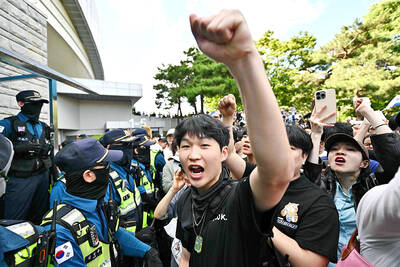
‘ABSURD MISTAKE’: The election commission said that there had been a failure to anticipate turnout after 14 polling stations ran short of ballot papers South Korean riot police yesterday cleared protesters from a Seoul polling station after a 35-hour blockade sparked by a shortage of ballot papers during local elections earlier this week. Wednesday’s election was the first nationwide vote since South Korean President Lee Jae-myung took office following the ouster of Yoon Suk-yeol over his short-lived martial law declaration. Lee’s ruling Democratic Party swept most races, but failed to flip the crucial Seoul mayoral seat. The South Korean National Election Commission apologized, blaming a failure to anticipate turnout after 14 polling stations in Seoul ran short of ballot papers. Some polling stations stayed open until 10pm to

France experienced its hottest spring on record, the French weather service said on Tuesday, after an exceptional early heat wave that also broke highs for the season in England and Wales. Meteo-France said the average nationwide temperature over March to May was 13.8°C — about 1.7°C above the norm, and surpassing records set in 2011 and 2020. “The warmest spring since records began in 1900,” it said in a bulletin. All three months were warmer than average, but the onset of an “unprecedented heatwave” late last month pushed the mercury to highs typically seen at the height of the summer. “Our country had never

A Sherpa guide was found crawling to base camp on Mount Everest a week after he went missing and was reunited with his family, who had given up hope he would return. Dawa Sherpa was last seen on Friday last week descending the mountain, but he did not reach base camp even though his client did. The pair were among the last climbers on the mountain as the climbing season came to an end and the route was dismantled. Dawa was located by a cleaning crew on Thursday morning as he was crawling down the snowy slopes around the Khumbu Icefall, just above
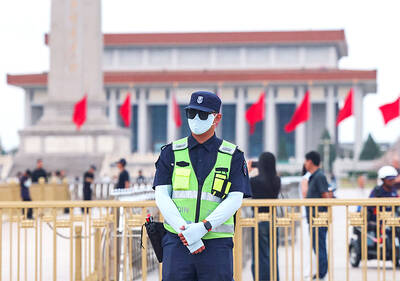
Chinese authorities are snuffing out any remembrance of the deadly 1989 military crackdown on student-led pro-democracy protests in Tiananmen Square, which happened 37 years ago yesterday, in a further tightening of a years-long campaign to erase what happened from public memory. Police told relatives of the victims they would not be allowed to visit a cemetery in Beijing on the anniversary of the crackdown, a person with knowledge of the matter said. Relatives of the victims visited the cemetery on the anniversary for more than 30 years to read memorial statements with police keeping watch, Amnesty International said. Hundreds of people,


 RSS
RSS