


US President George W. Bush on Sunday ramped up his efforts to curb Venezuela and Cuba's clout in Latin America, accusing them of trying to "roll back" fragile democratic and free-market gains in the region.
After talks with Brazilian Pres-ident Luiz Inacio Lula da Silva, Bush bowed to his host's view that successful WTO negotiations have to precede new talks on creating the Free Trade Area of the Americas (FTAA).
Bush, who reportedly brought his own food and chef to the Summit of the Americas in Argentina, also made a point on Sunday of praising Brazil's shared passion with his home state of Texas: barbecue.
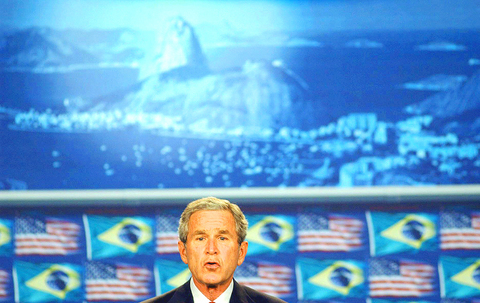
PHOTO: EPA
Lula served Bush -- who was on his first visit to Brazil -- trad-itional fare of beef, lamb, ox tail and some cheese, according to the White House.
The US president, who had predicted the meal "will remind me of home," later declared the meal "unbelievably good barbeque."
He also promised to take Lula up on a fishing invitation once he leaves the White House.
Amid concerns in Washington that poverty may enhance the appeal of anti-US, economically populist messages, Bush said in a speech that "ensuring social justice for the Americas requires choosing between two competing visions."
"One offers a vision of hope. It is founded on representative government, integration into the world community and a faith in the transformative power of freedom," he told students, diplomats and business leaders.
"The other seeks to roll back the democratic progress of the past two decades by playing to fear, pitting neighbor against neighbor and blaming others for their own failures to provide for their people," he said.
He never named Venezuelan President Hugo Chavez or Cuban leader Fidel Castro, but White House aides tacitly acknowledged that they were the targets of what was the keynote speech of a five-day, three-country trip to the region.
Bush also celebrated US ties with the region's richest economy despite opposition here to his vision for a mammoth hemispheric free-trade zone stretching from Canada to Chile.
"He has got to be convinced, just like the people of America must be convinced, that a trade arrrangement in our hemisphere is good for jobs, is good for the quality of life," Bush conceded during a joint appearance.
In a joint statement, the two leaders vowed to work together to promote improved governance, regional and trans-regional dial-ogues, development and poverty alleviation.
Bush and Chavez stayed away from each other at the 34-nation summit in Argentina, where Venezuela and four other countries including Brazil blocked progress on the FTAA. Castro was not invited.
Brazil has said there is no point in doing so until after the so-called Doha Round of WTO talks, which have bogged down over agricultural subsidies -- the same chief obstacle in the Americas trade debate.
Lula called US aid to its farmers "unjustified barriers to our bilateral trade" and that he and Bush had explored their differences "without surprises or confrontations."
Earlier, in a roundtable discussion with prominent Brazilians, Bush shrugged off the sometimes violent protests he attracted at the summit in Argentina, saying: "I expect there to be dissent. That's what freedom is all about."
Outside the residence where Bush and Lula met, some 200 protesters chanted "Fascist Bush, the real terrorist" and burned an effigy of the US president dressed in a shirt with a swastika.
Also see story:
Americas' free-trade zone facing an uphill struggle
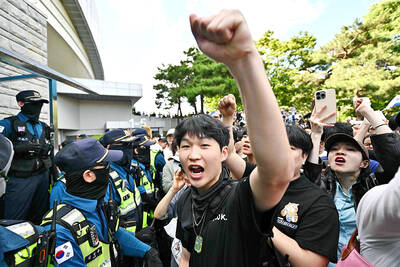
‘ABSURD MISTAKE’: The election commission said that there had been a failure to anticipate turnout after 14 polling stations ran short of ballot papers South Korean riot police yesterday cleared protesters from a Seoul polling station after a 35-hour blockade sparked by a shortage of ballot papers during local elections earlier this week. Wednesday’s election was the first nationwide vote since South Korean President Lee Jae-myung took office following the ouster of Yoon Suk-yeol over his short-lived martial law declaration. Lee’s ruling Democratic Party swept most races, but failed to flip the crucial Seoul mayoral seat. The South Korean National Election Commission apologized, blaming a failure to anticipate turnout after 14 polling stations in Seoul ran short of ballot papers. Some polling stations stayed open until 10pm to

France experienced its hottest spring on record, the French weather service said on Tuesday, after an exceptional early heat wave that also broke highs for the season in England and Wales. Meteo-France said the average nationwide temperature over March to May was 13.8°C — about 1.7°C above the norm, and surpassing records set in 2011 and 2020. “The warmest spring since records began in 1900,” it said in a bulletin. All three months were warmer than average, but the onset of an “unprecedented heatwave” late last month pushed the mercury to highs typically seen at the height of the summer. “Our country had never
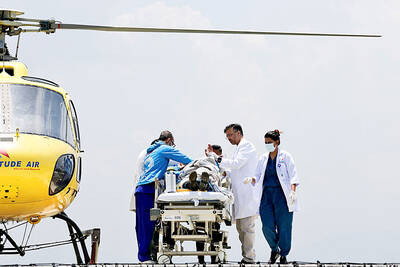
A Sherpa guide was found crawling to base camp on Mount Everest a week after he went missing and was reunited with his family, who had given up hope he would return. Dawa Sherpa was last seen on Friday last week descending the mountain, but he did not reach base camp even though his client did. The pair were among the last climbers on the mountain as the climbing season came to an end and the route was dismantled. Dawa was located by a cleaning crew on Thursday morning as he was crawling down the snowy slopes around the Khumbu Icefall, just above
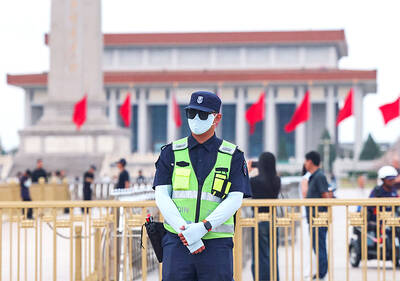
Chinese authorities are snuffing out any remembrance of the deadly 1989 military crackdown on student-led pro-democracy protests in Tiananmen Square, which happened 37 years ago yesterday, in a further tightening of a years-long campaign to erase what happened from public memory. Police told relatives of the victims they would not be allowed to visit a cemetery in Beijing on the anniversary of the crackdown, a person with knowledge of the matter said. Relatives of the victims visited the cemetery on the anniversary for more than 30 years to read memorial statements with police keeping watch, Amnesty International said. Hundreds of people,


 RSS
RSS