


Somalia may have a new government, but it can't seem to shake its history of chaos.
In Mogadishu, the capital of the Horn of Africa nation, gunmen threw grenades and a land mine exploded near the convoy of Somali Prime Minister Ali Mohamed Gedi on Sunday, killing at least five bodyguards and wounding several others, said Mohamed Ali Americo, a senior official in Gedi's office. Gedi was unharmed.
It was the second such narrow escape for Gedi. On May 3, an explosion went off just 10m from Gedi during his first visit to Mogadishu since he took office last year. He was not harmed and said the incident was an accident, but others suspect the blast was an attempt to kill him and guarantee his exiled government never takes power.
Gedi's transitional government, formed late last year after lengthy peace talks in Kenya, faces opposition from warlords who thrive in the anarchy Somalia has known since opposition leaders ousted dictator Mohamed Siad Barre in 1991. Fundamentalist Muslim leaders also oppose the secular transitional government.
The government is further weakened by internal rivalries. Gedi and President Abdulahi Yusuf Ahmed have set up in Jowhar, a Somali town 90km northwest of the capital, saying Mogadishu is considered unsafe. Rivals have set up another camp in Mogadishu.
This nation of 7 million has since 1991 been a patchwork of battling fiefdoms. The transitional government makes little pretense of having much influence on land, let alone on the seas, where pirates have been seizing merchant ships and holding them for ransom.
Somalia lies along key shipping lanes linking the Mediterranean with the Persian Gulf and Indian Ocean.
Even before the recent cruise ship attack signaled pirates had opened a new and bolder chapter, Gedi had called on neighboring countries to send warships to patrol his 3,000km coastline, Africa's longest. The International Maritime Bureau, citing a sharp rise in piracy this year along Somalia's coastline, has for several months warned ships to stay at least 240km away.
On Saturday, two boats full of pirates approached the Seabourn Spirit about 160km off the coast of Somalia and fired rocket-propelled grenades and assault rifles.
The cruise ship sped away. None of its passengers, mostly Americans with some Australians and Europeans, were injured, said Bruce Good, spokesman for the Miami-based Seabourn Cruise Line, a subsidiary of Carnival Corp. One member of the 161-person crew was injured by shrapnel, cruise line president Deborah Natansohn said.
Judging from the location of the attack, the pirates are likely to have been from a group that hijacked a UN-chartered vessel in June and held its crew and food aid hostage for 100 days, said Andrew Mwangura, head of the Kenyan chapter of the Seafarers Assistance Program.
Somali pirates "are getting more powerful, more vicious and bolder day by day," Mwangura said.
Britain's National Union of Marine Aviation and Shipping Transport, which represents merchant navy officers, called on Sunday for a naval task force to protect ships traveling off the coast of Somalia.
US and NATO warships patrol the region to protect vessels in deeper waters further out, but they are not permitted in Somalia's territorial waters.

School bullies in Singapore are to face caning under new guidelines, but the education minister on Tuesday said it would be meted out only as a last resort with strict safeguards. Human rights groups regularly criticize Singapore for the use of corporal punishment, which remains part of the school and criminal justice systems, but authorities have defended it as a deterrent to crime and serious misconduct. Caning was discussed in the parliament after legislators asked how it would be used in relation to bullying in schools. The debate followed stricter guidelines on serious student misconduct, including bullying, unveiled by the Singaporean Ministry of

As evening falls in Fiji’s capital, a steady stream of people approaches a makeshift clinic that is a first line of defense against one of the world’s fastest-growing HIV epidemics. In the South Pacific nation — a popular tourist destination of just under a million people — more than 2,000 new HIV cases were recorded last year, a 26 percent increase from 2024. The government has declared an HIV outbreak and described it as a national crisis. “It’s spreading like wildfire,” said Siteri Dinawai, 46, who came to be tested. The Moonlight Clinic, a converted minibus parked in a suburban cul-de-sac in Suva, is
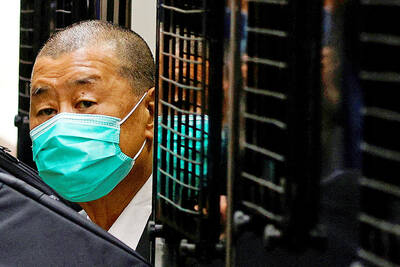
Jailed media entrepreneur Jimmy Lai (黎智英) has been awarded Deutsche Welle’s (DW) freedom of speech award for his contribution to Hong Kong’s pro-democracy movement. The German public broadcaster on Thursday said Lai would be presented in absentia with the 12th iteration of the award on June 23 at the DW Global Media Forum in Bonn. Deutsche Welle director-general Barbara Massing praised the 78-year-old founder of the now-shuttered news outlet Apple Daily for standing “unwaveringly for press freedom in Hong Kong at great personal risk.” “With Apple Daily, he gave journalists a platform for free reporting and a voice to the democracy movement in
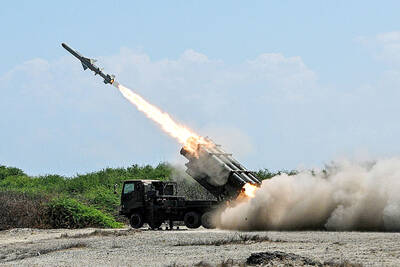
A MESSAGE: Japan’s participation in the Balikatan drills is a clear deterrence signal to China not to attack Taiwan while the US is busy in the Middle East, an analyst said The Japan Self-Defense Forces yesterday fired a Type 88 anti-ship missile during a joint maritime exercise with US, Australian and Philippine forces, hitting a decommissioned Philippine Navy ship in waters facing the disputed South China Sea, in drills that underscore Tokyo’s rising willingness to project military power on China’s doorstep. The drill took place as Manila and Tokyo began talks on a potential defense equipment transfer, made possible by Japan’s decision to scrap restrictions on military exports. The discussions include the possible early transfer of Abukuma-class destroyers and TC-90 aircraft to the Philippines, Japanese Minister of Defense Shinjiro Koizumi said. Philippine Secretary of


 RSS
RSS