


Southeast Asia and Australia forged a new friendship yesterday while Asia's top security forum struggled to stay relevant by expanding its mission from annual speechmaking to year-round diplomatic troubleshooting.
Australia pushed aside its past reservations about a nonaggression pact with ASEAN and signed a document of intent to join the treaty so it can be more solidly aboard efforts to create an Asian trade bloc to rival that of Europe and North America.
Australia's foreign minister joined counterparts from the 10-member ASEAN bloc and 13 other Asia-Pacific nations in Laos for the annual security-oriented ASEAN Regional Forum through tomorrow.
PHOTO: AFP
The ARF is Asia's top annual security forum, but it was getting second-tier attention this year from big players: Top diplomats from the US, Japan, China and India skipped all or part of this year's meeting, sending deputies instead.
"We see it as a coincidence. It's that they have some urgent business," said Thai Foreign Minister Kantathi Suphamongkhon. "We hope it's not a new trend."
Ministers at the conference planned to adopt a new doctrine today empowering the chairman of the forum to convene committees during brewing conflicts so that they can intervene with "preventive diplomacy," ARF spokesman M.C. Abad, Jr. said.
Malaysian Foreign Minister Syed Hamid Albar said the change has been inevitable since the ARF was formed in 1994.
"I think after 10 years, it is the correct way of moving forward ... a natural extension," Syed Hamid said. "I think it is good that it is not just simply a talk shop."
Abad said forum officials were drafting a concept paper to elaborate on giving the ARF chair the enhanced role.
Foreign ministers from the two Koreas met at a hotel in Vientiane while six-party talks continued in Beijing on efforts to end North Korea's nuclear weapons program.
Australia originally balked at joining countries such as Russia, China and India in signing the ASEAN nonaggression pact, saying it could conflict with its other treaties, including with the US.
Southeast Asian nations had urged Australia to sign the accord to help dispel their concerns over Canberra's policy asserting it has the right to attack terrorists on foreign soil if they pose a threat to Australia. That policy -- announced by Prime Minister John Howard after the 2002 Bali bombings killed 88 Australians -- drew strong protests from Indonesia and Malaysia, whose then-Prime Minister Mahathir Mohamad accused Howard of acting like a "white-man sheriff in some black country." At the six-day regional conference in Laos, foreign ministers from Australia, Indonesia and Malaysia all indicated that the issue was now defused.
"If the suggestion here is are we planning to invade our neighbors, that is a preposterous proposition," Australian Foreign Minister Alexander Downer said. "It's not an issue at all," Indonesian Foreign Minister Hassan Wirayuda agreed.
ASEAN made the pact a condition for Australia's invitation -- announced Tuesday -- for the inaugural East Asia summit in Malaysia in December among ASEAN's 10 core members plus China, Japan, South Korea and invitees New Zealand, India -- and now Australia.
The summit aims to create a trade bloc in a market encompassing half the world's population -- something Australia and the other invitees are eager to join. New Zealand, which did not share Australia's previous objections to the ASEAN pact, signed onto the treaty yesterday, as did Mongolia. Australia is to follow up its declaration of intent to join the treaty with ratification by its parliament and is expected to join by December.

PHISHING: The con might appear convincing, as the scam e-mails can coincide with genuine messages from Apple saying you have run out of storage For a while you have been getting messages from Apple saying “your iCloud storage is full.” They say you have exceeded your storage plan, so documents are no longer being backed up, and photos you take are not being uploaded. You have been resisting Apple’s efforts to get you to pay a minimum of £0.99 (US$1.33) a month for more storage, but it seems that you cannot keep putting off the inevitable: You have received an e-mail which says your iCloud account has been blocked, and your photos and videos would be deleted very soon. To keep them you need
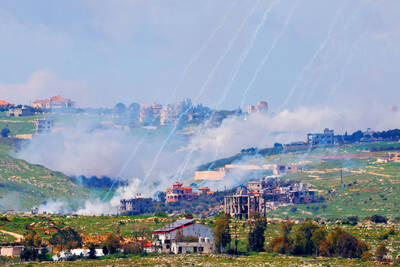
The Israeli military has demolished entire villages as part of its invasion of south Lebanon, rigging homes with explosives and razing them to the ground in massive remote detonations. The Guardian reviewed three videos posted by the Israeli military and on social media, which showed Israel carrying out mass detonations in the villages of Taybeh, Naqoura and Deir Seryan along the Israel-Lebanon border. Lebanese media has reported more mass detonations in other border villages, but satellite imagery was not readily available to verify these claims. The demolitions came after Israeli Minister of Defense Israel Katz called for the destruction of

A US YouTuber who caused outrage for filming himself kissing a statue commemorating Korean wartime sex slaves has been sentenced to six months in prison, a court in Seoul said yesterday. Johnny Somali, 25, gained notoriety several years ago for recording himself doing a series of provocative stunts in South Korea and Japan, and streaming them on platforms such as YouTube and Twitch. South Korean authorities indicted Somali — whose real name is Ramsey Khalid Ismael — in 2024 on public order violations and obstruction of business, and banned him from leaving the country. “The court has sentenced him to six months in
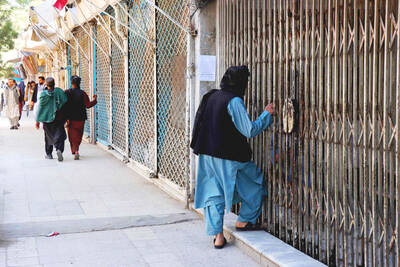
The death toll from a shooting in western Afghanistan rose to 11 on Saturday, after gunmen targeted civilians at a picnic spot in Herat, the provincial authority said. Bullet marks were visible on a wall of the Sayed Mohammad Agha Shia shrine, while bloodstains marked a blanket abandoned at the scene. “Eleven people have been recorded dead and eight others wounded from Friday’s incident, with the condition of two of the wounded reported as critical,” Herat’s information office said in a statement. The update raises a toll of seven killed provided on Friday by the Afghan Ministry of Interior Affairs


 RSS
RSS