


Three Palestinian Hamas militants were killed in an Israeli helicopter missile strike near a major Jewish settlement in the occupied West Bank yesterday, Palestinian witnesses said.
The witnesses said three missiles were fired at a car in a mountainous area between the settlement of Ariel and the Palestinian town of Salfit.
"I saw two helicopters firing three missiles in the area of Wadi al-Shaer [mountain], then they sprayed the area with heavy machine gunfire. Usually men wanted by Israel hide there," local resident al-Watheq Billah, said.
Minutes later, Israeli helicopters over Gaza City launched a missile into a car, tearing it apart and killing two Hamas militants inside. The missile strikes were part of a heavy Israeli offensive against militants launched after a rocket attack from Gaza killed a woman in nearby Israel on Thursday and an Islamic Jihad suicide bombing that killed five Israelis on Tuesday.
Palestinian security forces and Hamas militants exchanged fire in a crowded Gaza City neighborhood yesterday, and at least two people were killed and 25 wounded in some of the worst fighting among Palestinians in recent years. Palestinian troops were placed on high alert.
Palestinian President Mahmoud Abbas, struggling to rescue a five-month-old truce, has been under intense pressure from Israel and the US to crack down on militants. The tough Palestinian police action yesterday suggested a possible shift in Palestinian policy, though Abbas was reluctant in the past to confront the militants. Palestinian security chief Nasser Yousef said that his forces will "not hesitate" to restore law and order, and ordered rocket attacks to be stopped by all means.
A defiant Hamas demanded that Abbas fire Yousef, who was a top commander during the bloodiest clash between Hamas and security forces so far -- a 1994 confrontation outside a mosque in which 15 Hamas supporters were killed by Palestinian police fire.
Abbas was at his Gaza City office during yesterday's fighting, and it was not clear whether he would meet with leaders of militant groups in an effort to defuse tensions. Sakher Bseisso, a Cabinet minister involved in contacts with Hamas in the past, said the militants were leaving Abbas little choice but to crack down.
"Hamas is trying to impose its control on the ground," he said.
Yesterday's clashes erupted in Gaza City's Zeitoun neighborhood, after security forces searched for militants suspected of firing rockets at Israeli towns. Militants torched a police station, and set a police armored personnel carrier and three jeeps on fire. Thick black smoke from burning tires rose from the neighborhood, as masked Hamas gunmen stood guard outside the police station. A teenager and a child were killed in the fighting, and at least 25 people were wounded, including six policemen and 19 civilians, hospital officials said.
After heavy gunfire exchanges yesterday morning, police pulled out of Zeitoun, while masked gunmen took up positions on street corners and rooftops. Hundreds of civilians were watching the fighting.
Yesterday's clashes came just hours after a rocket fired from Gaza killed an Israeli woman and Israel retaliated with helicopter missile strikes on several targets in Gaza. Yesterday morning, six more rockets hit in and around the Israeli border town of Sderot, causing no injuries. If fighting spins out of control, it could overshadow the planned Israeli withdrawal from Gaza next month. Israel has said it would not pull out of Gaza under fire.
The confrontations between police and militants began in northern Gaza on Thursday evening, when police said they tried to stop a Hamas squad from firing rockets at nearby Israeli towns. A firefight erupted, and five Hamas militants were wounded. In response, dozens of Hamas gunmen attacked a Palestinian police post in a different area, firing machine guns, hurling grenades and setting two police cruisers on fire.

School bullies in Singapore are to face caning under new guidelines, but the education minister on Tuesday said it would be meted out only as a last resort with strict safeguards. Human rights groups regularly criticize Singapore for the use of corporal punishment, which remains part of the school and criminal justice systems, but authorities have defended it as a deterrent to crime and serious misconduct. Caning was discussed in the parliament after legislators asked how it would be used in relation to bullying in schools. The debate followed stricter guidelines on serious student misconduct, including bullying, unveiled by the Singaporean Ministry of

As evening falls in Fiji’s capital, a steady stream of people approaches a makeshift clinic that is a first line of defense against one of the world’s fastest-growing HIV epidemics. In the South Pacific nation — a popular tourist destination of just under a million people — more than 2,000 new HIV cases were recorded last year, a 26 percent increase from 2024. The government has declared an HIV outbreak and described it as a national crisis. “It’s spreading like wildfire,” said Siteri Dinawai, 46, who came to be tested. The Moonlight Clinic, a converted minibus parked in a suburban cul-de-sac in Suva, is
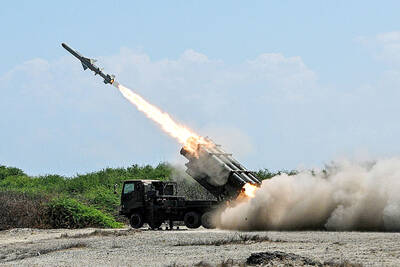
A MESSAGE: Japan’s participation in the Balikatan drills is a clear deterrence signal to China not to attack Taiwan while the US is busy in the Middle East, an analyst said The Japan Self-Defense Forces yesterday fired a Type 88 anti-ship missile during a joint maritime exercise with US, Australian and Philippine forces, hitting a decommissioned Philippine Navy ship in waters facing the disputed South China Sea, in drills that underscore Tokyo’s rising willingness to project military power on China’s doorstep. The drill took place as Manila and Tokyo began talks on a potential defense equipment transfer, made possible by Japan’s decision to scrap restrictions on military exports. The discussions include the possible early transfer of Abukuma-class destroyers and TC-90 aircraft to the Philippines, Japanese Minister of Defense Shinjiro Koizumi said. Philippine Secretary of
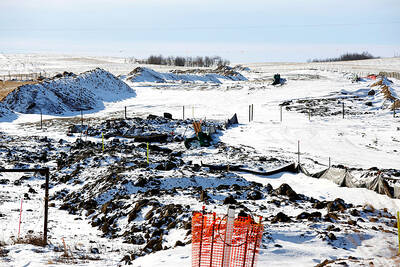
Separatists in Alberta are preparing to submit a petition tomorrow that they said has enough signatures to force a referendum on independence for the oil-rich Canadian province. Polls indicate the pro-independence camp remains a minority among Alberta’s 5 million people, but has hit a historic high of roughly 30 percent. Alberta separatists are also closer than ever to forcing a referendum, riding momentum fueled by intensifying grievances over Ottawa’s control of the provincial oil industry. They have also undeniably gotten a boost from the return to power of US President Donald Trump. After launching a petition in January, Stay Free Alberta, the group


 RSS
RSS