


A nuclear weapons test by North Korea would reverberate around the world, altering the nuclear balance in Asia and posing stark new challenges for US policy-makers and military planners.
It could also induce China, Russia and other powers to join the US in seeking UN-approved penalties against the hard-line communist country, analysts suggest.
With US officials increasingly concerned that North Korea may conduct a test soon, how would Washington respond?
First, the Bush administration probably would try to involve the UN. Less clear is whether US President George W. Bush would consider a risky military strike -- given North Korean leader Kim Jong-il's million-man army, heavy conventional weaponry and perhaps several nuclear weapons.
"The North Koreans are basically hellbent on proving to the world that they need to be taken seriously. That's dangerous," said Representative Curt Weldon, vice chairman of the House Armed Services Committee.
"A North Korean test would embarrass China and might actually rally other nations to our position. But the result might push Kim Jong-il to take whatever steps he felt were necessary to rally his people into war," Weldon said.
Weldon, who led a delegation to North Korea in January, said he met last Monday in New York with North Korea's deputy UN ambassador, Han Song-ryol, and told him, "If you do a test, you're going to set this process back years and years, and it's going to lead to consequences neither of us want."
Meanwhile, North Korea has indicated a willingness to return to the bargaining table but said it is waiting for Washington to clarify conflicting statements on US policy. Citing differences between Washington's public and private statements, the North's official Korean Central News Agency quoted a Foreign Ministry spokesman Sunday as saying Pyongyang "will continue to closely watch the US side's attitude, and when the time comes we will officially deliver to the US side our position through the New York contacts."
White House press secretary Scott McClellan said Monday that the Bush administration sees no contradictions in its statements on North Korea.
"The six-party talks are the way forward to resolving this issue. We want to see them come back to the talks. We have no preconditions for returning to the talks and we've made that very clear," he said.
US officials want China to exert more pressure on its longtime ally. China says bullying rhetoric by the US makes it harder to coax the North Koreans back to the negotiating table.
"The potential downside of a test is enormous," said Kurt Campbell, former assistant secretary of defense for Asia in the Clinton administration. "It would set off a chain reaction in the region with completely impossible-to-predict consequences."
It could even lead South Korea and Japan to rethink their policy against nuclear arsenals, he said.
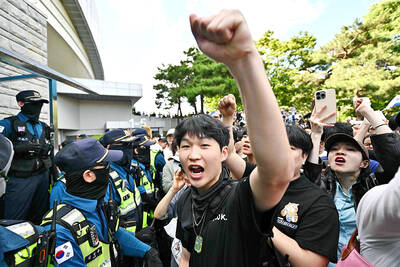
‘ABSURD MISTAKE’: The election commission said that there had been a failure to anticipate turnout after 14 polling stations ran short of ballot papers South Korean riot police yesterday cleared protesters from a Seoul polling station after a 35-hour blockade sparked by a shortage of ballot papers during local elections earlier this week. Wednesday’s election was the first nationwide vote since South Korean President Lee Jae-myung took office following the ouster of Yoon Suk-yeol over his short-lived martial law declaration. Lee’s ruling Democratic Party swept most races, but failed to flip the crucial Seoul mayoral seat. The South Korean National Election Commission apologized, blaming a failure to anticipate turnout after 14 polling stations in Seoul ran short of ballot papers. Some polling stations stayed open until 10pm to

France experienced its hottest spring on record, the French weather service said on Tuesday, after an exceptional early heat wave that also broke highs for the season in England and Wales. Meteo-France said the average nationwide temperature over March to May was 13.8°C — about 1.7°C above the norm, and surpassing records set in 2011 and 2020. “The warmest spring since records began in 1900,” it said in a bulletin. All three months were warmer than average, but the onset of an “unprecedented heatwave” late last month pushed the mercury to highs typically seen at the height of the summer. “Our country had never
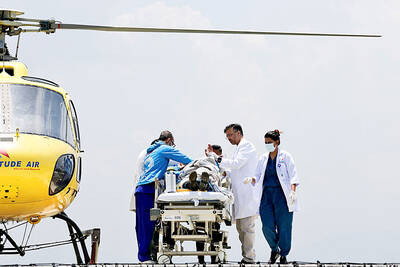
A Sherpa guide was found crawling to base camp on Mount Everest a week after he went missing and was reunited with his family, who had given up hope he would return. Dawa Sherpa was last seen on Friday last week descending the mountain, but he did not reach base camp even though his client did. The pair were among the last climbers on the mountain as the climbing season came to an end and the route was dismantled. Dawa was located by a cleaning crew on Thursday morning as he was crawling down the snowy slopes around the Khumbu Icefall, just above
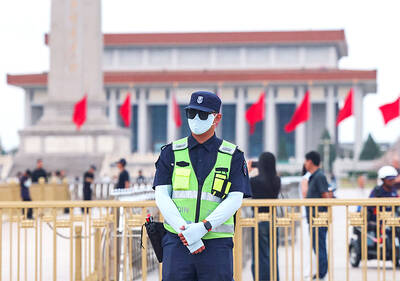
Chinese authorities are snuffing out any remembrance of the deadly 1989 military crackdown on student-led pro-democracy protests in Tiananmen Square, which happened 37 years ago yesterday, in a further tightening of a years-long campaign to erase what happened from public memory. Police told relatives of the victims they would not be allowed to visit a cemetery in Beijing on the anniversary of the crackdown, a person with knowledge of the matter said. Relatives of the victims visited the cemetery on the anniversary for more than 30 years to read memorial statements with police keeping watch, Amnesty International said. Hundreds of people,


 RSS
RSS