


US Secretary of State Condoleezza Rice made a surprise visit to Iraq yesterday to bolster the country's fledgling government just hours after US troops announced an end to a campaign to rout insurgents near the Syrian border.
As her visit got underway, the discovery of more bodies and a new string of attacks in Iraq underlined the severity of a security situation that has seen hundreds killed this month alone.
Rice arrived in the northern Kurdish city of Arbil on a C-17 military plane from Qatar. She had flown from Washington in utter secrecy, with only a few aides informed of the trip.
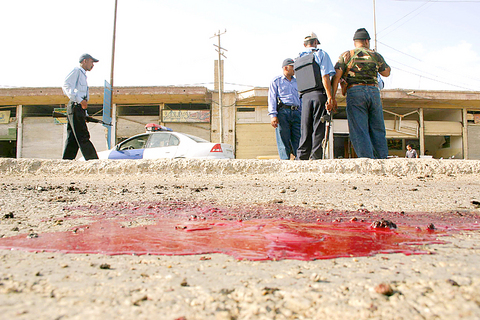
PHOTO: AFP
"I've been looking forward for some time to an opportunity to get to Iraq," Rice told a trio of reporters accompanying her on the top secret visit.
The secretary of state flew immediately to Salahuddin, near Arbil, where she was to meet with the Kurdish leader Massoud Barzani, in a convoy of Blackhawk helicopters with Apache escorts.
Rice also was slated to meet with Iraq Prime Minister Ibrahim Jaafari and senior Cabinet members at 3:00pm in Baghdad before holding a press conference.
Rice, on her first visit to the country as secretary of state, said she wanted to look at the security situation in Iraq, the political process, and Iraqi efforts to develop the country's infrastructure and economy.
She signalled concern over the lack of significant participation by minority Sunni Muslims in a new committee set up to draft a constitution, which is dominated by majority Shiites -- only two of its 55 members are Sunni Muslims.
"I think it is something that I would like to discuss with the leadership, the composition of that committee, and how they can ensure that there is participation of all Iraqis, including Sunnis, in this process."
Rice was unfazed by the wave of violence that has left 400 civilians dead since the start of the month, saying it was an attempt by insurgents to derail the political process and to respond to a major offensive launched against them by Iraqi security forces.
"To defeat them by having a political alternative that is strong," Rice said the Iraqis were now "going to have to intensify their efforts to demonstrate that the political process is the answer for the Iraqi people."
In Baghdad, the prime minister's spokesman Laith Kubba reinforced Rice's words, saying the faster the new government improves security, the faster it can ask US-led troops to leave the country.
Rice's visit came less than a day after US forces announced the end of a massive week-long sweep dubbed "Operation Matador" that had targeted militants loyal to Abu Musab al-Zarqawi, al-Qaeda's Iraq leader.
Nine marines were killed and 40 wounded in the operation in western Iraq near the Syrian border after US forces killed more than 125 insurgents and detained 39 "of intelligence value," the US military said.
Meanwhile, a British newspaper reported that Zarqawi, was wounded and treated briefly at a hospital in Iraq last week before he disappeared with his men.
The doctor who claims to have treated him told an Iraqi reporter in the western city of Ramadi that Zarqawi was bleeding heavily when he was brought into the hospital on Wednesday, the Sunday Times reported.
When the doctor treated the man's injury and asked him to register, he became agitated, the doctor said. The three men with him "politely" asked he be allowed to leave, requesting a prescription and list of medication.
Insurgents kept up a steady pace of attacks yesterday, killing six people in separate attacks around the country.
In the capital, assailants gunned down Colonel Jassem Mohammed Jomaa, an industry ministry official on his way to work and his driver, an interior ministry source said.
Municipal workers found seven bodies on Baghdad's eastern outskirts, a grisly repeat of an incident last week in which the bodies of 14 farmers were found after being taken from the eastern Sadr City market by men in police uniforms, according to witnesses.
Bombers struck twice in the insurgent stronghold of Baquba, killing at least four Iraqis and injuring 17.
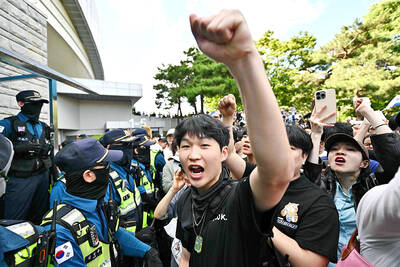
‘ABSURD MISTAKE’: The election commission said that there had been a failure to anticipate turnout after 14 polling stations ran short of ballot papers South Korean riot police yesterday cleared protesters from a Seoul polling station after a 35-hour blockade sparked by a shortage of ballot papers during local elections earlier this week. Wednesday’s election was the first nationwide vote since South Korean President Lee Jae-myung took office following the ouster of Yoon Suk-yeol over his short-lived martial law declaration. Lee’s ruling Democratic Party swept most races, but failed to flip the crucial Seoul mayoral seat. The South Korean National Election Commission apologized, blaming a failure to anticipate turnout after 14 polling stations in Seoul ran short of ballot papers. Some polling stations stayed open until 10pm to
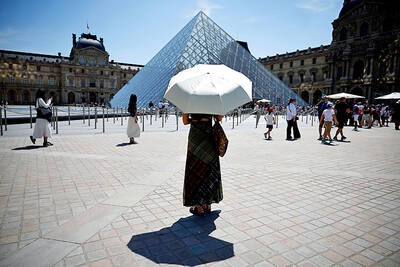
France experienced its hottest spring on record, the French weather service said on Tuesday, after an exceptional early heat wave that also broke highs for the season in England and Wales. Meteo-France said the average nationwide temperature over March to May was 13.8°C — about 1.7°C above the norm, and surpassing records set in 2011 and 2020. “The warmest spring since records began in 1900,” it said in a bulletin. All three months were warmer than average, but the onset of an “unprecedented heatwave” late last month pushed the mercury to highs typically seen at the height of the summer. “Our country had never
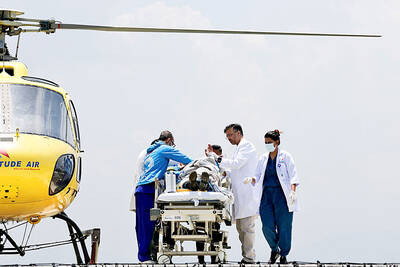
A Sherpa guide was found crawling to base camp on Mount Everest a week after he went missing and was reunited with his family, who had given up hope he would return. Dawa Sherpa was last seen on Friday last week descending the mountain, but he did not reach base camp even though his client did. The pair were among the last climbers on the mountain as the climbing season came to an end and the route was dismantled. Dawa was located by a cleaning crew on Thursday morning as he was crawling down the snowy slopes around the Khumbu Icefall, just above
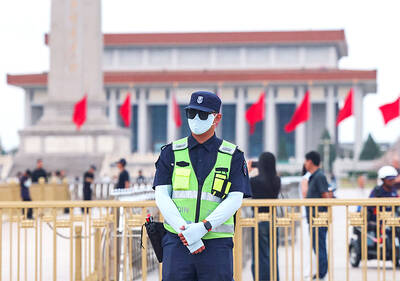
Chinese authorities are snuffing out any remembrance of the deadly 1989 military crackdown on student-led pro-democracy protests in Tiananmen Square, which happened 37 years ago yesterday, in a further tightening of a years-long campaign to erase what happened from public memory. Police told relatives of the victims they would not be allowed to visit a cemetery in Beijing on the anniversary of the crackdown, a person with knowledge of the matter said. Relatives of the victims visited the cemetery on the anniversary for more than 30 years to read memorial statements with police keeping watch, Amnesty International said. Hundreds of people,


 RSS
RSS