

Wrapped in white prayer shawls as priests sang hymns over loudspeakers, Ethiopian voters yesterday were choosing between the ruling coalition that ended a brutal dictatorship in 1991 and new opposition parties who promise greater liberalization.
The campaign under a government that has sometimes shown authoritarian tendencies had won qualified international approval, and foreign election observers reported no serious problems as voting progressed yesterday.
Foreign election observers were monitoring the elections for the first time in Ethiopia's history.
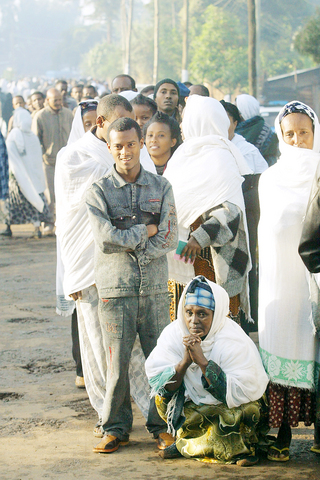
PHOTO: AP
EU observers inspecting four polling stations found 454 ballots with an unclear irregular mark in central Addis Ababa and similar ballots outside the capital. None of the ballots were pre-marked for the ruling party, as earlier reported. Opposition politicians had charged that thousands of pre-marked ballots had been circulated.
The National Election Board said the mark was a printing error and Ethiopians finding such ballots need not worry that their votes would not be counted.
Late on Saturday, opposition leaders also accused the police of rounding up hundreds of opposition candidates and poll observers in order to rig the elections in the rural areas. Government officials denied the opposition allegations.
Voters had begun lining up before dawn on a cool, misty morning for the third election in the country's 3,000-year history. The turnout appeared extremely high, in marked contrast to the 2000 election. Polls close at 6pm local time, but anyone in line at closing time will be allowed to vote.
Derje Woubeshet, an unemployed 29-year-old, said he was voting for the opposition Coalition for Unity and Democracy because he felt the ruling party had failed to create jobs.
"They brought me disaster, all the people are fed up," he said outside a primary school in Addis Ababa. "They have been supported for the last 15 years, now we need a new government."
Wahib Toure, a cotton producer, said complaints do not make a political agenda and that he would vote for the ruling Ethiopian People's Revolutionary Democratic Front.
"The opposition talked about grievances, but that is not enough to be elected, they are not organized," Wahib, 60, said.
Beyene Petros, vice chairman of the United Ethiopian Democratic Forces, said he had seen reports of vote rigging that "are only the tip of the iceberg."
Petros produced a marked ballot with an electoral seal which was already marked for Prime Minister Meles Zenawi's ruling coalition. He said thousands of such ballots began circulating on Saturday.
Information Minister Bereket Simon said that he called police stations across the country to investigate the opposition claims. "This is absolutely false," Bereket said.
Former US president Jimmy Carter said that the 24 teams of observers from the Carter Center had reported no problems with the balloting early yesterday, but they were looking into the opposition's allegations. More than 500 foreign observers were monitoring the polls.
Ethiopia was an absolute monarchy under Emperor Haile Selassie until the mid-1970s, when a brutal Marxist junta overthrew him.
Civil wars wracked the ethnically fractured country in the 1980s, and famine took as many as 1 million lives. Meles' rebel group overthrew the junta in 1991. Meles became president, then prime minister in 1995, and is now seeking a third term.
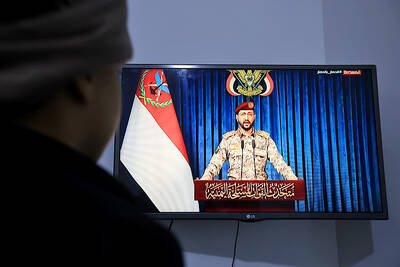
ON THE MOVE: Trump unexpectedly cut short a trip to return to the White House, while the State Department warned Americans to avoid travel to the Middle East The US on Saturday warned that hostilities between Saudi Arabia and Iran-backed Houthis could “escalate rapidly” after a missile attack targeted Riyadh for the first time since the Yemen conflict resumed. US President Donald Trump on Saturday cut short a weekend at Camp David, a secluded presidential complex in rural Maryland, to return unexpectedly to the White House. The White House gave no explanation for the early return, which comes as a new threshold was crossed in the conflict between Saudi Arabia and the Houthis, who control a large part of Yemen and are fighting government forces backed by a coalition led
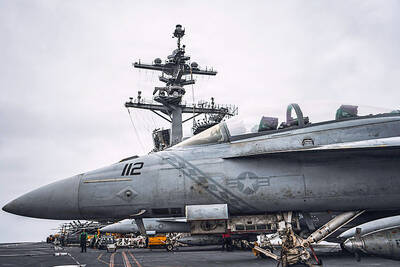
The US military came close to boarding a Chinese vessel in the Middle East earlier this year based on a flawed intelligence report prepared with the help of artificial intelligence (AI), CNN said on Friday. US intelligence indicated the ship was carrying nuclear weapons-related components, leading US forces to prepare to intercept it, the broadcaster reported, citing four anonymous sources familiar with the incident. However, the operation was called off after officials determined that an AI chatbot used by an analyst had misidentified the material the ship was carrying. The report was “entirely false,” but “almost started a war,” CNN quoted one source
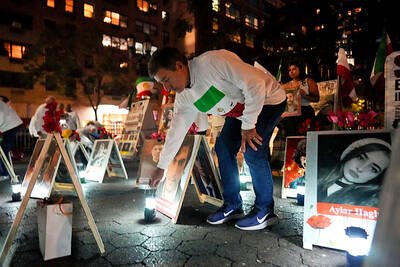
World leaders gather in New York this week for the UN General Assembly, bracing for US President Donald Trump’s return to the rostrum for a second year running, with talks centering on the widening conflicts in the Middle East and Ukraine and the risks of artificial intelligence (AI). Nearly 130 heads of state meet with the post-World War II order under strain and with the UN itself struggling to remain relevant and weathering attacks from Trump, who has slashed the US’ contributions and withdrawn from dozens of UN bodies. Chinese President Xi Jinping (習近平), who last addressed the diplomatic jamboree via video
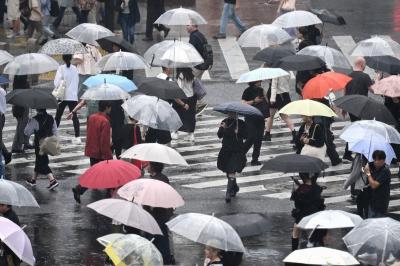
Typhoon Dujuan forced the cancellation of at least 275 flights in Japan today and prompted warnings of potentially record-breaking rainfall as the storm nears Tokyo. The typhoon, which is accompanied by high winds, has also led to the early closure in Tokyo of one the world’s biggest video game trade fairs and knocked out power for thousands. The Japan Meteorological Agency (JMA) warned yesterday that rain and winds were expected to intensify even before the typhoon’s arrival. “The total rainfall through Tuesday could exceed the average monthly rainfall for September, resulting in record-breaking heavy rain,” the agency said. The typhoon’s wind speeds were at


 RSS
RSS