


In another attack targeting Iraqi security forces, a suicide car bomb destroyed a police minibus at a checkpoint in former Iraqi president Saddam Hussein's hometown yesterday, killing at least eight policemen, officials said.
The attack was part of a surge of violence that has killed at least 255 people -- many of them Iraqi soldiers and police -- since Iraqi Prime Minister Ibrahim al-Jaafari announced his new government on April 28, with seven Cabinet positions still undecided.
Iraq's new Cabinet held its first meeting on Thursday. Al-Jaafari aide Laith Kuba said the seven vacant portfolios, including the key oil and defense ministries, would be filled by today and parliament would be asked to vote on them tomorrow.
In Tikrit, Saddam's hometown, a silver Opel packed with explosives -- and with a taxi sign on its roof -- destroyed the minibus at 8:30am yesterday, said US army 1st Sergeant Brian Thomas and Iraqi National Guard Major Salman Abdul Wahid.
At least eight policemen were killed, said police Lieutenant Colonel Saad Abdul Hamid and police Major Hakim al-Azawi.
They said that seven people were wounded: a policeman, two National Guardsmen and four civilians.
Initial reports by police had mistakenly said the attack involved explosives hidden inside the minibus and set off by remote control in Tikrit, which is 130km north of Baghdad.
In Thursday's deadliest attack, an insurgent used a suicide bomber belt to walk up to an army recruitment center in Baghdad which, like many others, have been turned into small fortresses of concrete blast walls and razor wire to prevent car bombings.
At al-Yarmouk Hospital, the morgue was overflowing with mangled bodies after the blast. One man lay screaming on his bed -- both his legs had been blown off. Pools of blood covered the floor.
At least 13 people were killed and 20 wounded in the blast, Lieutenant Salam Wahab said at the recruitment center.
At least nine policemen were killed in two attacks in western Baghdad on Thursday.
The bodies of at least 12 people who had been shot and killed were also found buried at a garbage dump in Baghdad yesterday, Iraqi officials said.
Some of the victims were blindfolded and had been shot in the head execution style, said Bassim al-Maslokhi, a soldier who was guarding the area during the recovery at the site on the outskirts of northeastern Baghdad.
There were conflicting accounts of the number of bodies found. Al-Maslokhi said 14 bodies were found. However, Kadhim al-Itabi, a local police chief, put the number at 12. Al-Itabi confirmed they had been shot.
Master Sergeant Greg Kaufman, a US military spokesman, confirmed an incident in the area, but would not provide details, referring queries to Iraqi authorities.
Police were called to the scene by impoverished residents who found some of the bodies while searching through the dump for scrap metal and other items to sell, al-Maslokhi said.
Police had found the victims, thought to be Iraqis, buried in shallow graves at the dump, al-Maslokhi said.
He added that they seemed to have been killed recently.
He said police were still digging at the site to see if more bodies could be found.
Insurgents often target Iraqi security forces, which are being recruited and trained by the US-led coalition as part of its exit strategy in Iraq. An estimated 1,800 Iraqi soldiers and police officers were killed between June last year and April 27 this year, the latest date for which statistics were available, according to figures compiled by the Brookings Institution in Washington.
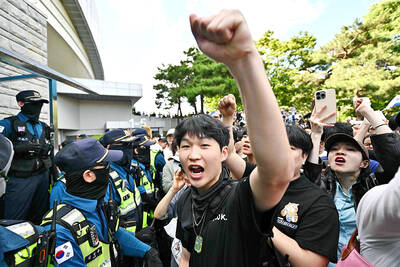
‘ABSURD MISTAKE’: The election commission said that there had been a failure to anticipate turnout after 14 polling stations ran short of ballot papers South Korean riot police yesterday cleared protesters from a Seoul polling station after a 35-hour blockade sparked by a shortage of ballot papers during local elections earlier this week. Wednesday’s election was the first nationwide vote since South Korean President Lee Jae-myung took office following the ouster of Yoon Suk-yeol over his short-lived martial law declaration. Lee’s ruling Democratic Party swept most races, but failed to flip the crucial Seoul mayoral seat. The South Korean National Election Commission apologized, blaming a failure to anticipate turnout after 14 polling stations in Seoul ran short of ballot papers. Some polling stations stayed open until 10pm to

France experienced its hottest spring on record, the French weather service said on Tuesday, after an exceptional early heat wave that also broke highs for the season in England and Wales. Meteo-France said the average nationwide temperature over March to May was 13.8°C — about 1.7°C above the norm, and surpassing records set in 2011 and 2020. “The warmest spring since records began in 1900,” it said in a bulletin. All three months were warmer than average, but the onset of an “unprecedented heatwave” late last month pushed the mercury to highs typically seen at the height of the summer. “Our country had never
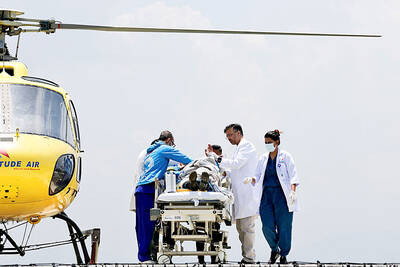
A Sherpa guide was found crawling to base camp on Mount Everest a week after he went missing and was reunited with his family, who had given up hope he would return. Dawa Sherpa was last seen on Friday last week descending the mountain, but he did not reach base camp even though his client did. The pair were among the last climbers on the mountain as the climbing season came to an end and the route was dismantled. Dawa was located by a cleaning crew on Thursday morning as he was crawling down the snowy slopes around the Khumbu Icefall, just above
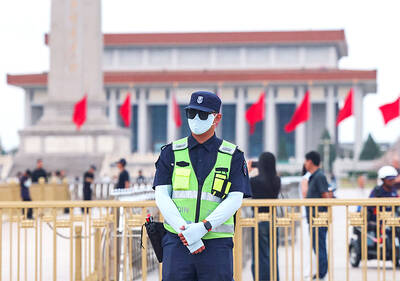
Chinese authorities are snuffing out any remembrance of the deadly 1989 military crackdown on student-led pro-democracy protests in Tiananmen Square, which happened 37 years ago yesterday, in a further tightening of a years-long campaign to erase what happened from public memory. Police told relatives of the victims they would not be allowed to visit a cemetery in Beijing on the anniversary of the crackdown, a person with knowledge of the matter said. Relatives of the victims visited the cemetery on the anniversary for more than 30 years to read memorial statements with police keeping watch, Amnesty International said. Hundreds of people,


 RSS
RSS