


One day after insurgents killed at least 36 Iraqis in a series of attacks, including the bombing of a funeral, militants set off three explosions in Baghdad yesterday, including one that narrowly missed a top Iraqi security official.
No casualties were immediately reported in yesterday's three attacks, including one that targeted a US military patrol and another that set fire to a six-story apartment building. Sunday's casualties included 25 Iraqis killed and more than 50 wounded by a car bomb that ripped through a tent packed with mourners at the funeral of a Kurdish official in the northern city of Tal Afar.
It was the single deadliest attack since insurgents started bearing down on Iraq's newly named government late last week. US and Iraqi forces imposed a curfew in Tal Afar, and by yesterday morning they had encircled it and stopped all traffic from entering or leaving the city.
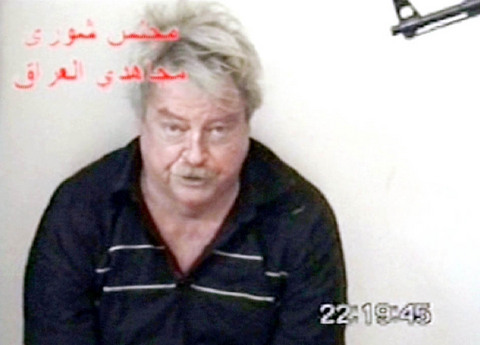
PHOTO: AFP
In five blood-soaked days in Iraq, at least 116 people, including 11 Americans, have been killed in a slew of bombings and ambushes.
In yesterday's attacks in Baghdad, Major General Rashid Feleih, the commander of a special Interior Ministry security force, narrowly escaped unhurt when a roadside bomb hit his four-car convoy, damaging one vehicle.
In southern Baghdad, a car bomb exploded in an upscale shopping district of south-central Baghdad, setting fire to a six-story apartment building with a shop on the ground floor. Elsewhere, a roadside bomb exploded near a US military patrol in northern Baghdad, but no Americans were hurt.
In Tal Afar, 150km east of the Syrian border, the car bomb exploded at a tent where mourners had gathered for the funeral of Sayed Talib Sayed Wahab, an official of the Kurdish Democratic Party (KDP), said Goran, a KDP spokesman in the nearby city of Mosul. Goran said the car plowed into the funeral tent and exploded, but the US military said it was not a suicide attack. About 25 people were killed and more than 50 wounded, the US military said.
Six other car bombs exploded in Baghdad on Sunday and at least five American soldiers were injured in the blasts.
US and Iraqi officials had hoped to dent support for the militants by including members of the Sunni Arab minority in a new Shiite-dominated Cabinet that will be sworn in today. Sunnis, who held monopoly power during the rule of former president Saddam Hussein, are believed to be the backbone of Iraq's insurgency.
However, the lineup named by incoming Prime Minister Ibrahim al-Jaafari after months of political wrangling excluded Sunnis from meaningful positions and left the key defense and oil ministries -- among other unfilled posts -- in temporary hands.
Insurgents have used their spectacular attacks and hostage takings to drive home their opposition to US-led forces and their Iraqi allies.
A video tape on Sunday showed a man identifying himself as Douglas Wood, 63, seated between two masked militants pointing automatic weapons at him. Wood, appearing disheveled and shaken, said he was an Australian national living in the San Francisco area with his American wife. He said he came to Iraq almost a year ago to work on reconstruction projects with the US military. He appealed to US President George W. Bush, Australian Prime Minister John Howard and Californian Governor Arnold Schwarzenegger to order coalition forces out of Iraq and let Iraqis look after themselves, saying he did not want to die.
"My captors are fiercely patriotic. They believe in a strong united Iraq looking after its own destiny," Wood said on the tape.
Wood's wife, Pearl, confirmed the man was indeed her husband. A militant group calling itself the Shura Council of the Mujahedeen of Iraq claimed responsibility for the kidnapping.
The British Foreign Office also said three arrests in the abduction of Margaret Hassan, a British aid worker believed slain last year, saying they were made on Sunday morning during a coalition raid 30km south of Baghdad.
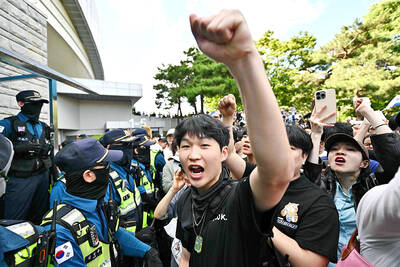
‘ABSURD MISTAKE’: The election commission said that there had been a failure to anticipate turnout after 14 polling stations ran short of ballot papers South Korean riot police yesterday cleared protesters from a Seoul polling station after a 35-hour blockade sparked by a shortage of ballot papers during local elections earlier this week. Wednesday’s election was the first nationwide vote since South Korean President Lee Jae-myung took office following the ouster of Yoon Suk-yeol over his short-lived martial law declaration. Lee’s ruling Democratic Party swept most races, but failed to flip the crucial Seoul mayoral seat. The South Korean National Election Commission apologized, blaming a failure to anticipate turnout after 14 polling stations in Seoul ran short of ballot papers. Some polling stations stayed open until 10pm to

France experienced its hottest spring on record, the French weather service said on Tuesday, after an exceptional early heat wave that also broke highs for the season in England and Wales. Meteo-France said the average nationwide temperature over March to May was 13.8°C — about 1.7°C above the norm, and surpassing records set in 2011 and 2020. “The warmest spring since records began in 1900,” it said in a bulletin. All three months were warmer than average, but the onset of an “unprecedented heatwave” late last month pushed the mercury to highs typically seen at the height of the summer. “Our country had never
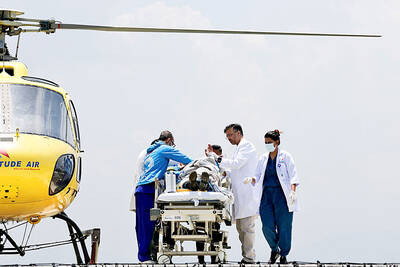
A Sherpa guide was found crawling to base camp on Mount Everest a week after he went missing and was reunited with his family, who had given up hope he would return. Dawa Sherpa was last seen on Friday last week descending the mountain, but he did not reach base camp even though his client did. The pair were among the last climbers on the mountain as the climbing season came to an end and the route was dismantled. Dawa was located by a cleaning crew on Thursday morning as he was crawling down the snowy slopes around the Khumbu Icefall, just above
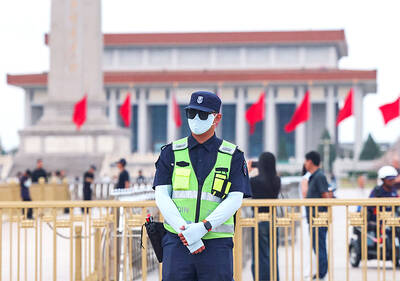
Chinese authorities are snuffing out any remembrance of the deadly 1989 military crackdown on student-led pro-democracy protests in Tiananmen Square, which happened 37 years ago yesterday, in a further tightening of a years-long campaign to erase what happened from public memory. Police told relatives of the victims they would not be allowed to visit a cemetery in Beijing on the anniversary of the crackdown, a person with knowledge of the matter said. Relatives of the victims visited the cemetery on the anniversary for more than 30 years to read memorial statements with police keeping watch, Amnesty International said. Hundreds of people,


 RSS
RSS