

A bomb exploded, injuring three people, and two others were defused yesterday on the route of the first India-Pakistan bus across Kashmir ahead of its inauguration this week, as separatist rebels threatened prospective passengers to stay away.
India mounted extraordinary security and detained hundreds of people ahead of the inauguration tomorrow of the passenger bus between Srinagar and Muzaffarabad, capital of Pakistani-controlled Kashmir.
Three civilians were injured in the explosion at Hanjivira village about 35km north of Srinagar, the summer capital of the Indian-controlled portion of Kashmir, an officer at the police control room said on condition of anonymity. The explosive was placed along the highway connecting Srinagar and Muzaffarabad.
The blast occurred soon after a bomb squad defused two powerful bombs placed in plastic bags along the same highway in nearby Palhalan. The bombs weighed 70kg and 60kg respectively, the officer said.
A number of Kashmiri rebel groups have issued death threats against anyone planning to travel on the buses, which they see as a publicity gimmick that will do nothing to bring their goal of independence for Kashmir. The threat was renewed yesterday.
"If you want to let the Indians succeed through your stubbornness, then let it be known that you must suffer with your own ashes and blood," said a statement faxed to reporters.
The statement was signed by four rebel groups: Al-Nasireen (The Helpers), the Save Kashmir Movement, Al-Arifeen (The Pious) and Farzandan-e-Millat (Sons of the Community). The first two are major militant groups, while the others are little-known.There was no way to independently verify the authenticity of the fax.
The trans-Kashmir road, once the region's main highway, has been closed for nearly six decades because of the enmity between India and Pakistan. Security in Indian-controlled Kashmir, already very tight, has been stepped up dramatically, with hundreds of soldiers and police deployed along the length of the 110km route the bus will take to the Line of Control.

Philippine Secretary of National Defense Gilberto Teodoro Jr on Tuesday hit out at China at an international forum after a memo asserting Beijing’s position over their longstanding maritime dispute was delivered to him while he was speaking on stage. The unusual incident was captured on video at the Seoul Defense Dialogue as the secretary was responding to a question about “gray zone” coercion in the South China Sea. The video shows what appears to be a conference staffer placing it on the table next to him while speaking. “I have a note here, I think this is from China,” he said, describing
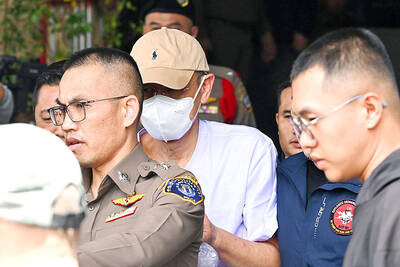
Thai police yesterday said that they arrested a senior Buddhist monk on suspicion of embezzling US$2.8 million intended for his monastery, alongside a suspected female accomplice he was having sex with. The case is the latest scandal to hit the clergy in Buddhist-majority Thailand after a sex and extortion case involving senior monks last year prompted public outrage and calls for greater scrutiny of temple finances. Phra Wachirayan Wi, the 66-year-old abbot of the 14th-century Wat Phutthaisawan in the ancient capital of Ayutthaya, was arrested on Thursday on charges including embezzlement and money laundering, lead police investigator Pattanasak Bupphasuwan said. A 47-year-old woman

SECRET FOOTAGE: A 17-year-old girl told British broadcaster Channel 4 that she had been approached by a man who covertly recorded her and their interaction Calls are growing louder in Europe for action against “pervert” smart glasses after secretly filmed footage of girls and women appeared online — with a petition in Britain demanding a ban on their sale. Anyone wearing smart glasses can take photos, film videos, listen to music, make phone calls, translate text or interact with an artificial intelligence (AI) assistant, with sales now hitting millions. The devices grabbed attention this summer after a marketing tie-up between Kylie Jenner, beauty mogul and member of the Kardashian dynasty, and tech giant Meta. Since smartphones are now embedded in daily life, “big tech” is
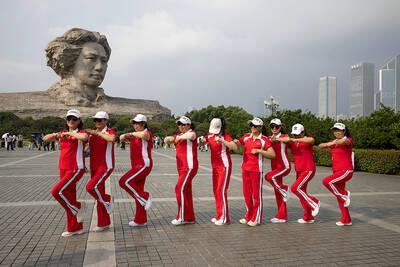
China yesterday marked half a century since the death of Mao Zedong (毛澤東), founder of the People’s Republic, who brought roughly one-quarter of the world’s population under communist rule and whose specter still haunts China’s future. Mao’s death on Sept. 9, 1976, at age 82, mourned by many and welcomed by some who suffered under his nearly three-decade rule, also hastened the end of the Cultural Revolution, a frenzied mass movement he launched in 1966. The party later condemned the Cultural Revolution as a grave error for which Mao bore primary responsibility, but still reveres him, saying his achievements outweigh his mistakes. Mao’s


 RSS
RSS