


A powerful earthquake shook central Iran yesterday, destroying villages, killing at least 231 people and injuring more than 1,000, state-run television reported.
The epicenter of the 6.4-magnitude quake, which struck at 5:55am, was on the outskirts of Zarand, a town 56km northwest of Kerman, the capital of Kerman province, the seismological base of Tehran University's Geophysics Institute.
"The death toll has increased," the television quoted Kerman provincial governor Mohammad Ali Karimi as saying.
Karimi was also quoted as saying that "several villages have been destroyed" by the earthquake. Rain was reportedly hampering rescue efforts.
Television footage showed a village almost flattened with few mud-built walls standing. Residents were shown digging frantically amid collapsed slabs of concrete and piles of dirt in a bid to find people buried under the rubble.
"All hospitals in Zarand are filled to capacity with the injured. Hospitals in the town cannot receive any more of the injured," the broadcast said, showing images of elderly women and men lying on beds with various injuries.
The villages of Hotkan, Khanook, Motaharabad and Islamabad were the worst hit villages, it said.
The television quoted the governor of Zarand, identified only as Rashidi, as saying that power in the region has been disrupted. He said medical and other supplies were needed, especially medicine, syringes and tents.
Zarand, 965km southeast of the capital Tehran, is a small town in Kerman Province with a population of about 15,000 people.
A provincial official said still there was no accurate picture of the depth of the catastrophe but said the quake was not as bad as a killer quake that hit a nearby region in December 2003.
Live pictures on the Iranian television showed ambulances carrying the dead and injured and survivors sitting next to the dead slapping their faces and striking their head in grief.
People were also showed with bloodied cloth and blown faces and broken legs and hands on hospital beds.
Residents in a village stood next to their devastated houses asking for help to rescue their beloved buried under the rubble.
"What a catastrophe. Please help us," said one of the survivors.
Pictures also included many mud-built houses not damaged in some of the villages near the quake epicenter suggesting that yesterday's quake was not as devastating as the quake in 2003.
That magnitude-6.6 quake flattened the historic southeastern city of Bam in the same region, killing 26,000 people. Iran is located on seismic fault lines and is prone to earthquakes.
It experiences at least one slight earthquake every day, on average.

‘ABSURD MISTAKE’: The election commission said that there had been a failure to anticipate turnout after 14 polling stations ran short of ballot papers South Korean riot police yesterday cleared protesters from a Seoul polling station after a 35-hour blockade sparked by a shortage of ballot papers during local elections earlier this week. Wednesday’s election was the first nationwide vote since South Korean President Lee Jae-myung took office following the ouster of Yoon Suk-yeol over his short-lived martial law declaration. Lee’s ruling Democratic Party swept most races, but failed to flip the crucial Seoul mayoral seat. The South Korean National Election Commission apologized, blaming a failure to anticipate turnout after 14 polling stations in Seoul ran short of ballot papers. Some polling stations stayed open until 10pm to

France experienced its hottest spring on record, the French weather service said on Tuesday, after an exceptional early heat wave that also broke highs for the season in England and Wales. Meteo-France said the average nationwide temperature over March to May was 13.8°C — about 1.7°C above the norm, and surpassing records set in 2011 and 2020. “The warmest spring since records began in 1900,” it said in a bulletin. All three months were warmer than average, but the onset of an “unprecedented heatwave” late last month pushed the mercury to highs typically seen at the height of the summer. “Our country had never

A Sherpa guide was found crawling to base camp on Mount Everest a week after he went missing and was reunited with his family, who had given up hope he would return. Dawa Sherpa was last seen on Friday last week descending the mountain, but he did not reach base camp even though his client did. The pair were among the last climbers on the mountain as the climbing season came to an end and the route was dismantled. Dawa was located by a cleaning crew on Thursday morning as he was crawling down the snowy slopes around the Khumbu Icefall, just above
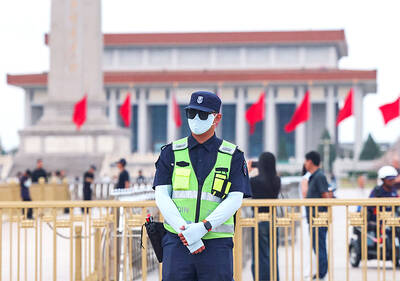
Chinese authorities are snuffing out any remembrance of the deadly 1989 military crackdown on student-led pro-democracy protests in Tiananmen Square, which happened 37 years ago yesterday, in a further tightening of a years-long campaign to erase what happened from public memory. Police told relatives of the victims they would not be allowed to visit a cemetery in Beijing on the anniversary of the crackdown, a person with knowledge of the matter said. Relatives of the victims visited the cemetery on the anniversary for more than 30 years to read memorial statements with police keeping watch, Amnesty International said. Hundreds of people,


 RSS
RSS