


Israeli Prime Minister Ariel Sharon is proposing evacuating all 21 Jewish settlements in the Gaza Strip at the beginning of next year, or eight months earlier than planned, to avoid drawn-out clashes with settlers, his aides said.
Sharon was to present the revised timetable to his rebellious Likud Party yesterday. Many Likud legislators oppose a withdrawal, and a stormy debate was expected.
In Gaza early yesterday, a Palestinian man wearing an explosives belt resembling underpants and hidden under his clothing was stopped at the Erez crossing into Israel. The man had waited in line with thousands of workers making their way into Israel every morning.
Soldiers became suspicious when they spotted on him what looked like an activation device, the army said. Soldiers isolated him from the workers and ordered him to remove the explosives, which he did, the army said.
Also, Palestinians said a 14-year-old boy was shot and killed during an Israeli operation in the Rafah refugee camp on the Gaza-Egypt border. Israeli military sources said soldiers were tearing down an abandoned structure and fired on a suspicious Palestinian approaching them.
Details of the timetable were obtained by reporters. It starts in mid-September with the Cabinet approving legislation to give compensation to settlers leaving their homes.
By the beginning of next year, the military and police will be ready to move in and empty the settlements. The evacuation is to be completed in one sweep shortly afterward. Sharon had initially assured critics of the plan that the withdrawal would take place in several stages, with each step approved separately by the Cabinet.
His change of tactics angered opponents of the withdrawal. Education Minister Limor Livnat from Likud told Sharon during a meeting of senior Cabinet ministers that the new plan would also require Cabinet approval, the Haaretz daily said.
Sharon responded angrily.
"This is false patriotism," Sharon told Livnat, according to Haaretz. "We can evacuate in four stages -- on Sunday, Monday, Tuesday and Wednesday."
Sharon has already lost two Likud battles over his pullout plan -- a nonbinding referendum by party members and a convention vote. At least half of the 40 Likud members of parliament oppose the pullout.
According to Sharon's initial "unilateral disengagement" plan as approved in June, the Gaza settlements and four small enclaves in the West Bank were to be removed by the end of September next year.
At the Likud faction meeting, Sharon plans to present "the detailed, specific timetables and dates of the stages in the decision-making process," said Sharon adviser Raanan Gissin.
Since Sharon first raised the plan in December, settlers have been organizing to resist. Though most of the 8,000 Gaza settlers are expected to accept compensation or alternative housing and leave quietly, a small hard core of settlers would likely dig in and try to fend off security forces.
Removing all 21 settlements at once would be practical, said political analyst Hanan Crystal.
"If they do it in stages, the same thousand settlers will run from one place to the next" to resist, he told reporters. "If they do it all at once, where can they run?"
The one-off evacuation also helps Sharon solve political problems. Faced with a Cabinet rebellion, Sharon rammed the plan through in June, but had to agree to additional votes for each stage of the evacuation.
Sharon refuses to coordinate the pullout with Yasser Arafat's Palestinian Authority, charging that it has not stopped militants from attacking against Israelis.
In recent months, rival groups in Gaza have been maneuvering for position to take control after the Israeli exit, and there are warnings that Islamic militants could fill a power vacuum.
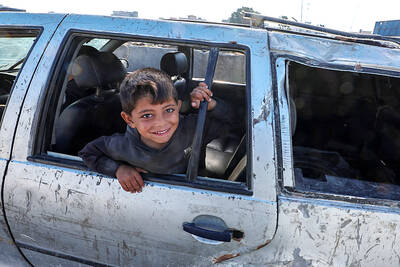
Gaza is rapidly running out of its limited fuel supply and stocks of food staples might become tight, officials said, after Israel blocked the entry of fuel and goods into the war-shattered territory, citing fighting with Iran. The Israeli military closed all Gaza border crossings on Saturday after announcing airstrikes on Iran carried out jointly with the US. Israeli authorities late on Monday night said that they would reopen the Kerem Shalom crossing from Israel to Gaza yesterday, for “gradual entry of humanitarian aid” into the strip, without saying how much. Israeli authorities previously said the crossings could not be operated safely during

Hungarian authorities temporarily detained seven Ukrainian citizens and seized two armored cars carrying tens of millions of euros in cash across Hungary on suspicion of money laundering, officials said on Friday. The Ukrainians were released on Friday, following their detention on Thursday, but Hungarian officials held onto the cash, prompting Ukraine to accuse Hungary’s Russia-friendly government of illegally seizing the money. “We will not tolerate this state banditism,” Ukrainian Minister of Foreign Affairs Andrii Sybiha said. The seven detained Ukrainians were employees of the Ukrainian state-owned Oschadbank, who were traveling in the two armored cars that were carrying the money between Austria and

Kosovar President Vjosa Osmani on Friday after dissolving the Kosovar parliament said a snap election should be held as soon as possible to avoid another prolonged political crisis in the Balkan country at a time of global turmoil. Osmani said it is important for Kosovo to wrap up the upcoming election process and form functional institutions for political stability as the war rages in the Middle East. “Precisely because the geopolitical situation is that complex, it is important to finish this electoral process which is coming up,” she said. “It is very hard now to imagine what will happen next.” Kosovo, which declared
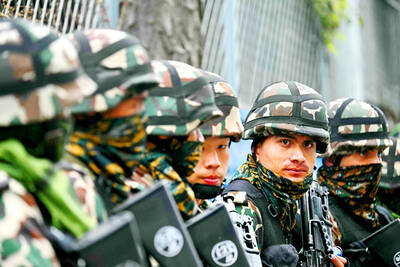
Counting was under way in Nepal yesterday, after a high-stakes parliamentary election to reshape the country’s leadership following protests last year that toppled the government. Key figures vying for power include former Nepalese prime minister K. P. Sharma Oli, rapper-turned-mayor Balendra Shah, who is bidding for the youth vote, and newly elected Nepali Congress party leader Gagan Thapa. In Kathmandu’s tea shops and city squares, people were glued to their phones, checking results as early trends flashed up — suggesting Shah’s centrist Rastriya Swatantra Party (RSP) was ahead. Nepalese Election Commission spokesman Prakash Nyupane said the counting was ongoing “in a peaceful manner”


 RSS
RSS