


At the closing ceremony of the Athens Olympic Games on Sunday night, International Olympic Committee (IOC) president Jacques Rogge issued the traditional invitation to "the youth of the world" to reassemble in four years' time.
Athletes who were either in the stadium or watching and dreaming at home will be sustained until 2008 by the prospect of Olympic glory in Beijing.
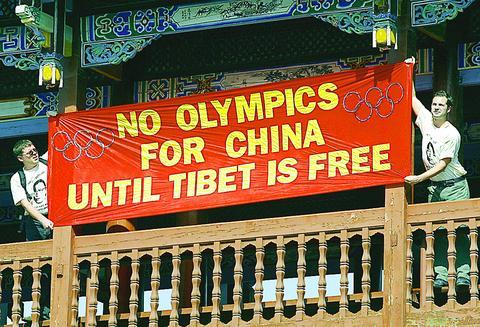
PHOTO: AFP
But for Rogge and the movement he leads, the road to the Chinese capital promises to be a rocky one.
The decision to take the Games to the world's most populous country may have gone down well with the sponsors and broadcasters who fund the greatest show on Earth, but it has ensured a torrent of criticism from politicians and protesters concerned about human-rights abuses in China.
Athens saw protests from the Free Tibet Campaign and others in response to reports that the authorities in Beijing had arrested a number of Catholics and Buddhists during the first week of the Games.
A "Free Tibet" banner was unfurled during a diving final last weekend and activist groups, including the World Uyghur Congress (WUC), which speaks for people in East Turkestan, and Olympic Watch, which monitors the IOC's ethical stance, called for a silent protest when the Olympic flag was handed over to the Chinese delegation last night.
WUC president Erkin Alptekin said: "The Olympic flag symbolizes peace, harmony and solidarity among various nations. Athens is the source of democracy, rule of law and human rights. For the last 50 years, however, Beijing has been turned into a center of oppression, arbitrary arrest and execution."
The Beijing Games would be a nightmare for thousands of Uyghurs, Tibetans and Chinese dissidents, he said.
"Because, under the pretext of security, the Chinese leaders are preparing themselves to detain, torture and even execute hundreds of Uyghurs, Tibetans and Chinese dissidents during the Olympic Games in 2008," he said.
Speaking before the closing ceremony, Rogge said the IOC was in full support of human rights, and the Chinese themselves had acknowledged that the Games would help change their society.
"The IOC is always in favor of maximum application of human rights," he said. "We have clearly said that the position of the IOC is that human rights should be respected in full. But it is not up to the IOC to monitor human rights, we are not inspectors."
The 2008 Games offer the sponsoring multinationals an unprecedented opportunity to penetrate China's vast emerging market. And to the Chinese they will be a huge vehicle for national pride. Yesterday Chinese athletes in Athens received a message of thanks from Beijing for a record display which secured 32 gold medals.
"The motherland is proud of you, and the people are proud of you," the state council said.
"The excellent performance by China's athletes again shows the spirit of the Chinese nation's unremitting efforts to improve itself ... The motherland and the people thank you and look forward to your triumphant return," it said.
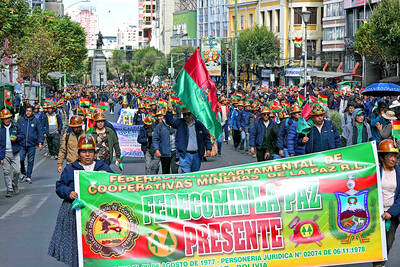
The Bolivian government on Friday struck a deal with protesting miners, but was still grappling with blockades and demonstrations by other workers across La Paz. Other groups are still blocking access roads into the city, which is also the seat of the government. Police on Thursday prevented the miners from entering the main square by using tear gas, while the demonstrators hurled stones and explosives with slingshots. Protests against the policies of Bolivian President Rodrigo Paz have convulsed the Andean nation since early this month, and roadblocks were choking routes into La Paz throughout Friday, the national road authority said. Miners demanded that Paz
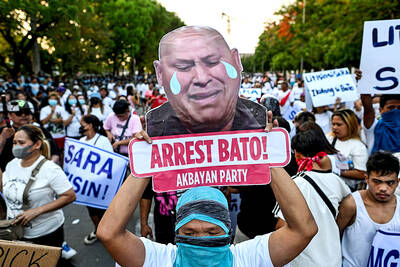
The Philippines said it has asked the country’s Supreme Court to allow it to arrest former Philippine president Rodrigo Duterte’s chief drug war enforcer to stand trial in an international tribunal. The International Criminal Court (ICC) last week unsealed an arrest warrant against Philippine Senator Ronald dela Rosa, accusing him along with Duterte and other “coperpetrators” of the “crime against humanity of murder.” Dela Rosa briefly sought refuge in the Philippine Senate last week while asking the Philippine Supreme Court to stop an ongoing attempt by government agents to arrest him. “By his own conduct, he has placed himself outside the protection of

A ship anchored off the United Arab Emirates (UAE) was seized and taken toward Iran and another — a cargo ship near Oman — sank after being attacked, authorities said on Thursday, as tensions escalated near the Strait of Hormuz. It was not immediately clear who was behind these incidents, but they happened as a senior Iranian official reiterated his country’s claim of control over the waterway and another said it had a right to seize oil tankers connected to the US. The turmoil in the strait has been a sticking point for weeks in talks between the US and Iran to

Crowds in Bangladesh are flocking to snap photographs with an unlikely social media star — an albino buffalo with flowing blond hair nicknamed “Donald Trump” that is due to be sacrificed within days. Owner Zia Uddin Mridha, 38, said his brother named the 700kg bull over its flowing helmet of hair resembling the signature look of the US president. “My younger brother picked this name because of the buffalo’s extraordinary hair,” he said at his farm in Narayanganj, just outside the capital, Dhaka. Mridha said that a constant stream of curious visitors — social media fans, onlookers and children — have come throughout


 RSS
RSS