


Mark Thatcher was preparing to flee South Africa when he was arrested over his alleged involvement in a botched coup attempt, police in Cape Town alleged Thursday.
As the apparent plot to overthrow the president of Equatorial Guinea continued to unravel, the elite Scorpions police unit said it had arrested Thatcher after learning that he had put his house on the market, arranged to sell four of his cars, found boarding school places in the US for his two children and bought his family plane tickets to the US.
When officers arrived at his home in the upmarket Constantia suburb of Cape Town at 7am on Wednesday, they found the Thatchers' suitcases packed and in the hall. The house had been placed on the market for 22 million rand (US$3.3 million) and an estate agent is understood to have been in the process of organizing aerial pictures for a sales brochure.
"That's why we moved to arrest him," Sipho Ngwema, spokesman for the Scorpions, said. "We did not want him to leave the country while we were investigating him."
Further details of the charges against Thatcher emerged yesterday. According to police, they have evidence that he invested US$271,000 to fund the logistics of the coup attempt.
Ngwema said the Scorpions were confident they had evidence against Thatcher that will stand up in court.
"Our investigation is going very well," he said. "We have evidence that Thatcher has been financing the plot against Equatorial Guinea. We found information when we searched his residence that is going to assist us in the case."
Thatcher, who denies any involvement, is under effective house arrest for allegedly helping to fund the coup attempt.
The alleged leader of the plot, Simon Mann, an Old Etonian and former SAS officer, has been in jail in Zimbabwe since March, along with 69 other men. They were arrested on the tarmac at Harare airport in Zimbabwe after landing to pick up a small arsenal allegedly to be used to overthrow president Teodoro Obiang Nguema.
By Thursday night three different explanations had emerged from the Thatcher camp for his decision to pack up and ship out.
Friends in London said he had decided to move back to the US months ago, hinting that it was a move designed to save his marriage to Texas millionaire Diane Burgdorf.
Meanwhile one of his lawyers in South Africa said the family were "downsizing" to a smaller home in Cape Town because the children were going to boarding school in the US where the Thatchers would be spending more time.
But Thursday night his supporters offered a more sinister explanation. Channel 4 News reported claims, first made last month, that Thatcher had received anonymous threats over his alleged links to the coup plotters.
Thatcher was first interviewed about the allegations more than two weeks ago, after agreeing to a meeting with the Scorpions in Pretoria.
Meanwhile the number of businessmen and establishment figures involved in the coup plot was widening last night. Lord Archer, who was dragged into the controversy after US$134,000 was deposited into Mann's bank account in the name of JH Archer four days before the coup attempt, was at the Olympics in Athens. Archer was a vice-president of the British Conservative party while Margaret Thatcher was prime minister.
His lawyers said that he had never met, spoken to, or communicated in any way with Mann, but the carefully worded statement stopped short of denying he had paid the money into Mann's company account.
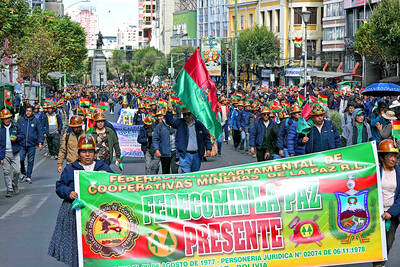
The Bolivian government on Friday struck a deal with protesting miners, but was still grappling with blockades and demonstrations by other workers across La Paz. Other groups are still blocking access roads into the city, which is also the seat of the government. Police on Thursday prevented the miners from entering the main square by using tear gas, while the demonstrators hurled stones and explosives with slingshots. Protests against the policies of Bolivian President Rodrigo Paz have convulsed the Andean nation since early this month, and roadblocks were choking routes into La Paz throughout Friday, the national road authority said. Miners demanded that Paz
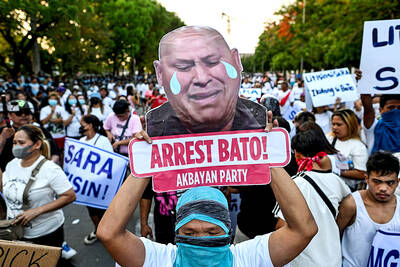
The Philippines said it has asked the country’s Supreme Court to allow it to arrest former Philippine president Rodrigo Duterte’s chief drug war enforcer to stand trial in an international tribunal. The International Criminal Court (ICC) last week unsealed an arrest warrant against Philippine Senator Ronald dela Rosa, accusing him along with Duterte and other “coperpetrators” of the “crime against humanity of murder.” Dela Rosa briefly sought refuge in the Philippine Senate last week while asking the Philippine Supreme Court to stop an ongoing attempt by government agents to arrest him. “By his own conduct, he has placed himself outside the protection of
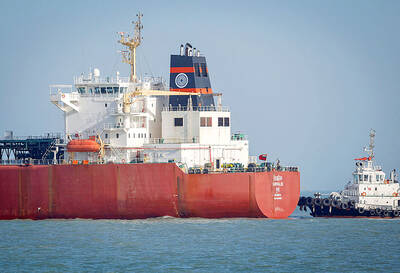
A ship anchored off the United Arab Emirates (UAE) was seized and taken toward Iran and another — a cargo ship near Oman — sank after being attacked, authorities said on Thursday, as tensions escalated near the Strait of Hormuz. It was not immediately clear who was behind these incidents, but they happened as a senior Iranian official reiterated his country’s claim of control over the waterway and another said it had a right to seize oil tankers connected to the US. The turmoil in the strait has been a sticking point for weeks in talks between the US and Iran to
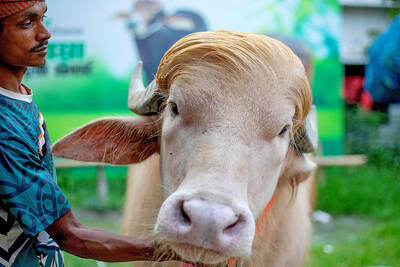
Crowds in Bangladesh are flocking to snap photographs with an unlikely social media star — an albino buffalo with flowing blond hair nicknamed “Donald Trump” that is due to be sacrificed within days. Owner Zia Uddin Mridha, 38, said his brother named the 700kg bull over its flowing helmet of hair resembling the signature look of the US president. “My younger brother picked this name because of the buffalo’s extraordinary hair,” he said at his farm in Narayanganj, just outside the capital, Dhaka. Mridha said that a constant stream of curious visitors — social media fans, onlookers and children — have come throughout


 RSS
RSS