


Eight days before a UN Security Council deadline for Sudan to rein in state-sponsored Arab militias in Darfur, Interior Minister Abdul Rahim Mohammed Hussein said in comments published Saturday that they would be disarmed only gradually.
"The collection of weapons will be gradual and begin with an initiative for reconciliation among the tribes through the native administrations," the minister told Khartoum newspapers after a visit to the South Darfur state capital of Nyala.
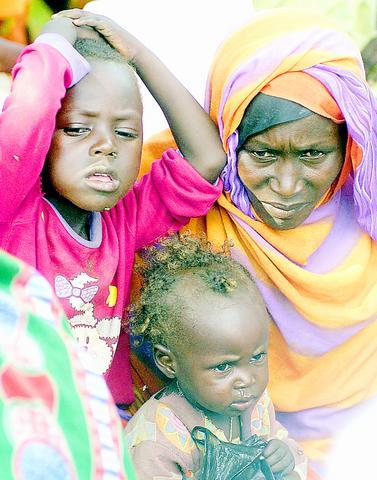
PHOTO: AP
The minister, who is Khartoum's pointman on Darfur, gave no timeframe for the "reconciliation" initiative, but the government has only just begun to re-establish the native administrations, which were disbanded in the 1970s.
Hussein said the new bodies would have wide-ranging powers in "administrative, security and judicial matters."
On July 30, the UN Security Council gave Khartoum 30 days to disarm the militias, held responsible for a reign of terror against non-Arab ethnic minorities in Darfur.
But since then, Sudanese government officials have only once given any timeframe for the disarmament process.
On August 5, North Darfur police chief General Jamal El-Houerees said the process would begin in the week beginning August 12, but there has been no further announcement since.
UN officials say Khartoum has also made little progress in honoring its commitments under an agreement with Annan made public on July 3, notably securing safe zones for the more than one million people displaced by the government's bloody policies.
The UN High Commissioner for Refugees warned Friday that a further 30,000 displaced people were poised to flee over the border into neighboring Chad, joining 200,000 refugees already there, because of the continuing depredations by the militias.
"We are concerned that such an influx of 30,000 refugees in one single spot along the Chad-Sudan border, if it were to materialize, would put a strain on our ability to care for and feed refugees in our camps there," the UN agency said.
The UNHCR's director of Sudan operations, Jean-Marie Fakhouri, met with representatives in the camp at Masteri.
"This group of displaced people said they want protection from UN peacekeepers," the agency's statement said. "If they do not get international security guarantees, they said they will all cross to Chad as soon as the rain-swollen river that marks the border with Sudan dries up."
Most of the displaced people in the Masteri camp fled attacks on their own villages earlier this year, but are still prey to state-sponsored Arab militias, the UNHCR said.
"When they venture outside, they are regularly attacked by Janjaweed militiamen. "A 43-year-old woman told members of Fakhouri's team that she was one of many women who had been raped when she went out of Masteri for food and firewood.
"She said women are being raped every day, but they continue to go out because the men will be killed if they venture out."

Four contenders are squaring up to succeed Antonio Guterres as secretary-general of the UN, which faces unprecedented global instability, wars and its own crushing budget crisis. Chile’s Michelle Bachelet, Argentina’s Rafael Grossi, Costa Rica’s Rebeca Grynspan and Senegal’s Macky Sall are each to face grillings by 193 member states and non-governmental organizations for three hours today and tomorrow. It is only the second time the UN has held a public question-and-answer, a format created in 2016 to boost transparency. Ultimately the five permanent members of the UN’s top body, the Security Council, hold the power, wielding vetoes over who leads the

A humanoid robot that won a half-marathon race for robots in Beijing on Sunday ran faster than the human world record in a show of China’s technological leaps. The winner from Honor, a Chinese smartphone maker, completed the 21km race in 50 minutes and 26 seconds, said a WeChat post by the Beijing Economic-Technological Development Area, also known as Beijing E-Town, where the race began. That was faster than the human world record holder, Ugandan Jacob Kiplimo, who finished the same distance in about 57 minutes in March at the Lisbon road race. The performance by the robot marked a significant step forward

An earthquake registering a preliminary magnitude of 7.7 off northern Japan on Monday prompted a short-lived tsunami alert and the advisory of a higher risk of a possible mega-quake for coastal areas there. The Cabinet Office and the Japan Meteorological Agency said there was a 1% chance for a mega-quake, compared to a 0.1% chance during normal times, in the next week or so following the powerful quake near the Chishima and Japan trenches. Officials said the advisory was not a quake prediction but urged residents in 182 towns along the northeastern coasts to raise their preparedness while continuing their daily lives. Prime
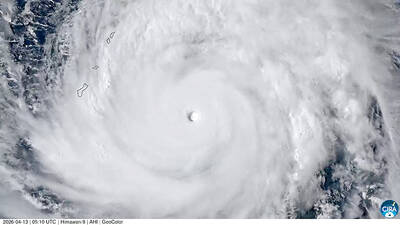
HAZARDOUS CONDITION: The typhoon’s sheer size, with winds extending 443km from its center, slowed down the ability of responders to help communities, an official said The US Coast Guard was searching for six people after losing contact with their disabled boat off the coast of Guam following Typhoon Sinlaku. The crew of the 44m dry cargo vessel, the US-registered Mariana, on Wednesday notified the coast guard that the boat had lost its starboard engine and needed assistance, Petty Officer 3rd Class Avery Tibbets said yesterday. The coast guard set up a one-hour communication schedule with the vessel, but lost contact on Thursday. A Coast Guard HC-130 Hercules aircraft was launched to search for the six people on board, but it had to return to Guam because of


 RSS
RSS